Breaking down F1’s longest season

After an off-season that no one expected, F1 roars back into life for a marathon 24 race season beginning later this month.

For fans worldwide, and for those involved in the sport, 2024 will have an unusual feel right from the get go. The opening race takes place in Bahrain on March 2nd, not only the earliest start to a season since 1992, but also the first Saturday start since 1982! Likewise, Saudi Arabia takes place on a Saturday just one week later, both changes due to Ramadan.

From there, F1 heads to Australia, Japan, and China. Japan moves up the calendar from September to April, while China returns to the calendar for the first time since 2019. The first race that takes place in a European lunchtime slot is not until Imola on May 19th.

Despite the record 24 race season, the championship does incredibly well to avoid a clash with the 24 Hours of Le Mans, the football European Championships and the Wimbledon tennis finals. Only the Belgian Grand Prix faces a major clash, facing the opening weekend of the Paris Olympics.

The year concludes with a triple header, beginning in Las Vegas on Saturday 23rd November and finishing in Abu Dhabi on December 8th which, thankfully, avoids the MotoGP finale this year.

Fan interest dipped during Verstappen’s dominant year

2023 was unquestionably Max Verstappen’s and Red Bull Racing’s year, in one of the most dominant displays by a single driver and team combination that F1 has ever seen.

Verstappen’s supremacy impacted worldwide interest in the sport, creating a mixed picture overall. Despite this viewing figures in the UK held up well compared to their neighbours. During 2023, Sky’s F1 channel reached 3.40 million viewers per month, a dip of 6% compared to the 2022 monthly reach figure of 3.62 million viewers.

It was a tale of two halves compared with 2022 for Sky: a poor spring followed by a good recovery through the summer and autumn. Audience figures slumped by 17% and 25% during April and May respectively, hindered by a disjointed start to the season thanks to the cancellation of the Chinese and Emilia Romagna rounds.

Nevertheless, audience figures rebounded by the summer, with increases in July (+5%) and September (+7%) and only marginal decreases in October (-5%) and November (-3%). Although Verstappen wrapped up the championship by early October, other stories such as McLaren’s resurgence and the inaugural Las Vegas Grand Prix kept fans engaged in Sky’s programming.

While it is fair to say that attention has dipped since the dramatic 2021 season, interest in the sport remains good in the UK and above the levels seen prior to the COVID-19 pandemic. Audience figures also decreased slightly in the US, however the season remained the second most viewed ever stateside, only behind 2022.

Ahead of the 2024 season, Sky Sports have created ‘The Greatest Track on Earth’. Generated using AI technology and voted on by the fans, the circuit brings together some of F1’s historic turns into one location. Above: The Castle Section for the Baku City Circuit, Azerbaijan. Image Credit: Sky Sports.

Over 1 million viewers continued to watch F1 in France on Canal+, however audiences held up less well in Germany and Austria, according to data supplied to Motorsport.com. Austria’s average audience across two networks dropped by around 12%, while Sky’s average audience in Germany decreased by 21%, dropping from 740,000 to 593,000 viewers.

More races, more social responsibility for broadcasters

Sky and Channel 4 return as the two broadcasters airing Formula 1 on television in the UK, now in their 13th and 9th season respectively. Every race will air live on Sky and in highlights form on Channel 4, the latter also covering the British Grand Prix weekend live across the weekend of July 4th to 6th.

As well as winning the Formula E production contract during the winter break, Whisper retained the contract to produce Channel 4’s free-to-air F1 offering, with their new agreement stretching until the end of 2026.

Motorsport Broadcasting understands that Whisper faced tough competition from North One Television, who previously produced F1 for ITV and currently produce TNT Sports’ MotoGP coverage, with the incumbent winning out.

But this year, Whisper’s offering will look a little bit different on Channel 4, as broadcasters seek to increase their focus on sustainability while cutting costs across the board. Late-night highlights for races such as Brazil, Mexico, and Miami, will air from “an innovative, immersive studio location,” believed to be the F1 Arcade space in London.

Over on Sky, this site has learnt that coverage of the Australian, Chinese, and Japanese race weekends will come from London, with only a small team travelling to the events, like how ITV covered some fly away races during their period airing F1 live. It will be the first time ever that Sky have not had an expansive presentation team on-site.

They are not the first major production to do this, with recent examples (outside of C4 F1) including ITV’s Rugby World Cup coverage where the lead broadcaster has opted to present coverage from their “interactive, mixed reality studio” in the UK, while retaining some on-site presence at the same time. Sky did not comment on the change as of writing.

All details for Sky Sports F1 unless stated.

Wednesday 28th February
15:00 to 16:00 – The F1 Show: Season Preview

Thursday 29th February

11:00 to 12:55 – Practice 1 (also Sky Sports Main Event)
14:35 to 16:15 – Practice 2 (also Sky Sports Main Event)
16:15 to 17:15 – The F1 Show (also Sky Sports Main Event)

Friday 1st March
12:15 to 14:10 – Practice 3 (also Sky Sports Main Event)
15:10 to 18:00 – Qualifying (also Sky Sports Main Event)
18:00 to 18:30 – Ted’s Qualifying Notebook (also Sky Sports Main Event)
19:30 to 21:00 – Qualifying Highlights (Channel 4)

Saturday 2nd March
13:30 to 18:30 – Race (also Sky Sports Main Event from 14:30 to 17:00)
=> 13:30 – Grand Prix Saturday
=> 14:55 – Race
=> 17:00 – Chequered Flag
=> 18:00 – Ted’s Notebook
19:50 to 22:20 – Race Highlights (Channel 4)

The full UK TV schedule for the 2024 Bahrain Grand Prix.

Alongside Sky’s F1 coverage, the F1 channel will also air Formula 2, Formula 3, the F1 Academy series, and IndyCar live this year. Formula 2 and 3 begin in Bahrain from March 1st, whilst F1 Academy and IndyCar kick off their campaigns a week later.

F1 Academy will also air live worldwide on YouTube, with Nicki Shields, a name fans may recognise from Formula E, leading the commentary line-up alongside Alex Brundle and Jordan King.

Both Sky and Channel 4 field largely unchanged punditry line-ups, with Simon Lazenby and Steve Jones leading Sky’s and Channel 4’s outputs respectively. David Croft and Martin Brundle will continue to commentate on Sky’s offering, with Channel 4 taking F1 TV’s commentary line-up featuring Alex Jacques, Jolyon Palmer, James Hinchcliffe, and David Coulthard.

For the first time though since Sky began broadcasting F1, Croft will not be part of their coverage for three races this season, with Harry Benjamin becoming Sky’s lead commentator for the Emilia Romagna, Austrian and Azerbaijan race weekends. Commenting on the change, Croft said “It’s more about keeping fresh for the whole season. I’m not getting any younger.”

In an interview with The Independent, he added “I’ve given up and sacrificed a lot for my career. I want to give a bit of time back to my family and not be on the other side of the world. I’m getting married this year as well, so I’ve got a wedding to organise!”

“But I also want to sit and watch a race at home. I want to enjoy it. Maybe I can learn something by not commentating on a race. I can spot a few things when I’m watching – I want to see what the viewer sees.”

BBC’s Radio 5 Live coverage of F1 continues, the station celebrating 30 years on the air this March, F1 forming part of its line-up during each of those years, with coverage of every session airing across BBC Radio 5 Live, 5 Live Sports Extra and the BBC Sport website.

RTL returns to the free-to-air folder whilst F1 increases the DTC prices

Meanwhile in Germany, F1 returns to free-to-air television as part of a sub licencing deal agreed between RTL and Sky. While Sky will continue to air every race live, RTL will also air 7 races live and 12 qualifying/sprint sessions live. Their old presentation team, including pit lane reporter Kai Ebel and presenter Florian König return, as well as former Haas team principal Guenther Steiner.

“For us, Formula 1 is an absolute highlight. The 30-year success story at RTL is directly linked to Florian König, Kai Ebel, Heiko Wasser and Christian Danner. Together with Laura Papendick we have the perfect grid for our motorsport fans,” explained Andreas von Thien, Head of Sports at RTL. “We are therefore very pleased that they are all at the start again!”

In Spain, DAZN will cover the sport for the next three years exclusively, while F1 has extended its partnership with RTBF in Belgium.

> Wonder how F1 TV is made? Take a look at Motorsport Broadcasting’s in-depth analysis behind the scenes at Biggin Hill (part 1, part 2, part 3) as well as our analysis comparing F1 TV and Sky F1.

Over in the direct-to-consumer space, F1 has made their first significant price changes since launching the platform in May 2018, with the cost increasing in multiple territories.

In the Netherlands, the yearly price of F1’s premium tier service, F1 TV Pro, has increased by €30.00 from €64.99 to €94.99, a 46% rise. To the north of Netherlands, in Norway, the price has increased from by a similar amount, with rises also seen in territories such as the US, France, Poland, Brazil and Canada.

Justifying the price rise, F1 themselves have noted that one reason for the price rise is that there are more races in 2024 compared to previous seasons. Responding to fans, the series says “We continue to focus on making F1TV even more valuable to fans. We have increased the number of races from 22 races in 2023 to 24 in 2024, making this the biggest season ever!”

“We are also introducing F1 Academy along with more in-depth shows and a fantastic new interface,” the message concludes.

Although price rises are understandably frustrating, on a per race basis, the cost remains very small considering the content that fans get in return. The most expensive F1 TV price in each territory is likely still cheaper than the cheapest price for MotoGP’s Video Pass, which costs fans €199.99 worldwide.
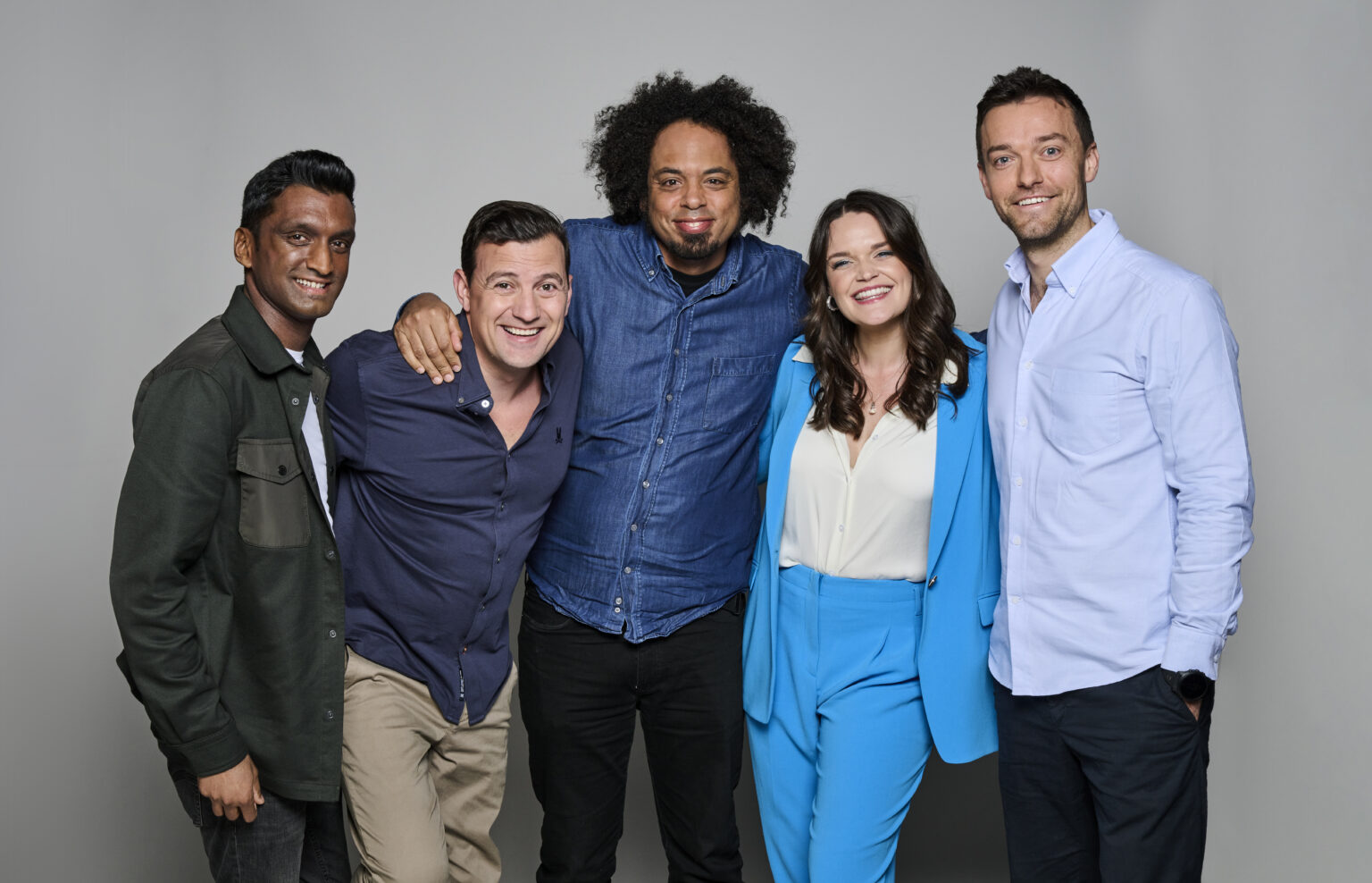
The F1 TV team, from left to right: Lawrence Barretto, Will Buxton, Sam Collins, Laura Winter and Jolyon Palmer. Image Credit: F1.

Announcing their plans for the new season, Will Buxton and Laura Winter return as F1 TV’s lead presenters, with the in-race commentary line-up identical compared with last year, led by Alex Jacques.

Jacques will also continue his Formula 2 duties alongside Alex Brundle, while Chris McCarthy returns for his first full Formula 3 season as lead commentator. Experts, including Brundle, former race engineer Julien-Simon Chautemps and 2012 GP2 Series champion Davide Valsecchi will join the core F1 TV team throughout 2024.

For UK fans, F1 TV Pro is still inaccessible, meaning that the only way for fans to watch every race live in 2024 is via Sky Sports F1. Nevertheless, fans in the UK can access the vast archive as well as F1 TV’s supplementary content during a race weekend, such as their pre-race and post-race analysis and Tech Talk segments with Sam Collins.

Into the podcasting world

After a successful first year, The Fast and The Curious podcast continues into 2024. Fronted by Greg James, Betty Glover and Christian Hewgill, the podcast series aims to shine light on F1 from a different perspective.

The trio between them had many high profile F1 guests on the podcast during 2023, including both McLaren stars Lando Norris and Oscar Piastri, and seven-time Drivers’ Champion Lewis Hamilton.

“We wanted to try and create a podcast that didn’t already exist,” explains Hewgill. “And for us the key to that was humour, it was making a bit of a community like Greg’s [Radio 1] breakfast show does so well. It was bringing people on the journey and that was where Betty really came in because she is a sports fan, but was only just starting to know and learn and love Formula 1.”

“I didn’t feel that there was a podcast that lent into the humour of the sport and the silliness of the sport, because the sport is mad! This travelling circus that goes around the world, there’s so much humour and funniness to it. I didn’t think there was a podcast that lent into the, for want of a better word, the Drive to Survive era, in that there were more people coming into F1 who knew a bit, but didn’t know loads.”

“Some people say that motor racing drivers are quite dull, I couldn’t disagree any more. Motor racing drivers are fascinating.”

2024 promises more of the same from the podcast and, already as of writing, the show has featured both Williams drivers, triple F1 drivers champion Sir Jackie Stewart, Toto Wolff, George Russell and, yes, even having a dinner date with Karun Chandhok!

Away from The Fast and The Curious, Hewgill’s other podcast vehicle, F1 Explains returns, Hewgill presenting alongside Katie Osbourne, the show helping to explain F1’s nuances to newer audiences of the sport.

Thursday 29th February
11:25 to 12:35 – Practice 1 (BBC Radio 5 Live Sports Extra)
19:30 to 20:30 – Bahrain Grand Prix Preview (BBC Radio 5 Live)
14:55 to 16:05 – Practice 2 (BBC Radio 5 Live Sports Extra)

Friday 1st March
12:25 to 13:35 – Practice 3 (BBC Radio 5 Live Sports Extra)
15:55 to 17:05 – Qualifying (BBC Radio 5 Live Sports Extra)

Saturday 2nd March
14:45 to 17:00 – Race (BBC Radio 5 Live Sports Extra)

The full UK radio schedule for the 2024 Bahrain Grand Prix.

You might be thinking, quite rightly, why podcasts are continuing to proliferate the motor racing world. Analysis released last month by YouGov shows that podcasts are most popular with those in the 18 to 34 demographic, the same demographic F1 is attracting thanks to Drive to Survive.

Sky Sports’ in-house F1 podcast returns this year, with Matt Baker continuing to lead the podcast alongside a range of guests from their F1 team and beyond. Also returning is the BBC’s usual post-race output Chequered Flag.

A pre-season addition for the Beeb this year has been the launch of a standalone eight-part podcast series. Narrated by actor Joseph Fiennes, F1: Back at Base series takes fans behind the scenes of the Mercedes and Williams team from the chequered flag in Abu Dhabi last year through the off-season and into lights out for F1 testing.

The launch of the BBC’s new podcast series is their latest effort in the F1 world, following the series in late-2022 analysing the Spygate scandal in Sport’s Strangest Crimes across ten episodes. Expect more podcasts from the likes of Autosport, The Race and P1 with Matt and Tommy as 2024 progresses.

For the second year running, The Race Media has opted to overhaul their WTF1 brand. Content creators Amber Jones and Haydon Gullis will lead the brand this year, with the company saying that now “is right to relaunch the brand, creating the perfect platform for new and younger fans to engage with motor racing.”

“We’re all looking forward to this brave new era of WTF1, Haydon and Amber work fantastically together and our fan first approach to F1 will be central to the content we’ll be releasing over the coming weeks and months,” explained Tim Silvey, Head of Talent for WTF1.

“We have significant plans for channel growth and look forward with renewed enthusiasm to this new iteration of the brand.”

The challenge for anyone generating F1 content this year worldwide, whether that be broadcasters or podcasters alike, is to keep fans engaged throughout 2024. And, based on the early evidence from testing, that might be a challenge.

Can someone take the challenge to Max Verstappen and Red Bull, or will the Dutchman take his fourth Drivers’ Championship in a row? It is time to find out…

Article last updated on Monday 26th February, with a further update made on Wednesday 6th March covering F1 Academy’s coverage plans.

If you enjoyed this article, consider contributing to the running costs of Motorsport Broadcasting by donating via PayPal. If you wish to reproduce the contents of this article in any form, please contact Motorsport Broadcasting in the first instance.

Formula E heads to TNT as series struggles to make FTA breakthrough

After ten years of flirting with multiple free-to-air networks, Formula E has made the jump to pay television in the United Kingdom.

From ITV to Channel 5 to the BBC and onto Channel 4, the electric series has never found its belonging at any of those networks. Now, after battling for its place on free-to-air, the series has turned to TNT Sports for its next phase.

But how has Formula E ended up here, and did the series have any other options? Motorsport Broadcasting analyses the situation.

A new home for 2024

Organisers of the series, now heading into its tenth season, have announced an agreement with TNT Sports, touting the outlet as the championship’s exclusive television home, although terms of the contract (or its length) are undisclosed.

Discovery+ will stream coverage, the platform bringing together their Eurosport and TNT outlets under one roof.

Moving forward, fans will be able to access live coverage of MotoGP, World Superbikes, British Superbikes, Speedway, World Rally Championship, World Endurance Championship (including the 24 Hours of Le Mans) and Formula E via Discovery+.

Their television line-up for the new season is a hybrid of familiar Formula E names, combined with names typically associated with Whisper’s Channel 4 F1 broadcasts, the production house taking over the English language wrap-around offering from North One Television.

Joining the likes of Nicki Shields, Karun Chandhok, Dario Franchitti and Allan McNish will be Billy Monger, David Coulthard and Jamie Chadwick, the latter two names making “guest appearances” during the 2023/24 season.

Tom Brooks returns as lead commentator, this time on a full-time basis, replacing Jack Nicholls in the role.

The big talent announcement though is that former footballer Jermaine Jenas will be presenting Formula E’s race coverage, succeeding Vernon Kay. Jenas is no stranger to presenting, having presented the BBC’s magazine programme The One Show since 2020, as well as contributing to TNT’s football coverage.

“Since retiring from football I never thought I would find a sport that I loved as much but Formula E is a sport like nothing else,” Jenas said. “I couldn’t be more excited to take on this incredible presenting role and travel the world with such amazing teams.”

“To get in front of the camera and share that energy and action with viewers is a whole new challenge and adrenaline rush for me and I’m really looking forward to it.”

Formula E in the UK – at a glance

2014-15 – ITV
2015-16 – ITV
2016-17 – Channel 5
2017-18 – Channel 5, Eurosport
2018-19 – BBC, BT Sport, Eurosport, Quest
2019-20 – BBC, Eurosport, Quest
2020-21 – BBC, Eurosport, Quest
2020-21 [London only] – BBC, Channel 4, Eurosport
2021-22 – Channel 4, Eurosport
2022-23 – Channel 4, Eurosport
2023-24 – TNT Sports

Formula E’s CEO Jeff Dodds added, “This is incredible news for sports fans in the UK who already watch premium live sports on TNT Sports. From next month they will get to enjoy the new thrill of Formula E racing, the most competitive motorsport on TV.”

“For existing Formula E fans, we are excited to present TNT Sports as the new home of Formula E in the UK,” Dodds said.

“With experienced professional sportsperson and broadcaster Jermaine Jenas leading our stellar line-up of expert presenters to provide his original perspective for viewers, we cannot wait to get to work in Mexico City.”

Was this Formula E’s number one option?

The biggest surprise about Formula E’s announcement is that it did not happen earlier. Formula E was first linked with TNT Sports (then BT Sport) a decade ago, and had a brief spell on BT Sport five years ago!

At the time, their chief executive Alejandro Agag said that the series was in discussions with BT and Sky, but that the aim was “free-to-air even if we get less money. Free-to-air would be great: BBC or ITV.”

To Agag’s credit, that is exactly what Formula E did, launching in 2014 live on ITV4. Less than a year later, a peak of over 1 million viewers watched Nelson Piquet Jnr become the first Drivers’ Champion in London.

But since then, despite glimpses of optimism along the way, the series has failed to gain traction in the UK and instead has gone into reverse. ITV lost faith, as did other broadcasters.

Viewing figures have failed to reach the 2015 peak, with clashes with F1 and MotoGP, long gaps between races and a lack of promotion from both broadcasters and series organisers hampering the championship.

The pandemic only exasperated the problem that the series faced in the UK. Channel 4’s broadcast deal sought to reverse the decline, with more races airing live on free-to-air television. Note the key word: “more,” not “every.”

Some races aired live on YouTube, meaning that the series was offering a disjointed service to fans. Either way you cut the slice, audience figures on Channel 4’s YouTube broadcasts were pitifully low, while races on Channel 4’s linear channel struggled outside of London.

According to The Race, the Hyderabad E-Prix averaged 97,000 viewers for the two-hour broadcast on Saturday 11th February. Two weeks later, the Cape Town E-Prix averaged 151,000 viewers. It is with this in mind that comparisons with MotoGP, which moved to pay TV a decade ago, are invalid given that their free-to-air audience was far higher than what Formula E achieved.

With such little interest, why should Channel 4 care enough to renew, when repeats of The Simpsons would draw a higher audience? At a time where broadcasters are making efficiencies across the board, it is little surprise that Channel 4 did not renew.

Channel 4 would not be alone in their assessment of Formula E: in Germany, free-to-air station ProSieben cut ties with the championship owing to viewer interest not developing “as expected.”

Earlier suggestions of a deal between Formula E and ITV in the UK for season 10 appear to have fallen through based on the wording of the press release issued by Formula E and TNT Sports, although Autosport suggests that free-to-air deals may be agreed on a “race-by-race” basis.

What we do not know is whether TNT Sports have offered Formula E substantial sums of money. They may well have done; however, I struggle to see a situation where this has happened. TNT most likely see this as a way of boosting their existing sports portfolio at little cost to them.

TNT Sports is not a small network: it is the second biggest sports network in the UK only behind Sky and has a significant sports portfolio. And, combined with Eurosport via Discovery+, the powerhouse airs sport ranging from the Olympics through to the UEFA Champions League football.

From a Formula E perspective, they may feel that it is better for them to be in amongst those sporting properties via Discovery+ rather than on free-to-air television, or having a couple of thousand viewers watch them via Channel 4’s YouTube channel.

For those who only watch Formula E and no other sport that Discovery+ airs, the news is likely disappointing, however I understand why the series has taken the decision it has, when faced with few alternatives.

Formula E wants to, understandably, attract the wider sports fan in the UK, and this is the best they can get with the options they have at their disposal.

If you enjoyed this article, consider contributing to the running costs of Motorsport Broadcasting by donating via PayPal. If you wish to reproduce the contents of this article in any form, please contact Motorsport Broadcasting in the first instance.

F1 TV or Sky Sports: who wins the pre-race battle?

In recent years, Formula 1 has evolved its direct-to-consumer product, F1 TV. The platform has grown since launch in 2018, with the championship now providing fans with a rich in-house offering during a race weekend.

As well as their non-live YouTube offering, the series also presents live pre- and post-race content on YouTube and through their DTC platform, meaning the F1 now stands directly alongside the broadcasters that air the sport.

F1 TV caters to international fans, similar to how Sky Sports serves fans in the UK. But how to the services compare from a pre-race build-up perspective?

Motorsport Broadcasting has analysed F1 TV’s and Sky’s build-up to last weekend’s Sao Paulo Grand Prix to see where the similarities and differences lie in their offering. With both Drivers’ and Constructors’ Championships well wrapped up, it is challenging for F1 and its stakeholders to create engaging content as the 2023 season concludes.

How did F1’s in-house team fare with 60 minutes to play with, and how did Sky fill 70 minutes of content (excluding commercials)? And are UK fans missing out by being unable to access F1 TV’s premium live content?

Where F1 TV takes the lead

Laura Winter and James Hinchcliffe led F1 TV’s output that included former Lotus and Renault race engineer Julien Simon-Chautemps on-site. Technical expert Sam Collins and commentators Alex Jacques and Jolyon Palmer provided additional build-up analysis from F1’s UK base.

The pre-race broadcast focused on the thing that mattered the most: the racing, dissecting the fortunes of all 10 teams and 20 drivers, each part given time to breathe, without the need to rush into an ad-break or onto the next segment.

F1 TV’s ‘all drivers covered’ mantra was evident during their grid walk, where Hinchcliffe walked from the rear to the front of the field. The format reminded me of NBC’s IndyCar build-up (a team that Hinchcliffe is also part of), serving to bring fans up to speed with the storylines in a digestible manner.

Whether it was Red Bull or Alfa Romeo, F1 TV had it covered. ‘Hinch’ was brilliant throughout the build-up. Like Sky’s Karun Chandhok, Hinchcliffe is a walking F1 encyclopaedia!

By way of comparison, Sky’s broadcast predominantly focused on the top contenders (similar to their 2022 output) in a circular and sometimes disjointed fashion, with the tailenders receiving minimal coverage from the pay TV broadcaster.

F1 TV’s broadcast felt accessible to fans of all generations, introducing everyone to the race as if it was their first time watching during the weekend, irrespective of their viewing habits. The broadcast never ‘assumed knowledge’, which I really liked. Features aired to recap both Friday’s qualifying and Saturday’s Sprint race, reminiscent of the BBC’s and ITV’s old F1 broadcasts.

James Hinchcliffe and Laura Winter presented F1 TV’s broadcast from the grid.

As expected, the show utilised F1’s Biggin Hill archive and the terabytes of data that they receive during a race weekend. However, while both features in question were good, I was left wanting more in both areas.

Will Buxton narrated a piece looking back at Brazil 2003, showcasing F1’s history, but never gave fans a new take on events. It felt like a piece I could watch on YouTube with no ‘added value’ like previous segments on Sky have had.

Later in the broadcast, Collins compared the tyre degradation of Mercedes’ George Russell and Red Bull’s Max Verstappen, showing where Russell lost out to Verstappen over the course of the Sprint. This was a superb piece of analysis and really showed where Verstappen is a class ahead of his rivals.

An issue I had with both Sky’s and F1 TV’s broadcasts though, is that neither broadcaster explained the tyre degradation situation is simple terms.

There was lots of chat, and helpful analysis from Collins on F1 TV, but neither aired a graphic comparing the amount of tyre compounds (Soft, Medium and Hard) each driver had left, which felt like a major oversight considering how much chatter there was on the subject.

Nevertheless, there is only so much data-driven and technical content you can create for the build-up without overwhelming (or alienating) the audience.

Each weekend, F1 creates Tech Talk, a segment fronted by Collins for their social channels, highlighting the technical updates across the whole of the grid.

While Sky adopts a personality-led approach to attract the Drive to Survive convert, F1 is streets ahead of the competition when it comes to data and technical content creation.

…and where Sky hit the DRS

If you want a show that brings you closer to the personalities involved with F1 as well as the wider storylines beyond the race, Sky Sports is the place for you.

Fronted by Simon Lazenby, Naomi Schiff and Karun Chandhok, Sky’s build-up as always aired interviews with the key drivers in their 90-minute broadcast before lights out. David Croft gave a brief summary from the commentary box, with Rachel Brookes and Ted Kravitz down in pit lane and the paddock.

There were two standout features in Sky’s expansive pre-show: a behind the scenes look at Ferrari, and Martin Brundle’s grid walk.

Filmed during the Mexican Grand Prix weekend, a camera crew followed the Ferrari team around, giving fans a new perspective on the Scuderia. In the week following the race, Sky’s production team turned around a 15-minute edit, which aired in two segments during the Brazil weekend.

Arguably, it is one of the best behind the scenes pieces you will see any F1 TV broadcaster air this season, even more impressive considering the turnaround to get the piece on-air.

In comparison, Netflix’s Drive to Survive airs months after footage is shot. That is not to do Drive to Survive a disservice, merely to highlight the effort involved from Sky on this front.

As amazing as features like these are, the logistics of organising the pieces mean that they are few and far between. Sky’s other build-up features on George Russell’s firsts and Daniel Ricciardo were likely much quicker to turn around that the Ferrari segment.

Brundle’s grid walk was its usual chaotic self, with a mix of driver and celebrity interviews, and clearly different to the style offered up by F1 TV. ‘Inform, educate and entertain’ may be the BBC’s mission, but it is also a statement that is pertinent across the whole of the broadcasting landscape.

Sky’s iteration of the grid walk (and its predecessors) serves to inform and educate, by bringing fans the latest news from the grid, intertwined with interviews from stars past and present.

In Brazil, this included a brief catch up with Safety Car driver Bernd Maylander, ex-Brazilian star Rubens Barrichello (informing), and explaining what has changed on the Ferrari since Friday qualifying (educating).

But there is the third branch: entertaining, and Brundle’s grid walk fulfils that mantra. Whether it is hearing him say “Balloons out and away we go!” or him trying to get some sense out of Machine Gun Kelly, it is entertaining television. Sometimes the grid walks miss wildly, but that is live television for you.

While the F1 TV version of the grid walk was informative and entertaining, the format was dry and unsuitable for a broadcaster like Sky who are trying to attract new fans to F1.

Brundle’s grid walk lasted almost twice the length of Hinchcliffe’s, but had a ‘Fast and Furious’ style to it, rather than wandering from back to front. Both grid walks were good, but the target audience for both parties is different and that is the key here.

Elsewhere, Sky’s broadcast featured 3D analysis on the Sky Pad, overlaying Verstappen’s and Leclerc’s qualifying laps, the graphic and Chandhok’s usually excellent description giving fans an idea of where the differences were between the two drivers during Q3.

Chandhok’s knowledge came into play throughout the build-up, linking Lance Stroll’s qualifying performance to engineer Tom McCullough, who was also Nico Hulkenberg’s engineer when he took pole at Brazil in 2010.

Looking ahead to 2024

Whether you like F1 TV’s or Sky’s build-up more really depends on what you want out of your pre-race content.

If you are an F1 fanatic who does not care so much about the glitz and glamour that surrounds the sport, F1 TV is likely the place for you, the in-house broadcaster continuing to enhance its product.

F1 TVSky Sports F1
+ Archive+ Behind the scenes
+ All rounded+ Grid walk
+ Data usage+ Leading contenders
+ Line-up+ Sky Pad
Quick comparison of the pros of F1 TV’s and Sky’s Sao Paulo Grand Prix build-up

On the other hand, if you are newer to F1, or like to see the personalities that F1 has on offer, then Sky has this in abundance. The recent changes to their broadcast team, with the additions of Bernie Collins and Naomi Schiff, in place of Johnny Herbert and Paul di Resta, have helped their broadcast.

Having a former Strategy Engineer as part of Sky’s team has benefited them this season, however Collins’ absence has been felt during some race weekends, when she either has not been there or she has been with…. F1 TV.

Arguably, having two separate English speaking presentation teams presenting live F1 dilutes the talent pool, at a time when broadcasters are trying to save costs. Sky likes to put their own mark on their premium events, which makes the idea of them sharing a broadcast with F1 TV unpalatable.

However, the next six months may be tough for F1 at the pay TV broadcaster as inflation bites across the broadcasting world.

F1 has yet to face the brunt of Sky’s cost cuts in the same vein as Sky’s Premier League offering, which saw veteran faces Geoff Shreeves, Martin Tyler and Jeff Stelling leave at the end of the 2022-23 season.

Sources have indicated to Motorsport Broadcasting in recent months that Sky’s F1 budget will be cut for the 2024 season. As F1 TV continues to grow their offering, Sky F1 may well be changing theirs, which will change the dynamic again heading into 2024.

UK fans can access F1 TV’s Sao Paulo Grand Prix build-up via F1 TV Access here.

If you enjoyed this article, consider contributing to the running costs of Motorsport Broadcasting by donating via PayPal. If you wish to reproduce the contents of this article in any form, please contact Motorsport Broadcasting in the first instance.

Whisper takes over Formula E wrap-around offering as Tom Brooks appointed lead commentator

Whisper will produce coverage of Formula E’s wrap-around programming for the upcoming season, while Tom Brooks has been appointed as lead commentator for the electric series, the production company has confirmed.

Whisper takes over the responsibilities previously provided by North One Television in this space, with enhanced build-up coverage of all practice sessions, qualifying and the race.

In addition the company, founded by Jake Humphrey, David Coulthard and Sunil Patel, have confirmed that Tom Brooks will lead the commentary line-up, succeeding Jack Nicholls in the role. Nicki Shields, Karun Chandhok, Dario Franchitti, Radzi Chinyanganya and Allan McNish return to the presentation team, with more names to be announced soon.

Aarti Dabas, Formula E’s Chief Media Officer, said “We are excited to work with Whisper who will bring to Formula E their impressive, proven credentials for creating compelling sports and entertainment broadcast content.”

“Formula E is the most competitive motorsport world championship with unrivalled racing action, big personalities in the paddock, and genuine storylines that will capture the imagination of new and current audiences.”

Sunil Patel, Whisper’s CEO & Co-Founder, said: “Our intention for the Formula E coverage is to deliver ‘Entertainment Electrified’.”

“We have an exciting and updated talent line up, as well as ambitious coverage plans, as we seek to redefine the coverage with the inspiring Formula E team. This project will draw on our creative storytelling skills and our absolute passion for motorsport.”

In conversation with MotoGP’s Dan Rossomondo

“I read it and agree with these guys. We are not satisfied, but know how wonderful our product is.”

These are not my words, or the words of any journalist. They are actually the words of MotoGP’s new Chief Commercial Officer Dan Rossomondo, who made that comment recently on Twitter/X in response to a thread on Reddit.

It is no secret that MotoGP has a task in front of itself to build the next generation of fans, as discussed previously on these pages. But MotoGP have a new man spearheading their commercial operations.

Rossomondo started with MotoGP earlier this year, and Motorsport Broadcasting caught up with him during the British Grand Prix weekend to get his take on where MotoGP is heading.

Give a little flavour of what you were up to before MotoGP.

I spent the majority of my career at the National Basketball Association, the NBA. I had a variety of jobs there mostly on the revenue generation side, trying to figure out how to architect revenues for the league and our various properties.

I worked in sponsorship, licencing branded attractions media. We represented not only the NBA, we represented the WMBA (Women’s National Basketball Association), the G League, USA basketball, NBA 2K League (esports). Before that I was at IMG and before that at Madison Square Garden working for the Knicks, the Rangers and the Yankees.

Coming over here to MotoGP, it’s the first time you’ve been in a motor sport role. Are there things though that you learnt in the NBA that you want to bring over here?

Yeah, there are definitely things that I want to take from the NBA. But I am very conscious of the fact that MotoGP and Dorna, it’s a very unique organisation. And look, they do things really well.

I do want to take some learnings [from NBA] but in no way shape or form do I want to impose the NBA culture on Dorna or MotoGP because I think it’s a very good business as I’ve said before, and I want to make it better.

What have you observed in the first few months, both things that you think ‘Yeah, that works really well’, and what have you observed that you think ‘we need to refine’ and do that better.

Let’s start on the sporting side, because there are things that I can’t control. It’s a typical American attitude to try to find things that you can’t control. I knew that if I came in and the sport was in a bad way or broken, I would be in trouble, but it’s not, the sport is brilliant. The sport is exhilarating. It moves at a great pace, and the paddock has some of the nicest people I’ve met, so that’s all good.

On the business side, I’ve got a lot of smart people, but what I really have learnt is that there’s a lot of opportunity. I’ve been to events but I’ve never been a fan of it [motor sport]. None of my kids liked it, but they instantly gravitated towards this sport because it’s very magnetic.

I think if we can utilise our media partners and brands to attract a wider audience, they will be as attractive to it as I’ve been, so it’s more about finding that right base and getting people to really identify with the sport. There’s a great opportunity is the shortest answer to that question.

I guess that’s what attracted you to the role, the fact that you’re not a motor sport man and this is new to you.

It’s new and there’s an opportunity to build something. There’s an opportunity to go in and change certain process[es], bring in some new ideas, rejuvenate some people who might have been there for a long time and just get them excited about what the sport is, and then we just go and build a business. That’s what I’m excited about.

Did it feel like MotoGP became stagnant, or is that the wrong word to use here?

I don’t think it’s stagnant. The easiest comparison that people make is to Formula 1. Formula 1 seems to be on a meteoric trajectory specifically in the United States, so everybody then compares it to MotoGP.

While Formula 1 was creating Drive to Survive and having good ratings success in the United States, we had Valentino Rossi retiring, we had Marc Marquez miss some racing. I don’t think stale is the right word, I think this is just an opportunity to get the throttle up again.

You touched on F1 there, it’s getting younger and more diverse. You could say ‘let’s copy what F1 has done’, but actually, that’s not the right answer to the question you’re trying to answer.

Not only is it not the right answer, but it would be impossible to do. You can’t put the tactics that they employed and put it in a different time. I’m very envious, I think they did a wonderful job. But they were also very fortunate in the fact that Drive to Survive was introducing new episodes during the pandemic and had people loved it, it was fantastic.

We’re a different sport. Our competition is not just Formula 1. Our competition is other sports, other entertainment, leisure time. We have to figure out what can we do that is unique to us because we are unique sport.

One of the big changes for 2023, is the introduction of Sprints. F1 did six races, whereas MotoGP went all in. Coming in fresh, what have you thought about the Saturday format?

I think it’s awesome. We created a new property, but we also created a property that bolsters our main property. We’re in the best of both worlds, we created a new property that we can point to and say ‘here’s something that’s going to happen every Saturday before the main race on Sunday’, that’s going to market the main race on Sunday.

It’s also going to give the circuits another really great draw to sell tickets. I think it’s been a fantastic addition to the calendar. And the consistency too, no one can misunderstand what we’re doing. If you qualify first, you qualify first for both [the Sprint and Main Race]. You race every Saturday, it’s half as many laps, it’s half as many points if you win, it’s very simple, there’s no mystery behind it.

In the first few months of your role have you spoken much to the broadcasters and stakeholders? What’s the feeling you’re getting from them?

I’d say for Sky Italia, they decided to put the sprint on free-to-air for the entire season, which is great because they love how it pushes towards the Sunday Grand Prix. I’ve talked to a lot of the broadcasters. I think they all are heavily invested in the sport.

We have some key renewals and key markets that we have to address and we will. We have some markets that we know we’re going to have some uncertainty with, in terms of, we would love to be [in a] better position there, but we’ve got to work really closely in the market. We’ve got to be more active in how we bring this sport to the market.

I think you’ve touched on two excellent points. The first one I want to tackle is around direct-to-consumer/over-the-top. MotoGP has been in this space for many years, but has it been exposed properly and is the entry price, right?

Very good question. I think there are a lot of sports that are probably envious, because of the production that we bring, how we control it and how we then disseminate that to our broadcast partners. People would love to be able to control how they’re seen.

I think people would also be a bit envious that we have been in the DTC world for quite a while. But being a DTC marketer is a very hard thing, it’s a business in and of itself. We have to figure out whether we have the muscle to actually be a DTC marketer. That said, we put on a great product.

And for people who want to go really deep into the sport, or fans that are maybe displaced a little bit in terms of they don’t get the broadcast coverage in their home market that they want, it’s a great property.

It was interesting the point that you made about Sky Italia and the Sprint’s being free, is that something that you want to think about in the Sprint space?

We have conversations on a daily basis with all of our broadcasters. The sprint is new, we’re going to continue to learn about it. Anything you learn about after five or six races, is just anecdotal. Let’s get a full season under our belts and that’ll be data [to analyse]. Right now, it’s all anecdotal.

UK specific, it’s not been a fantastic market in recent years. BT/TNT have done a fantastic job. Sky F1’s UK pay TV figures are going up, whereas TNT’s MotoGP figures have flatlined. Some of that for F1 is Drive to Survive related, but how do you turn your sport into bigger numbers or do you need to bring in the free element which hasn’t happened here [for Silverstone]?

I think we were the victim of the Community Shield and the Women’s World Cup coming together. Listen, we get that, that’s fine. One weekend is not going to make any difference for our business. We’ve identified the UK as a priority market, which means we’re going to work very hard on driving the audience, not just when we’re coming to Silverstone, but for 52 weeks of the year, and the 21 or 22 that we are racing.

What does that mean? We have to work with TNT more closely to market the sport. We have to cultivate more riders who are British. And then we have to make sure that we are taking advantage of what is a very good motorcycle culture in the UK. There’s a lot of foundations for us to be successful here. It’s us really prioritising how to build this market.

I think free-to-air versus pay, it’s always a constant give and take, it’s always, do you maximise exposure so you can get more fans or do you take revenue. I think there’s no easy answer. Every sport in every market deal with that issue.

How do you see things going from your perspective for the next six to twelve months?

I’m very fortunate in that I have a very supportive executive team and a very supportive organisation that wants to get things done. What we want to do takes time. People’s reputations are not made on the things that they say that they’re going to do, it’s made on the things that they actually do. I’m actually going to get things done.

We’re starting to have the right conversations with people across the board. To me, it’s just a matter of prioritising. We can’t do everything all at once and then just attacking those priorities. I think you’ll see in the next six to 12 months a real focus on priority markets, a real focus on digital media, a real focus on emphasising the sheer exhilaration of this sport. We have a lot of work to do.

I imagine you had a 1-3-5-year road map in place.

My team’s three-year plan is my six-month plan! I’m continuing to manage my expectations because we can’t pull everything off in once, but I’m very aggressive in that regard. I think that when they say, yeah, we can get this done by 2025, I’m like, what about 2024? There’s a little bit of give and take there.

It’s good to ambitious.

Yeah, you have to be!

The 2023 MotoGP season continues live on TNT Sports, with highlights on ITV4, concluding with the season finale in Valencia on Sunday 26th November, which airs live across TNT Sports and ITV.

If you enjoyed this article, consider contributing to the running costs of Motorsport Broadcasting by donating via PayPal. If you wish to reproduce the contents of this article in any form, please contact Motorsport Broadcasting in the first instance.