
In a guest article, Jack Ainslie (@JackAinslie) looks at NBC’s coverage of the IndyCar Series stateside, and why audience figures closer to home are not as high as they could be…
As the 2019 IndyCar Series season concluded at Laguna Seca last month with Josef Newgarden coming out on top, it also marked the end of the first year of Sky Sports’ collaboration with NBC to televise the series in the UK.
It was NBC’s first year as the sole US broadcaster of the sport, having shared the rights with ABC previously. Thus, it seems appropriate to review the broadcasting output of what has been a thrilling season of racing.
Viewers in the UK watch the NBC broadcast with no input from Sky. The NBC product has been fantastic, with increased viewership stateside. The Indianapolis 500, the premier event of the series, reversed a ratings slide suffered under ABC’s stewardship of the event.
An average audience of 5.45 million people watched the event across all of NBC’s platforms, an increase of 11 percent on the previous year and the highest average audience since the 100th running of the race in 2016. Overall, audiences increased by nine percent compared with 2018.
Diffey, Bell and Tracy steer the show
In my view, the increase is partly down to the excellent commentary team of Leigh Diffey and his analysts Townsend Bell and Paul Tracy – both former IndyCar drivers. There is also an extensive line up of pit reporters who often speak to strategists during races.
The excitement the trio clearly have for the racing is infectious, mixing analysis with just plain enthusiasm. Diffey does not dominate the commentary, often allowing for his co-commentators to converse between themselves for periods of time.
They are not shy of speaking out when they see something wrong – Tracy called for Takuma Sato to be suspended after a serious crash at the Pocono race. However, the trio share an appreciation of the racing and a willingness for all drivers to do well. Tracy was one of the first to congratulate Sato when he won the next race at the Gateway oval.
The actual broadcast is also strong. Depending on when NBC’s coverage starts, we sometimes have extensive build up (also presented by Diffey and co), or occasionally being just minutes away from the race. The build-up is generally just analysis and driver interviews however there have been on occasion some excellent driver features, which NBC should continue to do into 2020.
The graphics are sleek and do their job during the race. The coverage provides a wide array of camera angles throughout the broadcast including the standard camera mounted above the cockpit, a cockpit cam facing the drivers, as well as the infamous visor cam.
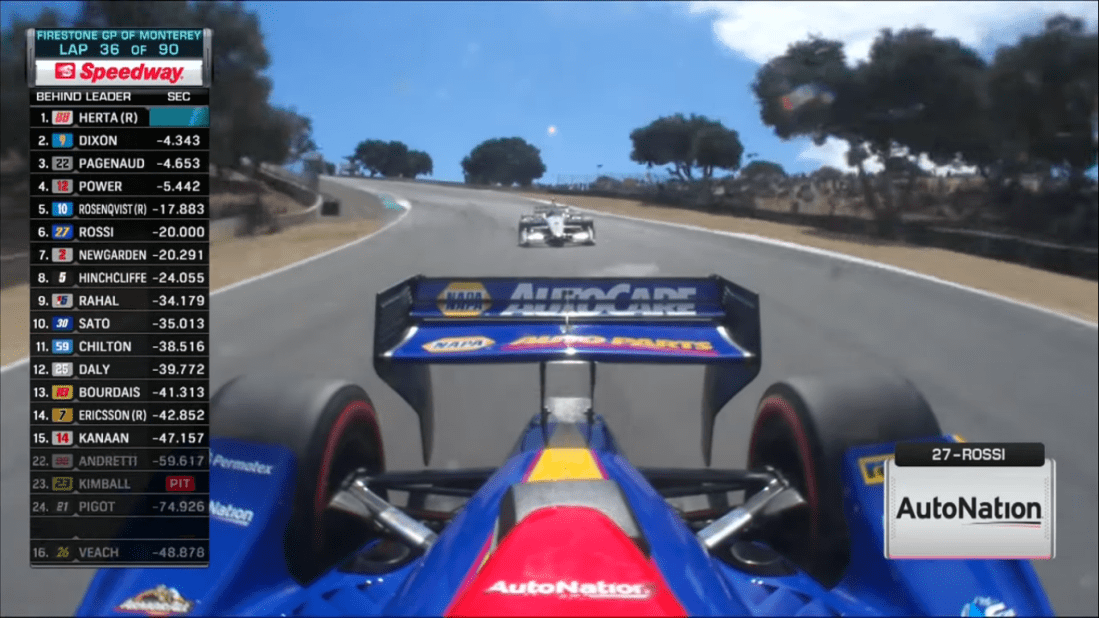
However, not all on-board camera angles are available to viewers watching at home. Fans at home only see between ten and twelve camera angles where third parties are sponsoring them, meaning that we sometimes do not get the best view of incidents if the main camera operators have not picked an incident up.
The visor cam really shows the thrill of the ride – particularly on the bumpy street tracks allowing us to see the speed of the cars as well as sensing the rough ride the drivers are going through. IndyCar often uploads these clips to their YouTube channel in addition to extensive race highlights, helping to cement their strong online presence.
NBC has heavily promoted races on other parts of its network, which benefited the 500 significantly. Us Brits may not enjoy the heavy amount of promotion of other NBC televised events during races but it does NBC’s commitment to increasing IndyCar’s viewership.
Little improvement for Sky compared to BT in UK
Closer to home, it is disappointing that Sky have been unable to build a larger viewership of the sport than it generally had during its BT days.
The racing product has been excellent, with absorbing, incident packed, overtaking laden races. There have been seven different winners and nine other drivers finishing in the podium positions – including drivers classified as low as 22nd in the championship. The racing itself is certainly not the reason for the lack of viewers.
Sky is in a strong position with an already present audience of committed motorsport fans regularly watching its coverage of Formula 1. So why the lack of interest in IndyCar?
Of course, IndyCar is not as ‘prestigious’ as Formula 1, therefore it seems reasonable to assume it will never reach the same figures as F1. However, there is familiarity for British audiences – drivers such as Sato, Max Chilton, Marcus Ericsson, and Alexander Rossi are names familiar to the committed F1 petrol head.
Oval racing is also not familiar to many of us in the UK and often dismissed (the Rockingham circuit which hosted Champ Cars in the early 2000s recently closed down), however the ovals have seen some of the most thrilling races in IndyCar this year.
Commercial breaks are a problem for IndyCar and its international audience. Unlike British motorsport coverage, American networks take advertising breaks during races. Whilst Sky do not cut to adverts during the US breaks it does mean that commentary falls silent in the gaps as Diffey and co. understandably do not continue commentating during the US breaks.
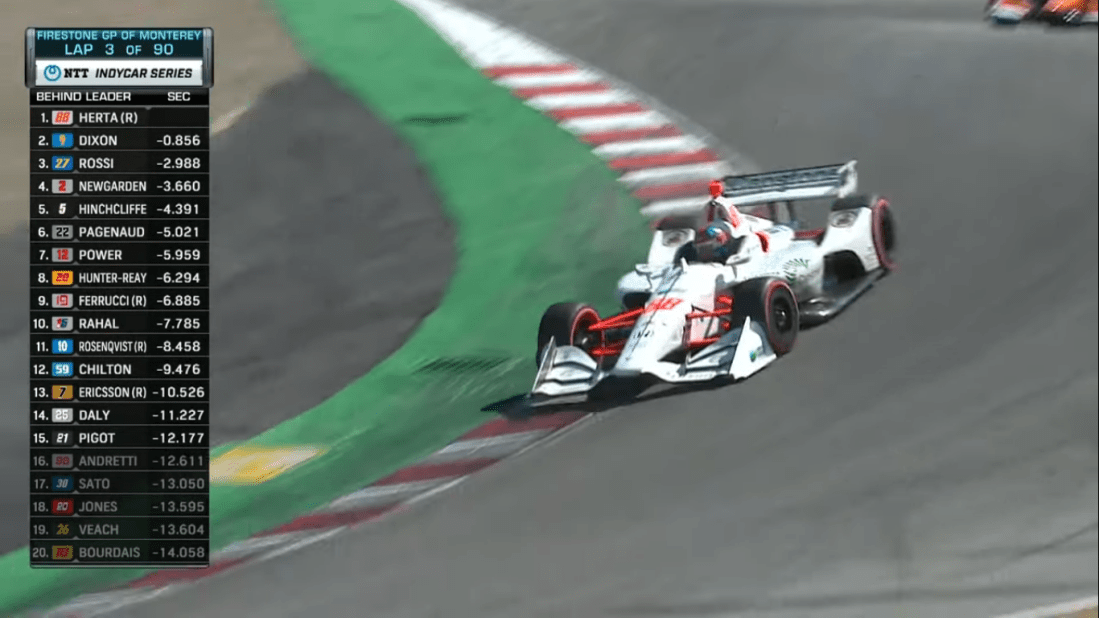
The on-screen graphics also disappear during US ad-breaks for UK viewers, which may confuse new viewers who are trying to follow the on-track action. Whilst NBC try to confine advertising to safety car (or ‘caution’) periods this is not always possible. It is also not thrilling for viewers to watch cars following the pace car with no commentary.
Promotion lacking outside of Indianapolis 500
During the Indianapolis 500, Tom Gaymor and Alex Brundle commentated during US advertising breaks leading to some continuity for UK viewers. It would be great for Sky to provide this at more races like BT did. As an unashamed fan of Alex Jacques, it would be great to see him call some Indy races, however this is probably impossible and merely a wish of mine!
The Indianapolis 500 understandably garnered Sky’s largest IndyCar audience of the season, with frequent mentions to the 500 from David Croft and Simon Lazenby during their Monaco Grand Prix coverage. Whilst the race was bound to gain a larger than usual audience due to its place as the top event of the season, there is a chance this promotion of the race could have directed more viewers its way.
Unfortunately, Sky did not repeat the promotion during other F1 weekends which coincided with IndyCar races, with little mention of IndyCar elsewhere during Sky’s F1 coverage. Four drivers were in contention for IndyCar’s crown as the championship entered its season finale, yet Sky did not reference this during their Singapore Grand Prix coverage.
Many races take place at reasonable times for UK viewers to watch however some of the night races take place in the early hours for British viewers. Sky could replay some of the races at more reasonable time slots during the week, as BT Sport did on occasion. Whilst this may not draw huge audiences, it would still allow a dedicated IndyCar following to build.
The IndyCar Series has fantastic racing and NBC is providing an excellent product for UK viewers to watch (even with presenters of motorsport in full suits!). However, Sky needs to push advertising of the series more.
Sky could do this through cross promotion, which seems to have worked well for NBC to build its own domestic audience as well as perhaps adding in some of their own personnel to make the broadcasts a more seamless experience for the UK viewer.
There is no doubt that the potential is there for the series to become far more popular in the UK than it is at present.
Have you been watching IndyCar this year? What have you enjoyed or not enjoyed? Do you think Sky could increase viewership through involving their own personnel or simply more advertising? Have your say in the comments below.
Fancy contributing to Motorsport Broadcasting? Head over here for further details…
Contribute to the running costs of Motorsport Broadcasting by donating via PayPal
 Motorsport Broadcasting