UK F1 TV viewing figures drop significantly with switch to Channel 4

The change of free-to-air broadcasting rights from the BBC to Channel 4 have had a detrimental effect on Formula 1’s television viewing figures in the United Kingdom, overnight viewing figures suggest. Audiences have shown signs of increasing though as we head into the Summer break.

> Channel 4’s audience down 1.5 million compared with BBC in first half of 2015
> Sky slides to record low for second year running
> Demographic analysis shows younger audience has held up strongly

As always, it should be noted up front what this site uses to compare the viewing figures with past data. All the numbers in this article are ‘overnight’ viewing figures supplied by Overnights.tv, which brings together the live viewing figure with recordings made before 02:00 the following morning, typically this is called Live + VOSDAL (viewing on same day as live).

For Sky Sports, the three-and-a-half-hour broadcast slot is used, for example, from 12:00 to 15:30. Currently, this encompasses ‘Pit Lane Live’ and ‘Race’ programmes. The three-and-a-half-hour slot has been used consistently for comparisons since Sky started broadcasting Formula 1 in 2012. This ensures that the number reported can be used to analyse cross-year data accurately. It also broadly uses the same slot length as the BBC and ITV have used in the past. There are exceptions: if a race overruns, the three-and-a-half-hour slot is extended, as necessary.

The data for Sky’s Formula 1 coverage includes Sky Sports 1 where applicable, ensuring that a complete picture is reported. In this piece, I will not break down the Sky figure into Sky Sports F1 and Sky Sports 1, simply because the number of races that were simulcast on Sky Sports 1 in the first half of 2015 compared with the first half of 2016 is largely unchanged.

Over on Channel 4, their full programme slots have been used, irrespective of length. This provides a fair comparison with the BBC data. However, caution should be exercised: Channel 4’s programmes contain advertising, the BBC’s did not which inevitably puts the commercial broadcaster at a disadvantage. But, this piece will analyse the data further, looking at how much impact that element has had on numbers.

Lastly, this piece only looks at the viewing figures for the first half of each individual season, given that this is a half way review. So for 2016, the period from the Australian Grand Prix to the Hungarian Grand Prix is in scope.

The 2016 story
Starting with Sky’s Formula 1 programming. Their show, from 12:00 to 15:30 or equivalent, averaged 617k, their lowest mid-season number in the five years that they have been covering Formula 1. As mentioned, the viewing figures include any simulcasting on Sky Sports 1. For the first half of 2015, the average was 657k, which at the time was a record low in itself. So, year-on-year, average audiences for Sky have dropped 6 percent. Compared with 2012, which was the high point at 772k, average audiences have dropped 20 percent.

The peak audience metric for Sky though has increased by 0.9 percent, from 980k in 2015 to 989k in 2016. I appreciate those two numbers are within the margin for error (in terms of my own calculations), but the average programme audience decreasing, yet the peak audience holding up would imply that Sky’s pre and post-race programming has dropped disproportionately to the race itself. Year-on-year, three races have seen their average audience increase: Canada (up 15.8 percent as a result of no live free-to-air coverage), Austria (up 15.1 percent) and Britain (up 13.9 percent). In Sky’s defence, the substantial drops occurred in the early phase of the season. Australia (down 30.4 percent) and China (down 26.4 percent) are two examples of this.

If Sky were hoping to capitalise on the BBC’s exit by hooking ex-BBC F1 viewers onto their product then unfortunately for Sky, that has not happened so far. The way the championship battle shaped up in the early races hurt both them and Channel 4. Only recently have both broadcasters started to improve their audiences. Had Lewis Hamilton’s championship defence not got off to a poor start (relatively speaking) then the first quarter of 2016 may well have performed better for Sky.

Normally at this stage in the article I would analyse the free-to-air broadcaster and look at year-on-year trends. This year, the situation is different. Channel 4 have taken over from the BBC. Channel 4 reaches less viewers than BBC One, so of course Formula 1’s viewing figures have dropped. To some degree, it is comparing apples and oranges, but this site aims to report Formula 1 viewing figures accurately and to do that, the comparison needs to be made. The key is, how much have audiences declined. The answer? At the half way stage of 2016, Formula 1’s terrestrial television viewing figures have dropped 40 percent.

On race day, Channel 4’s programming has averaged 2.01 million viewers, down 1.5 million on the 3.51 million viewers for the same period last year on the BBC.  In my opinion, seeing a 1.5 million drop year-on-year is on the more extreme side of what I expected. Channel 4’s viewing figures are around half a million lower than I anticipated. Unsurprisingly, every race has dropped year-on-year, from the very extreme of Canada (down 71.9 percent due to no live free-to-air presence) to Britain (down 26.7 percent).

The peak audiences that Channel 4 have recorded do not clock up much better, with an ‘average peak’ audience of 2.78 million, down 36.4 percent or 1.59 million on the ‘average peak’ audience of 4.37 million that the BBC hit in the first half of 2015. The commercial impact does hit the average audience metric slightly, but not big enough that it would wildly affect the overall year-on-year trend. Looking at the breakdown across the season, viewing figures have improved in recent races, hitting a peak audience of three million viewers for both Britain and Hungary.

The demographic gap
Channel 4 aims the content that it produces at a younger audience. That is the DNA of the corporation, hence channels such as E4. Whilst the overall audience drop is disappointing, this is largely concentrated amongst the older viewers, who simply have not transitioned across from the BBC. The younger audience has dropped, but at a far less rate than older viewers. Whilst the overall drop is major, there is a headline within the headline, and the numbers are not all bad news.

Speaking exclusively to this site, Channel 4’s Head of F1 Stephen Lyle is keen to emphasise this: “Viewing to both live races and highlights on Channel 4 has been strong with our live race coverage regularly making Channel 4 the most watched terrestrial channel over the time slot with the largest share of young viewers, which is important to the legacy of the sport.”

It should be noted that this piece does not include on demand viewing, such as Sky Go or All 4. With Sky Go slowly on the rise along with Now TV, this may account for the drop in Sky’s Formula 1 television viewing figures. However, All 4’s Formula 1 programming is unlikely to receive as many requests as BBC’s programming did on iPlayer, due to the respective size of both platforms. So, it is swings and roundabouts really.

Elsewhere, BBC 5 Live’s Formula 1 coverage is not included. The radio station benefited from Formula 1’s switch to Sky in 2012, so they may have benefited again as a result of the move from BBC to Channel 4. The methodology for measuring radio listening figures is different to television viewing figures, so numbers are difficult to compare. However, in the latest RAJAR figures released for Q2 in 2016, 5 Live was up year-on-year whilst 5 Live Sports Extra was down.

Combined audience and final thoughts
The combined television average audience in the UK at the half way stage of 2016 is 2.63 million, a decrease of 36.8 percent on 2015’s average audience of 4.16 million. Currently, it stands as the lowest number on record, dating back to 2006. I expect the second half of the season to do better than the first; the last race which rated lower than 2.63 million was Canada. In fact, both Canada and China drag the average audience down.

In a perfect world, the numbers would be higher. Audiences are slightly lower than what I expected on Channel 4. Can that be reversed? Absolutely. If the championship race goes down to the wire, there is no reason why audiences cannot increase. Channel 4 and Sky have been unlucky this season. The on-track battle between Mercedes and Ferrari which I thought and hoped would occur simply has not materialised. You can only talk about what you see on-track, and the Mercedes duel for the third season running, irrespective of channel, pay walls or anything else, is not the most appealing to the casual viewer even if there is British interest.

We saw at the back of last season that Hamilton wrapping the championship up early will not be good for viewing figures. Seeing as Hamilton vs Sebastian Vettel has, for the moment, turned to star-dust, we look towards Max Verstappen. Verstappen vs Hamilton is something that has yet to happen but should happen on-track either in the latter half of this season or next. That battle should spice up interest up front and potentially bring new fans.

As of writing, I have received no comment from either the BBC or Sky, but if I do, I will amend this article.

Update on August 13th: The BBC have supplied this site with the following statistics. Over one million audio requests have been made for BBC’s Formula 1 coverage online, with their Formula 1 website receiving five million unique browser hits during its highest week. Furthermore, 1.37 million hits were received for their British Grand Prix live page, their largest number so far this season.

overnights.tv-bannersF1

Channel 4’s Formula 1 coverage gets off to a bright start

Earlier this year, I attended Channel 4’s pre-season media morning, where their team for the 2016 Formula One season was announced. There were promising sound bites on the day, but how much of it has come to reality? And is this the “dream team” that Channel 4’s Chief Creative Officer Jay Hunt suggested it would be?

On-air team, led by Jones, excels
The biggest question mark heading into the season was Steve Jones, who is Channel 4’s new Formula 1 presenter. An unknown in presenting live sport prior to this year, Jones has grown in stature race-by-race. I’m enjoying his presenting style, with the energy and warmth that comes with it.

It is clear that Jones is not attempting to be like Suzi Perry or Jake Humphrey before him. Jones is being himself. As a viewer, I appreciate that, it comes across as natural which helps the broadcast immensely. Half way through the season, Jones gets a thumbs up from me. If you’re not keen on Jones, the good news is that David Coulthard leads some of the discussion segments, meaning that there is no dominant figure leading the agenda.

The decision by Whisper Films to have “rotating pundits” is paying off thus far. Mark Webber, Alain Prost, Susie Wolff and Eddie Jordan have been used sporadically throughout Channel 4’s live races meaning that opinions are not repeated by the same faces, nor is the team bloated on-screen. Channel 4 struck gold in Spain, as Prost give his opinion on the Mercedes collision between Lewis Hamilton and Nico Rosberg whilst reminiscing about his own experiences with McLaren.

The chemistry is clear to see: Coulthard and Webber work extremely well together as do Wolff and Jordan when paired together on-screen. A natural team results in a successful team. We should applaud Whisper Films for putting together the team that they have, others before them have either tried and failed, or chose not to bother approaching the likes of Prost, Webber and Karun Chandhok.

Channel 4’s line-up contains a former World Champion (Prost), a former team boss (Jordan), two former Red Bull drivers, one of which challenged for the title (Webber and Coulthard) amongst others. It is the perfect recipe, bringing together a diverse group of people from a variety of backgrounds within motor sport.

The missing link before the start of 2016 was the role of “technical expert”, which disappointed readers including myself. Chandhok was hired to take up the role of pit lane reporter alongside Lee McKenzie. Nevertheless, Chandhok’s wealth of knowledge both past and present, amongst his paddock connections means that we are not missing as much information as I anticipated we would. Chandhok is a fantastic asset for Channel 4, and I’m glad that he is on board for their coverage. With McKenzie away for Wimbledon and the Olympics, it has been good to hear Holly Samos again, Samos used to be a member of BBC’s radio team until her departure at the end of 2010.

Overall, I do think Channel 4’s team is stronger than Sky Sports. Yes, Sky have the likes of Anthony Davidson, Martin Brundle and Ted Kravitz, but I feel that Channel 4 have given a wider range of opinions so far instead of the same two or three voices.

Reinventing the wheel
Sometimes, the little tweaks beyond the naked eye go a long way. Whilst Channel 4 have not ripped apart the BBC’s previous format, they have made some subtle, positive changes to their coverage.

Graphically, Channel 4’s output is top-notch. Modern, forward thinking is the term that I would use. Their Formula 1 branding, which was designed by Mammoth Graphics, feel like something I expect to see in 2016 as opposed to a relic from the past. If you compare the typical constructor and grid graphics of years gone by with Channel 4’s current graphics set, you will notice a stark difference: Channel 4’s graphics feel ‘simplistic’, yet attention to detail has been paid.

Added to this is the integration of social media in the graphics. As I mentioned in my review of their Australian Grand Prix coverage back in March, I love the fact that #C4F1 is integrated in the graphics package alongside relevant tweets, Instagram posts or Facebook statuses. The package has clearly been designed with social media elements in mind (hence ‘forward thinking’). In my opinion, the social media layer does not detract from the programme, but instead adds an additional level that previously was not there.

One introduction in Channel 4’s British Grand Prix coverage was the return of the three-person commentary team. Led as usual Ben Edwards, in the box alongside him was both Coulthard and Webber. This is not new: ITV briefly had a three-person commentary team in 2005 with Jenson Button in the box when Honda were banned, whilst the BBC have had three-person teams in both the mid-1990s and as recently as this season on BBC Radio 5 Live.

But for Formula 1 television coverage in the UK, it is a different step. Again ‘hearing different voices’ is good. Hearing Webber in the commentary box was great as he was able to give his first hand opinion on events having raced some of the drivers that were racing on track. In my opinion, it gives Channel 4 a further advantage over Sky Sports F1. The commentary line-up of Edwards and Coulthard was already good, but Webber raises the bar further. I am hopeful we see this set-up again in the latter half of 2016, three-person commentary teams do work if each person is given adequate input.

Whisper Films have excelled in the editing department with some fantastic VTs, notably Murray Walker’s interviews with Jenson Button and Freddie Hunt so far this season. This should not be a surprise considering most of the Whisper team used to work on BBC’s Formula 1 programme, but nevertheless it is good to see that the quality of the VT editing and shooting has remained high.

Room for improvement in some areas
As always with both Channel 4 and Sky, there is some room for improvement, in both cases only some of these are within the production teams control. The main improvement for me is on the cross-promotion front. Besides a pre-season programme special with Guy Martin, the cross-promotion has been lacklustre. There has been a Sunday Brunch special, but aside from that there has not been crossover with Channel 4’s biggest brands such as Gogglebox or Come Dine with Me.

The Sunday Brunch special was not promoted until the last-minute, and I feel it was a lost opportunity not broadcasting the magazine show live from Silverstone. I suspect the lack of crossover is simply down to the filming schedule: it should be remembered that Channel 4’s team was put together incredibly quickly just six to eight weeks before the 2016 season began, meaning there was little time to organise and produce cross over specials. I think these will probably come for 2017 if there is appetite for it.

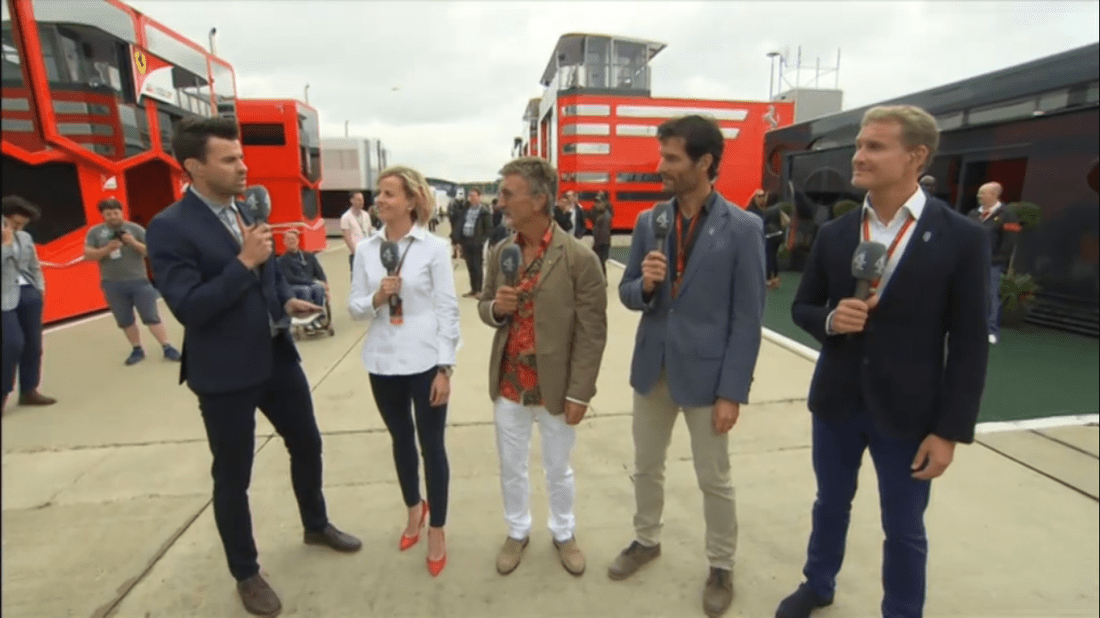
Channel 4's British Grand Prix team in the paddock: Steve Jones, Susie Wolff, Eddie Jordan, Mark Webber and David Coulthard (L to R).
Channel 4’s British Grand Prix team in the paddock: Steve Jones, Susie Wolff, Eddie Jordan, Mark Webber and David Coulthard (L to R).

Out of the personnel announced before the start of 2016, three faces have yet to appear during Channel 4’s main coverage: Nicolas Hamilton, Bruno Senna and Alessandro Zanardi. I imagine Hamilton and Zanardi will appear in Paralympics related features in September, I would be surprised if either are on-screen after that. As for Senna, I thought we would have seen him on-screen now, so his absence is surprising. No on-air references have been made to Senna appearing, my gut instinct is that we will see him in Mexico given that Mexico takes place two weeks before the Brazilian Grand Prix.

As Channel 4’s live programming has developed it has become clear, unintentionally or not, that their Saturday build-up shows are geared towards the dedicated viewer whereas the Sunday show is geared towards hooking more casual viewers up. This was evident in their British Grand Prix build-up where a significant portion of Sunday’s pre show centred around Lewis Hamilton. It did feel slightly overload towards him, as what could have been one interview segment was split into several segments interspersed through the build-up. As a one-off, this was okay but just something to note going forward. There have been a few celebrity segments, but these have been used to lead into a commercial break as opposed to a central feature.

The commercial television aspect of Channel 4 meant that their post-race coverage has suffered. But, if you look back over time, both BBC and Sky struggled at first to perfect their post-race element so this is something Channel 4 will only improve on in the live programming as time progresses. The lack of an extended post-race programme in the shape of a forum style show is disappointing, but I don’t feel like it is being missed, either. The social media boom may mean that fans use Facebook and Twitter more for post-race analysis as opposed to sticking around for the television post show. Viewing figures would probably not justify staying live on Channel 4 until 16:00 or 16:15 regularly. I think Channel 4 should do what the BBC did in their early post-2012 days and upload a 20 to 30-minute online forum / wrap up show online, similar to NBC’s Paddock Pass show.

Elsewhere, All 4 is a gripe where slow uploads are concerned after each race but I appreciate that this is something that is out of the control of the F1 production team. Overall, Channel 4 gets a deserved thumbs up. In my opinion, their coverage has been better than what I expected. Their strong start makes it all the more disappointing that, as it stands, we will only have Channel 4’s live coverage for the next two and a half seasons.

Davidson and Brundle highlight strengths and weaknesses in Sky’s Formula 1 team

The 2016 Formula One season is Sky Sports F1’s fifth year on the air. The channel, launched in 2012, features the likes of Martin Brundle, David Croft, Ted Kravitz and Anthony Davidson at the head of its line-up. Along the way, there have been relatively few changes and additions: the only major story was in early 2013 when Georgie Thompson left her presenting duties for pastures new.

Sky fill in the hole left by Davidson and Brundle
The Canadian and European rounds of the 2016 season signalled, temporarily at least, a changing of the guard for Sky. Both Davidson and Brundle were absent due to their 24 Hours of Le Mans commitments, whilst Brundle also had a medical procedure following the Monaco Grand Prix. It was the first time Brundle had not commentated on a Grand Prix since 2008, on that occasion Damon Hill deputised for him in the commentary box for ITV.

The absence of Davidson and Brundle resulted in a significantly weaker line-up for Sky. Simon Lazenby and Rachel Brookes headed up the various presenting duties, with David Croft in the commentary box. Paul di Resta substituted for Brundle as co-commentator and lead analyst, with Johnny Herbert, Damon Hill and Ted Kravitz on-board as usual.

More interestingly, we got to see what Sky Sports F1 would look like without Martin Brundle. A great team is one that still looks and feels the part, even when one of its main casting members have disappeared. Unfortunately for Sky, you had the impression that without Brundle, the team looked distinctively “second class”, as if it was a two tiered system previously, whereby the likes of Herbert and Hill were one or two levels below Brundle. And the same applies for a Sky without Davidson.

The commentary duo of Croft and di Resta was not that bad. But, it wasn’t great either. Di Resta in isolation was good filling in for Brundle, but he is not someone I would want to listen to on a regular basis. That is not a criticism of him, instead it is a reflection of how much we have come to appreciate Brundle’s commentary over the years. Furthermore, Brundle’s absence meant that most discussion segments contained Lazenby, Herbert and Hill. The problem here is a trio that is growing increasingly stale as time progresses.

Poll – Who do you think is Sky Sports F1’s biggest asset?

Back in 2012, I said that Herbert was a fantastic addition to Sky’s team. The problem is Herbert has since turned into a shadow of his former self on-screen. There are more comedic segments or bizarre opinions as opposed to actual analysis from him – stating on multiple occasions that Lewis Hamilton’s head is not “in the game” or that Fernando Alonso should retire. Both of these appear like attempts to generate headlines for Sky as opposed to a genuine thought. Opinions like these have started to, as of late, leak towards other members of Sky’s team, with Kravitz and Croft talking about Mercedes “conspiracies”. If that direction is coming from the production team, then it needs to be reined in, in my opinion.

Elsewhere, Davidson has been brilliant analysing the events so far this season, irrespective of the role he is placed in. The events of Spain and Austria placed greater emphasis on Davidson’s analysis, which was fantastic to listen to as he dissected the collisions between Lewis Hamilton and Nico Rosberg. Sky Sports F1’s coverage without Brundle and Davidson would be a significantly weaker television programme, and the programming that Sky produced in Canada and Baku only serves to demonstrate that point (the highlight of their Canada coverage came thanks to a seagull, which to be fair to Sky did go viral).

Should Sky head towards a “rotating team”?
A twenty-one race season is a major undertaking for everyone within Formula 1: teams, drivers, media, mechanics, you name it. From a fan perspective, seeing the same faces on-screen fronting each of the 21 races means that the opinions you get are repetitive. That is not Sky’s fault, in fact they’re probably happy that there are more races in 2016, as it means that they will reach more viewers. But, at the same time, have Sky failed to adapt to the changing dynamic?

When you look at the proposed 2017 calendar of 18 races, maybe not. Sky air every session live, as they themselves are keen to emphasise. With that, there should also be an emphasis on exploring, experiment, trying something different and changing personnel. Fresh faces are needed, in the same way that Channel 4 have brought in voices that the UK audience had previously never heard as pundits, such as Karun Chandhok and Alain Prost. Both men were not ‘obvious’ choices for Channel 4, but have been well received.

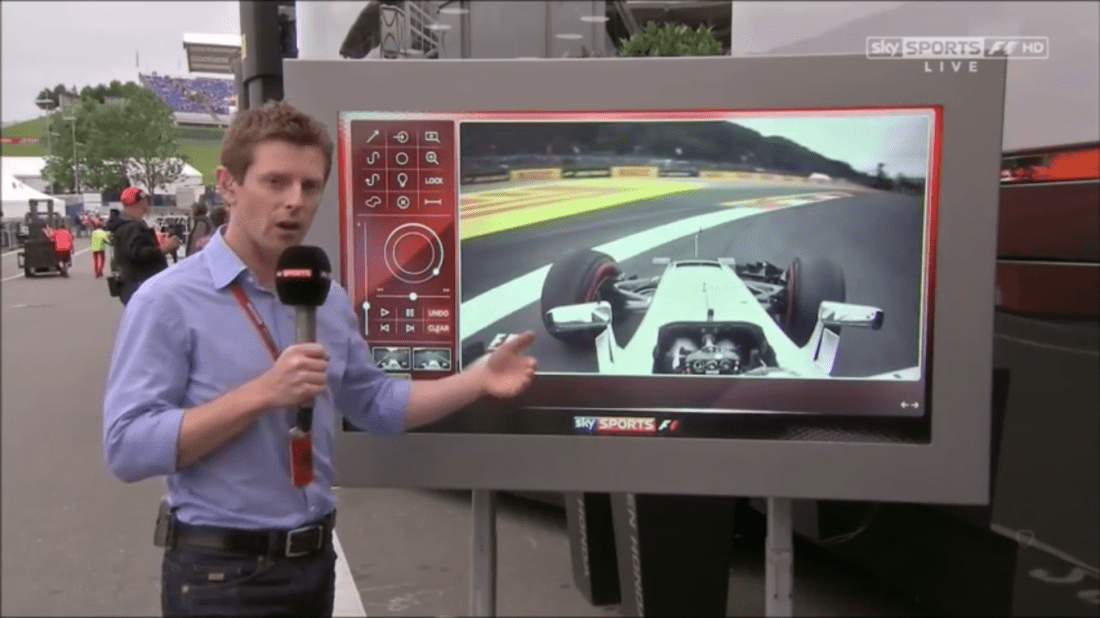
Anthony Davidson in mid-flow during Sky Sports F1's coverage of the 2016 Austrian Grand Prix, dissecting the crash between Lewis Hamilton and Nico Rosberg.
Anthony Davidson in mid-flow during Sky Sports F1’s coverage of the 2016 Austrian Grand Prix, dissecting the crash between Lewis Hamilton and Nico Rosberg.

Sky should be looking at a similar strategy going forward if the long-term intention is for the F1 calendar to remain around twenty races. Marc Priestley has joined their team which is all well and good, but why are they using him in an off-air capacity during race weekends and not a regular on-air capacity? I’m hopeful the changes Channel 4 have made compared to the BBC will mean that Sky will try to push the boundaries where their own team is concerned. However, I’m not sure how likely a “rotating team” is for Sky though, a wider variety of faces during the season team means a bigger pay bill overall…

The F1 channel feels the effect of Sky’s “efficiency savings”
When the Formula 1 channel started in 2012, there were a lot of positive vibes about what could be done to make the channel look and feel like an ‘F1 channel’. 2012 was a learning year, but it was 2013 and early 2014 when the schedule started to mould into one with classic races, F1 Legends, journalist specials, studio editions of The F1 Show. On top of this, Sky produced special material: ‘Senna Week’ remains the best ever week for the channel from a content perspective.

The hope was that Sky Sports would continue to improve and refine the output. But, focus turned elsewhere. With big money being splashed on Premier League rights, efficiency savings had to be made across the board. So far in 2016, Sky Sports have not produced one documentary about Formula 1. Not one has made the air (yet). The classic races that are airing are not new, and are simply now being repeated on a loop as and when each evening. The last new episode of F1 Legends (or Architects of F1) to make the air was November 2015. No new episodes of Tales from the Vault have been produced. The F1 Show in its 2015 form was essentially axed in favour of the weekly, recorded F1 Report shows. The F1 Report tends to be good but the quality of the guests varies massively with a shoe string budget.

Sky have aired several features this season that could have also been edited into stand-alone documentaries. The channel produced two short films focussing on the Spanish and Monaco rounds of the 1996 Formula One season, the latter in particular was excellent in my opinion as a variety of characters were interviewed. But, the problem was that both features were too short at less than 5 minutes in length when both could easily have been thirty minute documentaries to flesh out the two stories, adding to the content on the channel. Sky are not maximising what they have in the F1 channel, in my view.

So, as a consumer, let me ask the question. Why should I (or you) pay the same amount of cash that you do to Sky if the content being produced at the end of the production line has been reduced? Because that is what has happened. It is clear to me that the Sky Sports F1 channel currently exists as a contractual obligation, and nothing more. Sky (and BT Sport) are spending a ridiculous amount of money on rights acquisition, meaning that they have less money to produce supplementary material.

How will Sky’s attitude towards this change as we head towards 2019, I don’t know.

Looking ahead to 2016

The first three quarters of 2015 saw a lot of ‘mini stories’, from Formula One Management overhauling their online output to the inaugural Formula E season coming to a successful conclusion. But the events of the last two weeks have set the scene for what looks set to be a busy start to 2016.

A lot is going to unfold over the course of the next three months concerning Channel 4’s Formula 1 coverage. In no particular order, Channel 4’s…

– line-up
– production
– scheduling (and pick process with Sky Sports)

Each one of those bullet points sets off a new story. Does Channel 4’s line-up have any new faces? Is Channel 4’s scheduling different to that we have seen on the BBC in the past four years since 2012? How will their production fare, will Channel 4 be on location for every race? There are endless number of questions that we do not know the answer to at this stage. The countdown is on until the Australian Grand Prix.

Aside from Channel 4, there will be inevitably be other broadcasting stories in the Formula 1 landscape. With the BBC now back to their pre-2009 coverage level, attention turns to Sky Sports F1’s coverage as Sky enter year five. Over on the social media side, surely 2016 is the year we see Formula One Management launch an official presence on Facebook. “A day late and a dollar short” is the phrase, but FOM cannot afford to be a dollar short with this one.

Elsewhere, there will be the usual articles covering BT Sport’s MotoGP coverage and ITV’s Formula E programming. MotoGP was fantastic this season, and I hope that 2016 is just as good on BT Sport. Formula E looks set to get a boost from season three onwards with Jaguar joining the fray, although the alarmingly low UK viewing figures as of late should be a cause for concern. As for Formula 1, I’m hopeful that the talking in 2016 happens on the track rather than off it as was the case in 2015.

The rise and fall of BBC F1

The BBC’s return to Formula 1 has been a rollercoaster ride that began almost eight years ago. Here, The F1 Broadcasting Blog tracks the past eight years, in which the team went to a high never seen before in this country, to a low just four years later…

March 20th, 2008 – It was announced that Formula 1 would be return to BBC television, starting with the 2009 season. It was a five year rights agreement, set to continue through to the end of 2013. Roger Mosey, then Head of BBC Sport, said: “…we’re absolutely delighted F1 will be back on the BBC this time next year.”

November 24th, 2008 – Rider and Blundell out, Humphrey, Jordan and Coulthard in. The BBC were keen to bring fresh faces to their coverage, and they made their intentions clear towards the end of 2008. Alongside the trio at the head of BBC’s coverage, it was announced that Jonathan Legard would lead the commentary, replacing James Allen, with Martin Brundle joining from ITV. Meanwhile, behind the scenes in production, the BBC were already realising what a financial error this new Formula 1 deal was going to be. I quote Steve Rider’s book: “When [senior BBC producer] was told there would not be much change out of £8 or £9 million [in production costs] there was silence, then ‘Oh shit…’, and the line went dead.”

February 24th, 2009 – The BBC confirm their coverage plans for the 2009 season, including every practice session live and a one-hour interactive forum after each race, both behind the Red Button service.

March 4th, 2009 – Called “The World’s Greatest Car Chase”, the BBC unveiled their pre-season trailer, with that famous bass riff at the end…

March 26th and 27th, 2009 – Every session live, with one hour build-ups and a ton of reaction. Formula 1 had returned to the BBC, with Jenson Button winning in style. A peak audience of nearly seven million viewers watched across live and repeat.

July 25th, 2009 – Probably the first real low point of BBC’s Grand Prix coverage. Immediately following the crash of Felipe Massa during the Hungarian Grand Prix the team, notably Jordan, discussed Massa’s condition, with Jordan speculating about ‘rumours’ that he had heard minutes after the crash happened.

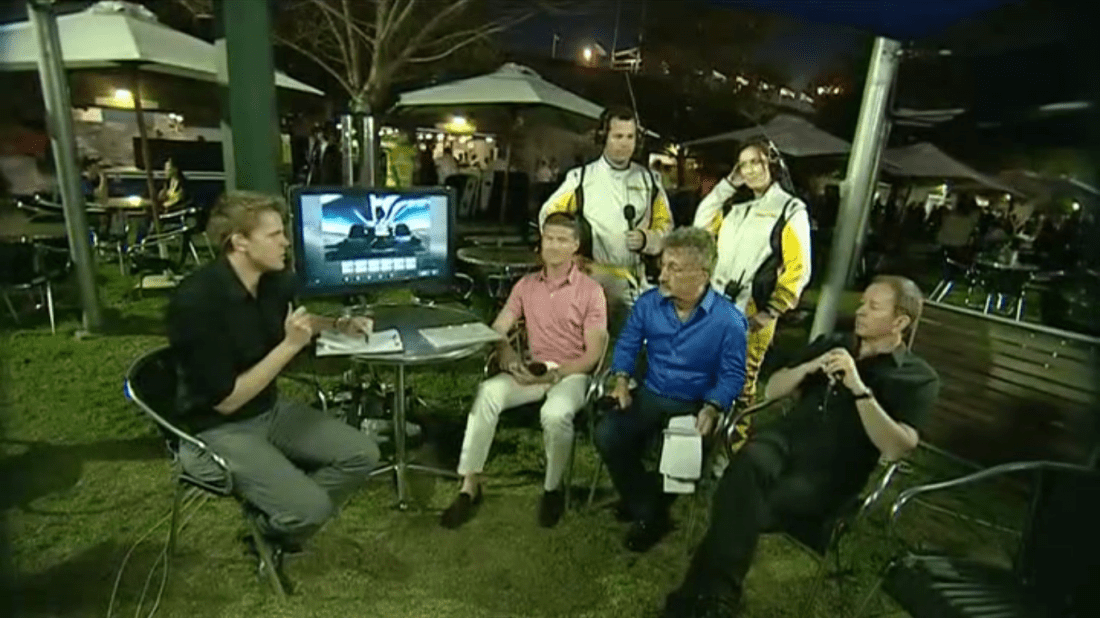
The first BBC F1 forum at the 2009 Australian Grand Prix. Jake Humphrey (l), Ted Kravitz and Lee McKenzie (top r), David Coulthard, Eddie Jordan and Martin Brundle (bottom r).

November 1st, 2009 – BBC’s first season came to a successful conclusion with the Abu Dhabi Grand Prix. From a personnel perspective, the team was well received, the exception being Legard, however the decision was made to retain him for the 2010 season.

July 11th, 2010 – The production team consolidated what they had in 2009 with more fantastic features airing during the 2010 season. Viewing figures increased, and notably the team stayed live on BBC One until 15:40 during the British Grand Prix. Over two million viewers stayed with them during the hour of post-race analysis on BBC One (excluding the forum that followed!), showing how much the audience liked and appreciated the BBC coverage. The trio of Humphrey, Coulthard and Jordan quickly built rapport with each other and it showed on air. It was clear that Formula 1 in the UK was heading into a golden age…

January 11th, 2011 – As good as BBC’s coverage was, it was clear that something was not quite right with the commentary team. The decision was made at the beginning of 2011 to remove Legard from the team, with Coulthard now co-commentating alongside Brundle. It was a marked departure from the usual set-up, with now two ex-racers commentating on the action.

June 12th, 2011 – “He’s gone wide, he’s gone wide! Button leads the Grand Prix!” Just two hours earlier, they were talking about ducks floating in the water. Of course, it could only be the Canadian Grand Prix, probably one of the best races I have watched. A peak audience of 8.5 million watched on the BBC, as the dramatic race tore up BBC’s primetime schedules. Their coverage was flying high. Sebastian Vettel may have been dominant, but viewing figures were still soaring. BBC’s F1 coverage was on top of the world. And then…

July 29th, 2011BBC and Sky awarded rights in new Formula 1 deal. The deal had been done. The costly error not to negotiate with Formula One Management three years earlier, plus the new licence fee settlement meant that half the races from 2012 would be aired exclusively live on pay television, an irreversible move. At the time, Barbara Slater, director of BBC Sport, said: “We are absolutely delighted that F1 will remain on the BBC. The sport has never been more popular with TV audiences at a 10-year high and the BBC has always stated its commitment to the big national sporting moments. With this new deal not only have we delivered significant savings but we have also ensured that through our live and extended highlights coverage all the action continues to be available to licence-fee payers.”

July 29th, 2011 – Martin Brundle on Twitter: “BBC/Sky/F1 2012+. Found out last night, no idea how it will work yet I’m out of contract, will calmly work through options Not impressed”

January 12th, 2012 – With Sky taking Brundle and Kravitz from BBC’s TV team, the BBC regrouped. Veteran motor sport voice Ben Edwards led the way alongside Coulthard in the commentary box, with former Jordan technical director Gary Anderson joining the team as analyst.

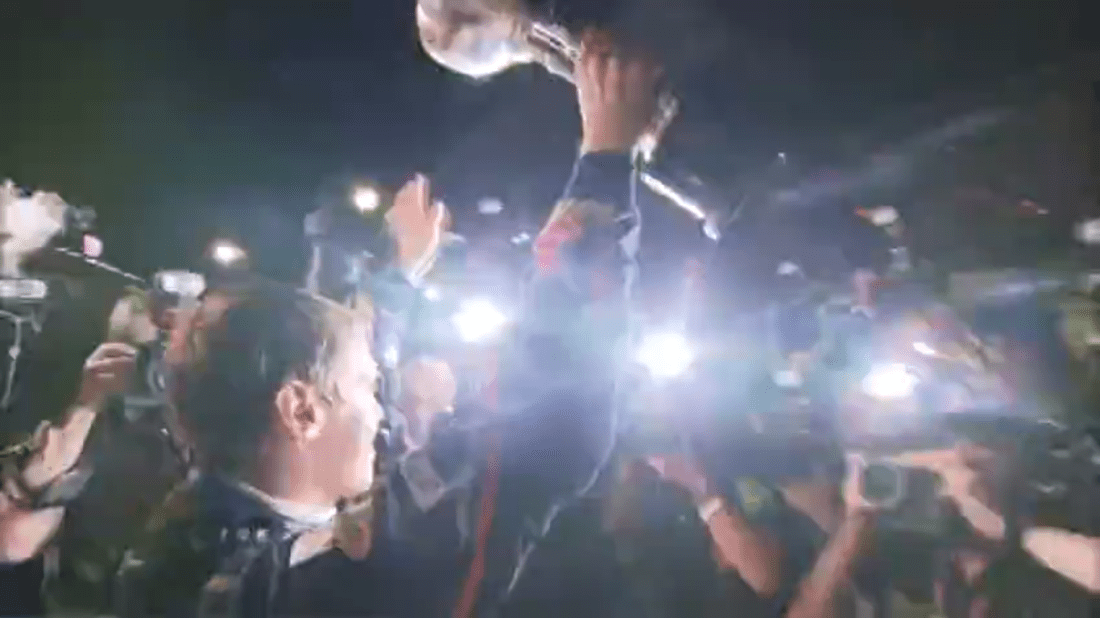
Moments to last a lifetime, beamed to millions of viewers. Sebastian Vettel's championship celebration, during the 2011 Japanese Grand Prix post-race forum show.
Moments to last a lifetime, beamed to millions of viewers. Sebastian Vettel’s championship celebration, during the 2011 Japanese Grand Prix post-race forum show.

March 17th and 18th, 2012 – A new era began. The 2012 Australian Grand Prix was broadcast exclusively live on Sky’s new Formula 1 channel to a peak audience of just over one million viewers. The BBC aired an extended highlights programme later that day in a two-hour timeslot. One aspect which frustrated fans to begin with was the lack of forum for non-highlight races. One of the best aspects of BBC’s programming had disappeared.

September 18th, 2012 – The highlights aspect was not for everyone. That included Jake Humphrey, who exited the BBC’s revised Formula 1 coverage after just one season, joining BT Sport’s Premier League team.

December 21st, 2012 – It was announced that Suzi Perry would become the new presenter of BBC’s Formula 1 coverage, following in the footsteps of Steve Rider, Jim Rosenthal and Humphrey. Perry said: “I am so excited to be joining the BBC. Working alongside such an eminent team and the F1 world is a huge honour and I can’t wait to get started.” The low-key addition of Tom Clarkson (a relative unknown) halfway through 2012 meant that arguably BBC’s team was stronger than ever before, despite not covering every race live.

Summer 2013 – I described the BBC team “as close to the perfect time as you would find” and that their programming is “still up there with the best.” Therefore, the very next point makes perfect sense.

January 13th, 2014 – Understanding your audience is important. In a move that baffles me to this day, the news was broken on this blog that Gary Anderson and the BBC had parted company. We found out later that, according to Anderson, the BBC thought viewers were not interested in technical analysis. Tom Clarkson filled Anderson’s role throughout 2014 and 2015. As good as Clarkson is, the move to reduce Anderson’s input was not well thought through and in the end resulted in something that no one benefited from. 72 percent of you believed that BBC’s Formula 1 coverage needs a technical expert.

November 23rd, 2014 – A peak audience of 6.5 million watched Hamilton win his second world title on BBC One. One year later…

October 25th, 2015 – A peak audience of 1.7 million watched Hamilton win his third world title exclusively live on Sky Sports F1, with an average of just over two million viewers watching on BBC One. 2015 was Formula 1’s lowest rated season in the UK since 2007, according to overnight viewing figures.

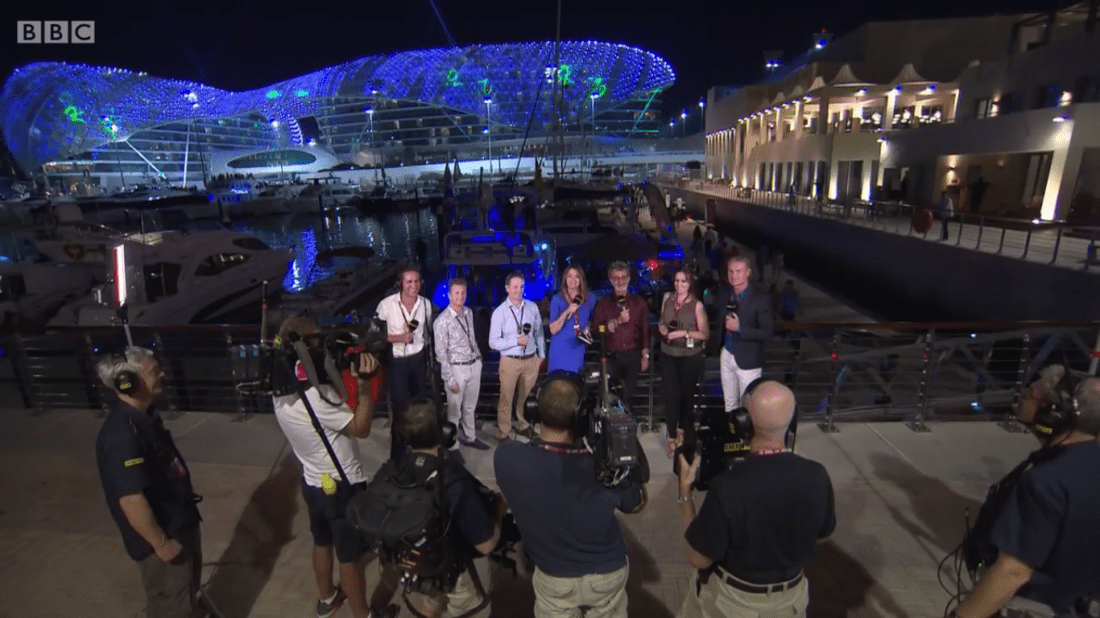
The BBC F1 team close their final ever F1 Forum at the 2015 Abu Dhabi Grand Prix.

November 18th, 2015 – Another licence fee settlement, another round of rumours. This time, the BBC were set to chop Formula 1 completely.

November 19th, 2015 – Multiple reports stated that the BBC went to Bernie Ecclestone in his Kensington office to renegotiate the financial side of their contract. It was reported that Ecclestone declined any offer the BBC made to him.

November 29th, 2015 – Unbeknown to the viewing public at the time, the Abu Dhabi Grand Prix aired for what would be the last live race under the current contract on the BBC.

December 17th, 2015 – Broadcast reported that ITV will broadcast Formula 1 from 2016.

December 21st, 2015 – A press release officially confirms BBC’s departure from Formula 1 after covering the sport for seven seasons.