
Since taking over Formula 1 at the start of 2017, Liberty Media have made gradual changes to the presentation of the sport on and off camera. Some of these changes have been noticeable, others have blended into the background.
Following the first three races of the year, I reviewed the main changes that Liberty Media made to the output, noting that whilst their new graphics were not as bad as feared, Formula One Management (FOM) still had some way to go to improve the graphics. It is worth another stock take, as there have been new developments since my April review worth factoring in.
F1 integrates the Halo
One of my main criticisms earlier in the season was that FOM had failed to integrate the Halo into its television package. Whilst I have become used to the cockpit protection system quicker than I expected, it has still rendered the main on-board camera worse than yesteryear.
Since the Azerbaijan Grand Prix, FOM have dressed up the main on-board camera with a virtual game-like heads up display. The display contains the same information as the previous speedometer graphic, but FOM have cleverly used the Halo to their advantage, displaying information moulded to the shape of the Halo.
Formula 1 is part of an ongoing trend in motor sport to attract the younger gaming fan, and this is one way they are trying to do it. Formula E started the trend with their own vision, whilst MotoGP has recently introduced a fresh take on a popular angle, although F1 currently uses it more frequently than their two-wheel counterparts.
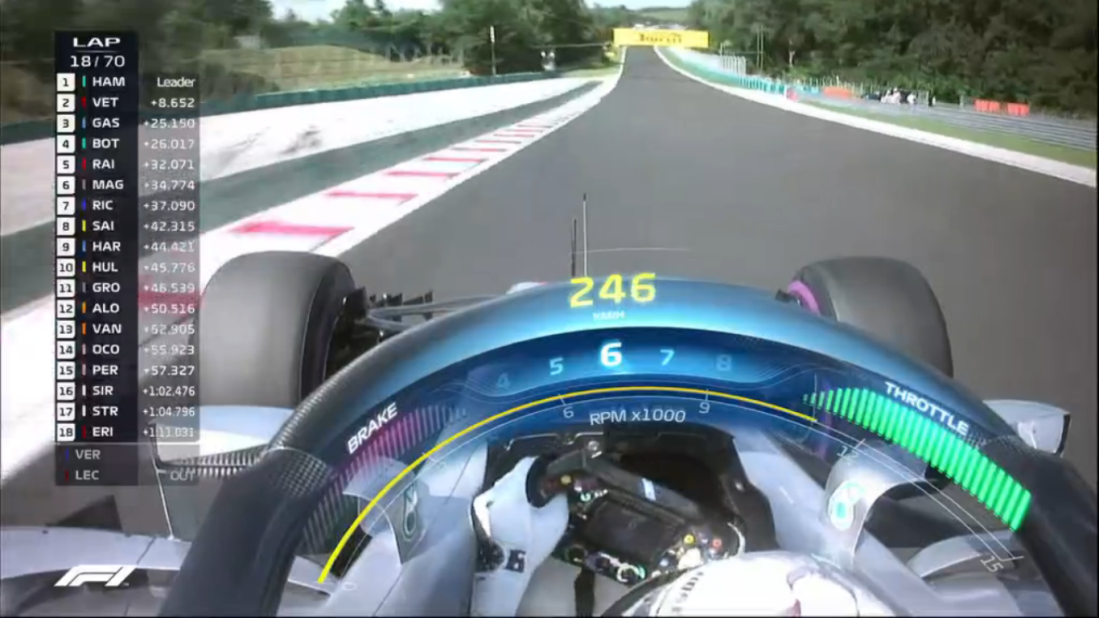
Depending on who you ask on social media, the display is either cool, or tacky. I can see why some might consider it messy, but again you must remember that Formula 1 is catering the virtual display towards a newer generation of fan. I like it, it is different, but for very good reason. There are a lot of things FOM can do moving forward to improve the display: what we are seeing now is only the bare bones of what is possible.
On the other end of the virtual spectrum has been another trend of what is known as ‘sponsor activation’, notably from Heineken and Amazon.
Heineken’s stars make an impact
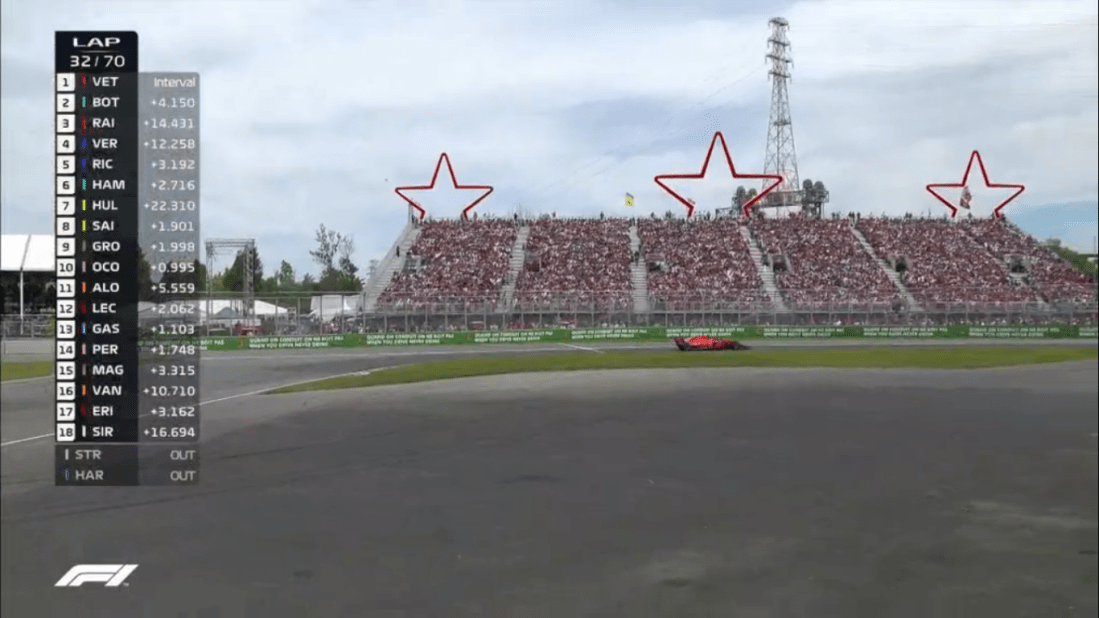
In my view, Heineken’s advertising activation is having an impact on Formula 1’s World Feed. Fans watching both the Canadian and Austrian rounds this year will have noticed Heineken’s ‘stars’ appearing across the World Feed at various vantage points.
I do not have a problem with Heineken activating their advertising efforts, but I do have a problem with the tackiness of the virtual stars. For a world-class sport, it looks and feels like an amateur hour effort. It detracts from the overall spectacle, and arguably is one of the worst examples of virtual advertising in Formula 1 to date.
As an experiment, I mocked up what the Heineken star would look like in MotoGP, were Heineken ever to turn their attention to MotoGP. The replies on Twitter from those involved in MotoGP speak for themselves.
The virtual track side graphics have not stopped with Heineken. During the British Grand Prix, Formula 1 overlaid their virtual logo track side with the word ‘Hammer Time’ following a pit stop from Lewis Hamilton. The virtual ‘messages’ to drivers continued in full force during the Hungarian Grand Prix, although the execution was better so not to detract from the on-track action.
A further negative trend comes in the form of five ‘beeps’ at the start of each race. The beeps have blighted not only the F1 broadcasts, but also Formula Two, GP3 and Porsche Supercup races. FOM are experimenting in this area, with some races featuring excruciatingly loud beeps, and others featuring no beeps at all (possibly because the sound of the cars masks the beeps).
When you add all of these up, and account for them as a collective, the overall direction of the Grand Prix suffers because of it. Imagine you are a director, who wants to pick the best angles and battles for the World Feed. However, as a director, I need to feature specific shots to get a specific trackside graphic into the frame, for example the Heineken star.
You can see how the two will not always match up, and could lead to FOM missing something critical (thankfully, yet to happen). “Put up or shut up” might be the only way forward to accepting virtual graphics and advertising activation, as both are likely to continue at a faster pace of knots in the future.
Whilst Formula 1’s direction may be compromised slightly by virtual advertising, one thing that has improved vastly compared with previous seasons are the camera angles FOM have used.
The return of Formula 1 to Paul Ricard saw a variety of camera angles which helped portray the speed of the cars, whilst FOM used drones to give a different perspective on the infield section during the Austrian Grand Prix. To FOM’s credit, they are experimenting with angles, seeing what works, and what does not.
Formula 1 expands new media footprint
Wherever you look on social media, Formula 1 is constantly expanding its footprint, with weekly additions.
With Tom Clarkson at the helm, the sport has moved into the podcast space. As host of Beyond the Grid, Clarkson has interviewed a range of stars, such as four-time champion Lewis Hamilton and current Sky Sports commentator Martin Brundle. If you have an hour of your spare time, or even on your train journey home, I encourage you to listen to these. The tone is different to the paddock interviews you hear during the weekend, giving you an insight into the people behind the helmets.
As anticipated pre-season, Formula 1’s live post-race show on Twitter has also got off the ground, with Will Buxton fronting it. I have not yet watched their output, simply because Sky Sports and Channel 4 gives me what I need post-race. After watching F1 for three or four hours, watching a further show on Twitter does not appeal to me. Controversial perhaps, but a live interactive show outside of race weekends to fully digest the weekend’s events might be better. Others who live elsewhere in the world without expansive post-race coverage might disagree.
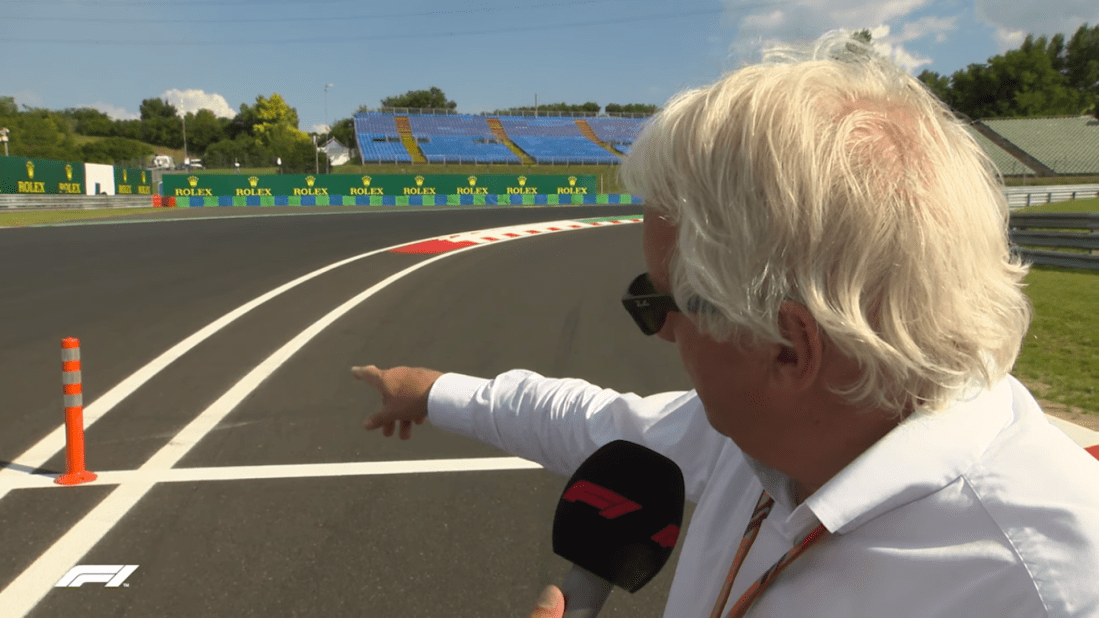
Formula 1 has used social media to their advantage this season to help explain stewarding decisions. Some fans thought that Lewis Hamilton should have been penalised harsher than a reprimand after a pit lane incident during the changeable German Grand Prix. But F1 used their outlets, and FIA race director Charlie Whiting to help fans understand why Hamilton was not penalised.
Elsewhere in the social media space, Formula 1’s teams have brought fans even closer to the action with a special camera embedded inside glasses, showing a day in the life of Toro Rosso’s Pierre Gasly at the Monaco Grand Prix and a lap with Romain Grosjean at Montreal. There are a lot of very cool things going on in the social media space, but you need to have a keen eye to find them, as not everything is in one place. Blink, and you miss it.
F1 TV’s archive starts to take shape
After an early season delay, Formula One Management finally launched F1 TV to the world in the run up to the Spanish Grand Prix. Although fans in the United Kingdom do not have access to live coverage of this year’s action through F1 TV Pro, fans can access Formula One Management’s rich archive through the entry-level F1 TV Access.
In its first three months, over 100 full races have been added to F1’s over-the-top service. As of writing, there are 13 full races from the 1980s, 21 from the 1990s, with the remainder from 2000 onwards. New additions have stalled in recent weeks, but expect things to pick back up soon. FOM will be constantly analysing user trends, seeing which years are more popular than others, which will drive their internal decisions moving forward.
Although track side adverts promoting F1 TV have been present, the promotion on social media has felt passive rather than aggressive, with little promotion of F1 TV from Formula 1 across its social media channels aside from the generic messages, FOM going for a soft launch approach rather than a big bang.
Even where FOM have posted classic clips on social media, they have failed to link back to their over-the-top service, which feels like a major oversight to me. If the service is to grow, Formula 1 needs to promote it at every opportunity, otherwise they could make a substantial loss in the early years.
And finally, the one thing I have yet to mention throughout this piece is Formula 1’s new theme song. Because, frankly, it is superb. I do think that, in a year or so, it will be a theme that people outside of F1 looking in, will instantly associate with the sport. It is that good, and that is a huge credit to Brian Tyler and all that were involved in the making of the tune.
Now to go away and hum the theme again…

 Motorsport Broadcasting