In conversation with Ellie Norman

Over the past two years, Formula 1 has undergone a digital transformation since Liberty Media acquired control of the sport.

Last week at the Black Book Motorsport Forum, Motorsport Broadcasting caught up with one of the faces leading the effort to bring F1 into the modern world. Ellie Norman (@ChikinCS) is Formula 1’s Director of Marketing and Communications, and we got her view on how things have gone so far.

Before Formula 1, you had stints at both Honda and Virgin Media, just talk to us about what you were involved in there.

I first spent five years on the agency side, where Honda was my client, and then directly with Honda for eight years, always in a marketing and advertising role.

Through that period, it was always about building meaning and value in the Power of Dreams brand. It was about elevating Honda at that time in the UK and Europe where the perception was that they lagged behind the more established European brands.

I spent five years in between Honda and F1 at Virgin Media. My focus shifted into being one market specific in the UK, so it was great to deepen learning versus working across international markets.

Interestingly it is an entertainment company, so they’re really understanding the landscape of TV consumption, the role that entertainment plays, cord cutting, the involvement of digital platforms, direct to consumer. Moving to F1 is a perfect combination of both automotive and entertainment.

Honda and Virgin Media both have huge marketing teams, yet you join F1 and find that is greenfield in nature, with little marketing, which was quite a culture shock I imagine!

F1 is such an incredible brand with a huge history. Bernie [Ecclestone] did an incredible job to build it into the business that it was, but my perception was that it had been underutilised, and that there was a role marketing could play.

Part of the appeal was having the ability to come into what is close to a 70-year old start-up and to be able to establish marketing from the ground up, agreeing what the infrastructure needed to be, shoring up the fan base, bringing in new fans. And that was exciting, too good of an opportunity for me not to take.

How difficult has it been in your role to attract new fans into F1, without alienating the existing fan base?

You are always treading a balance between holding onto your current fans, knowing who you are and what you stand for, but also needing to adapt and be contextually relevant to the fans of tomorrow, understanding what their motivations are, what platforms they are on and how they can be engaged, and bringing them into your sport.

Ultimately, we are a means of entertainment. The appeal of Formula 1 is that we have an ability to bring large groups of people together around live events. The on-track product is vitally important, but it is the entertainment that surrounds that as well.

15 to 20 years ago, there was one entry point for new fans, in front of the television, whereas now there are many different entry points. Does that make the job more complex?

It is very, very complex, the marketplace is fragmented.

The one thing I think we’re very fortunate with is that live sports is one of the last bastions that does bring millions of people together around a fixed time.

What can you learn from other brands, such as NASCAR, or non-motor sport brands, like the Premier League or Netflix?

It’s always interesting I think to look outside of your own echo chamber. Aside from other live sports, I’m always fascinated to know how entertainment properties operate, for example music festivals such as Glastonbury.

How are they engaging with fans, at a digital level in terms of insight, access, experiences that bring them closer? We can take learnings from that and pull that into Formula 1. I think part of the mentality needs to be an openness to try and to test things.

The fan festivals are a great example of where you can take the richness of the sport out of a race track and into city centres. It’s a visceral sport, the closer that people can get to seeing teams, drivers, hearing and smelling the cars, it moves you, and that’s what we know people love.

You did the ‘Engineered Insanity’ promotion last year, and have continued that this year.

‘Engineered Insanity’ is our brand positioning. It’s man and machine pushed to their limit; it’s opposing forces working together in harmony. We launched that brand platform and positioning in 2018, and this year we continued that work.

We brought it to life this year through a partnership with The Chemical Brothers, which was again a way to look outside the echo chamber of motor sport and to work with renowned musicians in their field, who are renowned for engineering their music and to bring those two audiences together. We knew there was an overlap of passion between a Chemical Brothers fan and Formula 1.

It’s interesting when you look at actually where people, and what they’re passionate about, it shows up through gaming, through music, food experiences, and there’s a way where Formula 1 can partner with many different brands within the wider world to take Formula 1 out to that fan base, and be relevant to them.

You cited Netflix earlier as a competitor of someone’s share of time. The Netflix series has been incredibly popular for us, and that was a way for us to reach a light, lapsed or a non-F1 fan through engaging long form content.

E-Sports is massive. We know younger audiences spend an awful lot of time within an E-Sports environment. Now, whether that’s watching it or playing it, Formula 1 is very closely aligned to E-Sports. You’re sitting in a seat, you’ve got your pedals, your steering wheel. We know all our F1 drivers spend hours and hours perfecting their laps within a sim.

So, this is how we can converge those worlds together.

Have you seen the demographics on your social media platforms change because of E-Sports?

Social media has grown ferociously. In the last two years, Frank [Arthofer] and our digital team have grown that to over 23 million people, a 54 percent year-on-year increase, making us the fastest growing sport across social media.

75 to 80 percent of the audience watching E-Sports is below 34 years old, so it’s really shifting the dynamic. We’re taking Formula 1 out, and showing a different side of Formula 1 to these audiences in places they’re already passionate about.

You’re now starting to scrape the surface of both of Formula 1’s feeder series, Formula Two and Formula Three. People may not realise this, but both are Formula 1 properties. [Note from David: this interview was done prior to Anthoine Hubert’s fatal accident at the Belgian Grand Prix]

They are incredible series, very competitive racing, wheel-to-wheel competition, you always have the interesting sprint races, for example with reverse grid in F2. And what we see is a lot of our Formula 1 drivers coming through the ranks of having either raced in Formula Two or Three, and there’s some really interesting characters and stories within those series.

Again, this is about us demonstrating the journey that racing talent goes through to get into Formula 1. There’s much more focus internally on what we can do with Formula Two and Formula Three to bring those closer to Formula 1 and to give them their own spotlight.

It’s F1’s 70th anniversary next year, is there anything in the pipeline that you can tell us?

We are busy back in the office, we have a range of ideas that we would love to see next year. All I can say is watch this space!

My thanks go to Ellie Norman for spending the time with me on the above piece.


Contribute to the running costs of Motorsport Broadcasting by donating via PayPal
New circuit, new challenges: preparing for MotoGP’s KymiRing adventure

A new circuit on the motor racing calendar is a challenge, not only for the racers, but for everyone involved in the championship, with many hours involved to ensure everything goes swimmingly.

Next year, MotoGP heads to the new KymiRing circuit in Finland for the first time, and preparations are already underway to ensure that the event happens without a hitch. Last week, six riders participated in a two-day test session, inaugurating the track.

The test was also the first time that MotoGP’s production team had visited the facility. Sergi Sendra, who is Dorna’s Senior Director for Media Content, Television and Production, gave me the low-down on how the test went, from a broadcasting perspective.

The logistics of a new event
For readers unaware, Dorna are MotoGP’s commercial rights holder, and have been since 1992. “I remember at the beginning it was tougher for us to arrive to a place and design which positions we would have, but now it is easier with experience,” Sendra tells me.

Races on the MotoGP calendar broadly fit into two categories from a logistical perspective: European and non-European. Sendra does not expect any surprises on the logistical front for Finland, as all the logistics from a broadcasting perspective sits within Dorna instead of third-party suppliers.

“The resources to accomplish the goal of having a stable Grand Prix in terms of logistics is going to be the same as at any other European round,” Sendra adds.

“We shouldn’t have any surprises on that front. We bring the scaffolds, the power supplies (with a triple generator group), the posts for the antennas, the cables, the fibre, it’s all ours. We never expect the local people to provide the key things. We make sure we have the same conditions, comfort, and practicability that we have in other circuits.”

The main difference, of course, is the layout of the circuit which varies from weekend to weekend. A typical MotoGP event has between 20 to 25 cameras track side, which gives Dorna enough scope to change the perspective on offer lap-by-lap.

“One camera should have a wide range of coverage from the in-point to the end-point,” he says. “This will help to have no gap in the coverage, when you cut from camera to camera.”

“What you want is a comfortable zone, where both cameras overlay for us to cut and have a good continuity for the viewer.”

Even with existing events, Dorna are always reviewing the existing camera angles on offer, to see if there is further room for refinement. Sendra gives Brno as an example, where Dorna have changed some angles in recent years to give MotoGP fans a different view of the circuit, whilst keeping to the core principles.

> Behind the scenes with BT Sport’s MotoGP team [2018] (planning, evolution)

What Dorna does not currently have for new circuits is the ability to simulate camera angles using 3D graphics months before the event which, although Sendra says would be beneficial, is not worthwhile given that new races are rare.

“This map [for Finland] in 3D will arrive later. We would make simulations if we had a 3D map that we could put in our computer and then start playing.”

“We wanted to do this a long time ago, but it takes a team to prepare the maps, and we don’t have this yet,” Sendra explains. “If we had five or six new circuits every year, then we should have it, but actually going to the circuit is better.”

“When you go to the circuit, you see it changing in front of your eyes, you can experiment with it, take cameras and film, which is the best way. We take the GPS positions exactly, and photos of everything to refer to later.”

“In any case, I think with the knowledge we have, we can presume and predict things that can also be done with computer.”

Visiting KymiRing
Normally when a new race is added to any Grand Prix calendar, whether it be Formula 1, Formula E, or in this case MotoGP, the production team working on the series will visit the circuit to perform a recce. The purpose of the recce is to firm up the exact details (i.e. deciding camera angles), and to iron out any potential risks ahead of time.

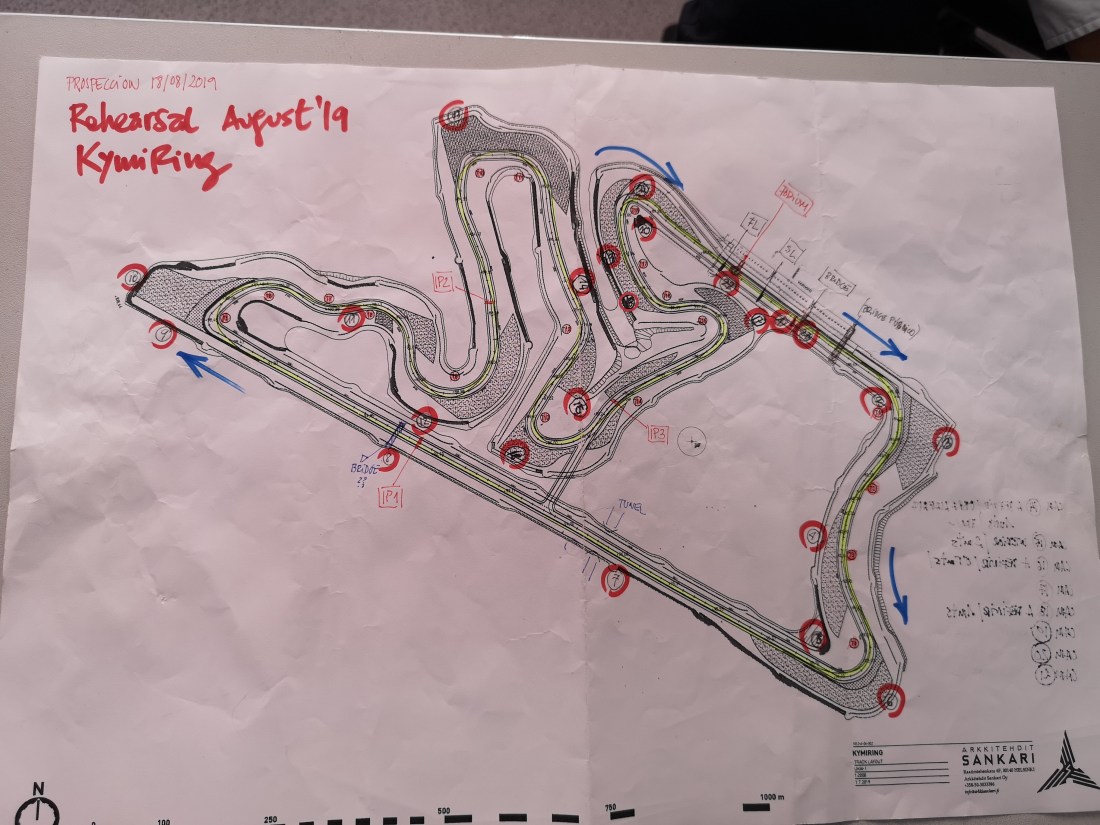
On the desk in front of myself and Sendra at Silverstone is a map of the KymiRing circuit, which Sendra and his team have heavily annotated, during and following their two-day visit.

2019 MotoGP - KymiRing.jpg
A map of the KymiRing, annoted by Dorna showing their current line of thinking ahead of MotoGP’s inaugural race at the circuit. All the red circles with numbers written inside (from 1 to 23) are the current proposed track side camera positions.

With only a handful of laps on the board during day one due to heavy rain, the TV team walked the track to scope out their initial thinking.

Immediately obvious to all was the scenery that surrounds the circuit, the nearest city twenty minutes away by car. The scenery, along with the elevation change from corner to corner, presents Dorna with an opportunity to highlight the best of Finland.

“The nice thing about this track is that it is surrounded by beautiful trees, nice Finland forest. We were looking for positions where we can see more of the nature,” Sendra tells me.

“It’s quite wild, and I’m sure we will look for the animals to capture the atmosphere. There are a lot of animals, not here, but close to here!”

“The second thing is the shape of the corners, the vision of the corners from the positions. It’s very different to Thailand, which is flat and very easy from that perspective, whereas Finland has a lot of up’s and down’s.”

“Here, there are spots that you cannot see, where there are trees in between. We like that, because it will give personality to the event.”

Throughout their visit, Sendra and his team are comparing KymiRing to MotoGP’s existing portfolio of circuits, although this is a challenge (in a good way for Sendra). Sendra says that KymiRing “is a completely different shape which is very good, because it enriches the championship.”

The second day allowed Dorna to confirm their thinking from day one, adjusting the positions slightly based on the action that was unfolding in front of them.

During the visit, Dorna try to ‘second guess’ where the hot spots are in terms of action. Turns 1, 4, 5 and 13 all have two camera angles to capture potential overtakes, whilst the 1.2 kilometre back straight requires a different approach.

Sendra continues “At the end of a straight, there will be braking points, so two cameras are necessary. If the straight is as long as this, we will have to split it, because with one camera will be boring. In the case of Finland, there are three spot cameras.”

“One at the beginning, let us say 350 meters, another one at 300 more, and then two at the end. There will be, for sure, overtaking at the end of this straight.”

One area of the circuit that Dorna believes will be a hot spot is the final bend, which may remind readers of the Fuji Speedway in Japan. Sendra expects the final corner to be “crazy” with Dorna opting to place more cameras down at that section than they usually would, for 2020 at least.

“It’s quite wide here, and we wanted to see a camera from outside and inside at the same time. We believe the corner is going to be better seen from outside than inside, but then all the cameras are inside so this is something you solve when you’re directing.”

“The final bend goes up, then goes down [heading to the finish line], it’s really very different compared to other places. All are quite flat to the finish line, only Saschsenring goes up.”

“We will have more cameras here the first time to make sure we don’t miss anything. If somebody likes to make a last lap overtake here like in Austria, then we must see it from various angles.”

Outside of the circuit itself, Dorna are figuring out their own logistics. The paddock being on the outside as opposed to the inside means that the television compound will be in a different location to usual, more than likely on the outside of turn one, Sendra tells me.

Moving forward
Whilst the track itself is finished, the surrounding area is still under construction, and it will not be long before the production team are back.

“Once we’ve set the camera spots, then it will be the people from the technical side to calculate lengths, accesses and everything else that surrounds this,” Sendra says.

“Normally we do two or three rehearsals. For TV, two rehearsals is the minimum to make sure we arrive during the week of a Grand Prix and nothing is forgotten, and everything is on the spot.”

Even with rehearsals, nothing is better preparation than a race weekend, and Sendra says that, it can take two or three year for the direction to gel on a new circuit.

“Honestly, we will have to wait until the first race, wet or dry, to understand if we made the right choices. The first weekend we will spend in Finland with a real experience, with three classes, races and practices, it will allow us to improve for the next year.”

“And I can more or less tell you that for us it takes between two and three years to stabilise the circuit, to have a good knowledge, because one year it will be hotter than the other, maybe it rains, it’s never the same.”

Now with a lot more information than before following the inauguration of the circuit, Dorna’s television team have a better sense of what they are dealing with ahead of the first MotoGP race at KymiRing next year.


Contribute to the running costs of Motorsport Broadcasting by donating via PayPal

Lee McKenzie on the art of broadcasting

Lee McKenzie is a name familiar to many readers of Motorsport Broadcasting, having covered motor sport for many years, as well as other forms of sport.

I sat down with her a couple of weeks ago at the W Series season finale in Brands Hatch, as we discussed a range of topics, from her upbringing and interview style, to giving advice to budding journalists coming through the ranks.

You’ve been around motor racing a lot since you were younger, through your Dad [Bob].

I was going to Formula 1 races when I was ten years old, I’ve known Bernie since I was a small child. My Dad was at Senna’s funeral, and wrote books on both Damon and Nigel. I’ve been surrounded by all this, in different sports, not just motor sport, all my life.

I started out as a rugby journalist and I started in equestrian, my two real passions. People just associate motor racing with me because that’s what they’ve been watching. I love doing the Paralympics, Para sport, Wimbledon, all that kind of thing. I’ve not done a full F1 season since 2012, it’s never been my only job, it’s never been my first job!

You go to other sports, and you think “actually F1 does this really well,” and then you go to other sports and meet other athletes, and think “yeah, we could learn from that.” There’s always a roundness to doing many other things, because it makes you more complete as a person.

I have been fortunate to have had that upbringing, but I wouldn’t have had a job had I not been good. I know that may sound arrogant, but if I was just somebody’s daughter, I wouldn’t have had a long career.

This year you have been presenting the new W Series. Has it been a different style of presenting for you, or do you tackle all sports similarly?

It doesn’t matter what sport I present; I present them all in a similar way. It takes an awful lot of prep, it’s not just the bit you see on camera. But I’ve thought the quality of racing has been fantastic.

It’s hard selling any television programme when the sport doesn’t do it justice, so the fact that the racing has been of such a high quality is great. It’s an easy sell from that point of view.

A lot of what you’re doing is reacting to the sport that’s been. Prepping for an Olympics or a Commonwealth Games is much, much harder. There are so many countries, sports, people. Here, I only need to know about 18 to 20 people, a few of whom I knew anyway.

We do a lot of filming in advance, so not everything we’re doing in that two hours. I’ve written all my scripts by the time I’ve got here; I’ve got the running order.

There’s a lot of blank sections that you fill in after qualifying, the whole of part two I can’t write a single word for yet, but that’s the excitement. And you obviously can’t write the ending of any television programme on sport, not a single thing, but I love that bit.

You’ve covered many different sporting events as you mentioned earlier, as well as non-sporting events before that. How do you get the best out of the different personalities involved?

I’m a journalist, I’m not a TV presenter. I’ve covered the Lockerbie trial, general elections, a lot of different sports. You prep, you can’t be a fan. You go in there as a professional, and if you make friends with people, that’s a bonus.

You have to get that level of respect, and I think that’s something you see in quite a lot of the F1 interviews, that level of respect you get from drivers. That’s something I’ve always tried to work hard on. I don’t need to be someone’s friend who I interview on television, but it helps sometimes.

You can be friendly with someone, but it’s how you conduct yourself in that high-pressure moment. It doesn’t matter who I was interviewing, I would never back down from asking a question should a question need to be asked, whether they were friends or not.

Lee McKenzie interviewing Max Verstappen as part of a wider feature during the BBC's coverage of the 2015 Belgian Grand Prix.
Lee McKenzie interviewing Max Verstappen as part of a wider feature during the BBC’s coverage of the 2015 Belgian Grand Prix.

If we use Formula 1 as an example, I would ask the same question to every driver differently because you get to know their characters. You’ve got to be a little bit clever with it. If I was trying to ask a question to Lewis [Hamilton] and ask a question to Sebastian [Vettel], it would be the same question but phrased differently.

Is there an F1 interview you’ve done that stands out from the rest, or was a highlight for you?

There’s ones that stand out for different reasons. The Lewis interview in 2011 was a big moment at Monaco, it didn’t necessarily feel good but it felt journalistic.

A lot of interviews with Seb, they always go slightly wrong, but all good fun. I did a hard-hitting sit-down piece with Fernando a few years ago, I was very pleased about that one. You get a good feel for when you’ve done a good interview, and a lot of that comes down to knowing the person and a bit of respect.

Lewis is great to sit down with as well when he’s very open, and touches upon a lot of different things.

Michael Schumacher’s probably one I would single out as, doing interviews with that I really liked. I loved working with Michael, I had a great relationship with him, we did some lovely interviews together.

I took the horse over to his yard and competed. Any time I could spend with Michael at that moment felt special, and not just because of the situation now. I went to Kerpen kart track with him and Seb where they both started out, and that was a lovely piece. Interviews like that stand out for me.

Lewis and Sebastian are the veterans of the F1 paddock now, but do you notice a different interview style for those coming through the ranks, such as Lando and George?

It’s easy to be unguarded and open when you first start out, you measure it on what happens in ten years’ time.

Max has been the same. I spent two days with him and his family in Belgium a few years ago, that was a lovely piece. Of course, you wouldn’t get the opportunity to do that now but I don’t think he’s changed as a person. He was hard-hitting as it was.

I think him and Charles are very open, but again it’s what happens in five years’ time when people’s careers progress that makes them have to shut down a little bit and that to me is understandable.

If you were to give advice to budding journalists coming through the ranks, what would you say?

I would say: prep. There’s no doubt that media in the past 15 to 20 years has changed. But don’t copy and paste. Own the content that you make, and do it with pride.

There’s a lot of people that come to me and say “I want to be a motor sport journalist, can you give me any tips” and I would look at their Twitter feed, and it’s like a crazed fan.

You’ve got to conduct yourself in a way that conveys respect. You’ve got to be a journalist; you can’t be a motor sport journalist I would suggest. I would say that the best journalists in sport come from that news background because it’s a very well-grounded thing, and then follow your passion, and immerse yourself in it.

Bringing it back round to the W Series, the series is not only aiding their on-track skills, but also their media behaviour as well in interviews.

Sometimes it feels like that [coaching], not just the Brits but a lot of European based drivers have known me, or have been watching me on TV.

We do sit down a little bit sometimes and talk things through. They want know how to come to a Grand Prix, they want to know how to do more media stuff, and how they should be conducting themselves.

I will never volunteer that, but if someone wants advice, then absolutely, I’m happy to give that advice.

My thanks go to Lee McKenzie for spending the time with me on the above piece.


Contribute to the running costs of Motorsport Broadcasting by donating via PayPal
How W Series has embedded itself into the DTM production setup

Setting up a new motor racing championship is inherently difficult. From the cars, to the drivers, to the media, to the television production and beyond, the amount of effort involved means that inevitably, not everything will go according to plan.

Last weekend, the inaugural W Series season ended at Brands Hatch, with Jamie Chadwick winning the championship trophy and a cool $500,000 to go with it.

Off track, how well has the series embedded itself into the DTM paddock? Motorsport Broadcasting roamed Brands Hatch to find out…

The existing DTM setup
On a logistical level, W Series slotted into the gap left by the FIA Formula Three Championship as the leading support series on the DTM bill, taking place at six of DTM’s nine race weekends.

DTM is the German equivalent of the British Touring Car Championship, except unlike the BTCC, the DTM championship travels around Europe, with four of this year’s nine race weekends taking place outside of Germany.

Now in its twentieth season, the DTM production setup features four different entities.

  • TV Skyline – outside broadcaster
  • DTM Productions / ITR – production and editorial
  • Wige – graphics and timing
  • Riedel – RF on-board cameras and team radio

W Series could have taken the existing DTM facilities, without additional wrap-around coverage.

In this scenario, broadcasters would have had to add their own bespoke content if they wanted additional colour – making W Series less valuable to prospective broadcasters. Producing a plain World Feed for W Series makes little sense.

The aim of W Series is to increase women participation in motor sport and, to get the message out, organisers needed a high-quality television product in place. That is not to say that the DTM product is not good, but the ambitions of both are different.

How well has the arrangement worked?
W Series organisers brought in Whisper and Timeline to work on the championship, playing the same roles as DTM Productions and TV Skyline respectively. The additions mean that space in the television compound is tighter than ever, but manageable nevertheless.

The role of Whisper and Timeline covers all wrap-around content, but does not cover the race itself, which remains in the control of DTM’s own providers. During W Series’ first season, Whisper and Timeline produced a live programme for broadcasters to air.

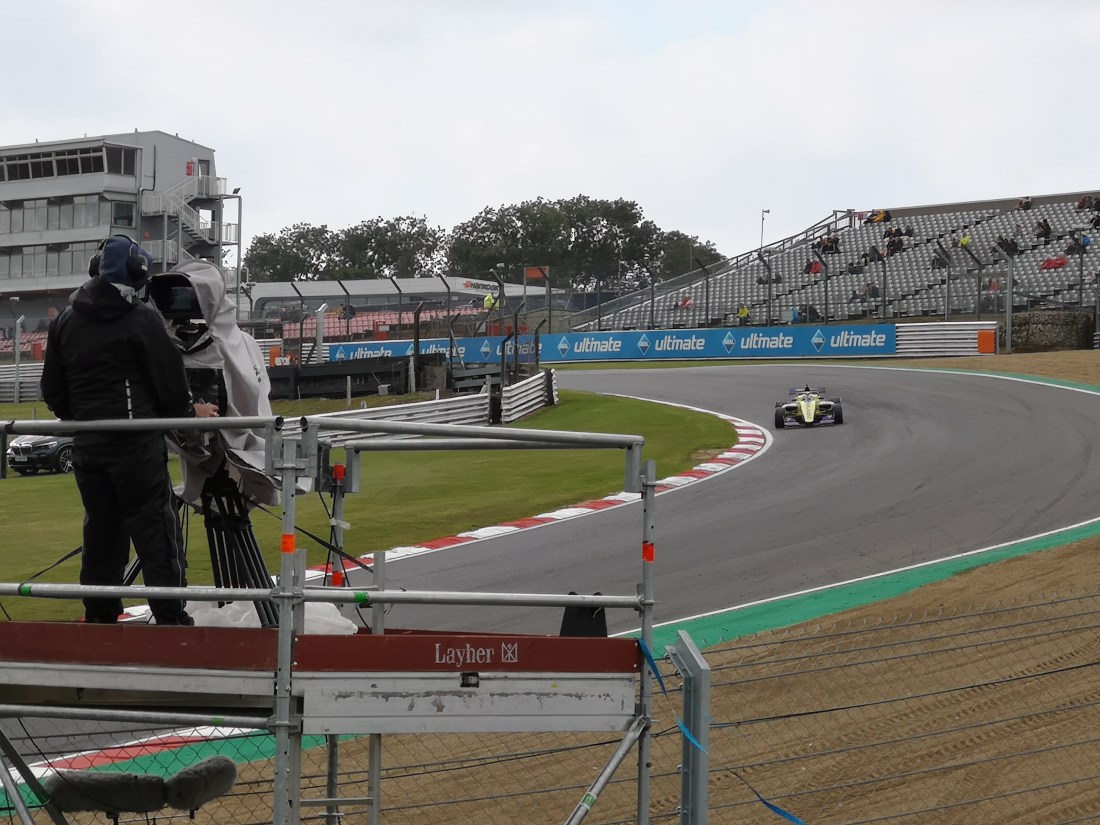
2019 W Series Paddock Hill Bend.jpg
One of the W Series drivers tackle Paddock Hill bend during Saturday’s second practice session.

Speaking to me during the final W Series race of the inaugural season, Whisper’s Senior Producer Harry Allen is happy with how the relationship between all parties has unfolded.

“As Formula E have found out, setting up a race from scratch and directing the whole race yourself is a pretty massive undertaking, and I think the relationship with DTM is a really neat, tidy and high-quality way of dealing with that situation,” Allen told me.

“We could have attempted to go our own way and have six races set-up all by us, all of the circuit infrastructure, everything, but that’s a massive expense,” Allen added.

“Being able to be a support series on DTM, but then present that on Channel 4 and round the world as a W Series programme is great. We make sure that we mention DTM, we don’t try to hide that we’re operating on a DTM weekend.”

Whisper’s in-house graphics arm Chapter 3 Graphics designed the W Series graphic suite, which fans saw during the wrap-around coverage. However, communication was required between Whisper and Wige (DTM’s graphics provider), to ensure that the race graphics aligned with the outer offering.

Allen, who has worked with the BBC in the past on their sports offering, points this out as one of the successes from his perspective.

“We designed the graphics pack which they’ve [Wige] integrated into their system. It all works so that when we come on-air with our graphics, they look the same as their graphics,” he said.

“It’s been pretty seamless with all the partners. DTM, ITR, TV Skyline, Wige, Riedel, Timeline, and our guys. It’s a massive operation, and it’s all worked pretty well I think, we haven’t had any major issues.”

What the team are producing
For Brands Hatch on race day, alongside the qualifying feed, Whisper produced a 195-minute World Feed from 14:15 to 17:30. That might confuse some readers given that Channel 4 were on-air from 14:30 to 16:30.

Although the ‘core’ World Feed is for those two hours, beforehand a variety of features are played out from 14:15 to 14:30, for any broadcasters that have opted to do something different (for example: a studio-based show with their own presenters).

Similarly, all the post-race interviews are played out following the conclusion of the main W Series programme for broadcasters that wish to use them later. The structure of the pre-race build-up allowed worldwide broadcasters to opt-in to the show at two different junctions, giving them flexibility from a scheduling perspective.

2019 W Series Ted Kravitz.jpg
Ted Kravitz in full flow during the start of the pre-race Notebook, recorded on Saturday evening.

In addition, the pre-race paddock segments air on a slight tape-delay. Due to the nature of the support series, cars are already making their way to the grid by the time the show begins to air, making it more logical to pre-record the paddock segments before the drivers’ get into their machinery.

Lee McKenzie steered both the pre and post-race build-up, with David Coulthard and Ted Kravitz providing additional input. Kravitz’s Notebook also played a key role in W Series’ social media output.

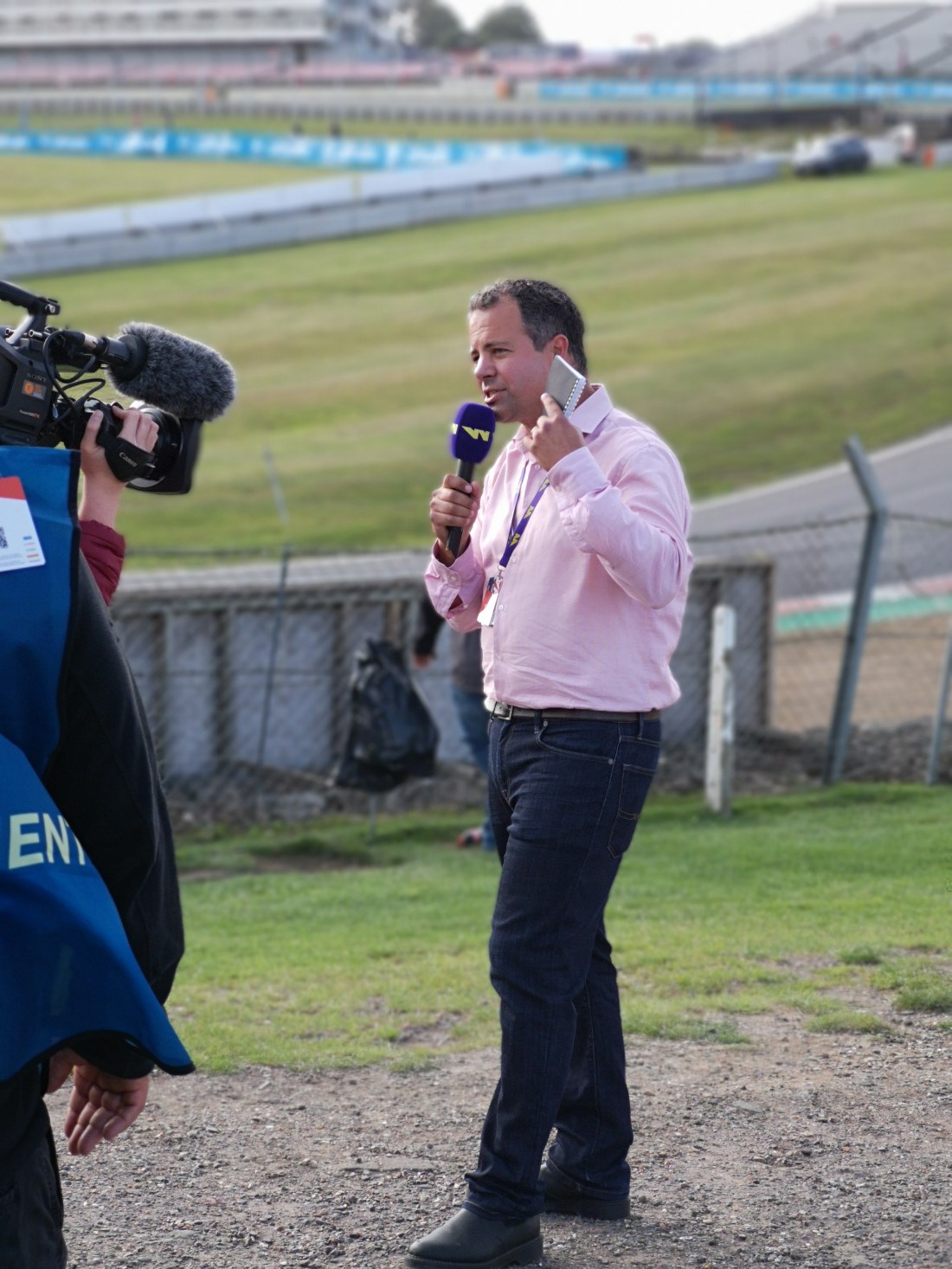
The style of Kravitz’s Notebook is like his F1 content, Kravitz wrapping up the fortunes of each of the 20 drivers, along with any other snippets that Kravitz has picked up throughout the race weekend. I watched on as Kravitz filmed the pre-race Notebook on Saturday evening, Kravitz beginning the Notebook from Paddock Hill bend (above) before wandering through to the W Village, all timed to near perfection.

On top of the live content and the Notebook, Timeline and Whisper also cut two separate highlights programmes off-site at Timeline’s base in Ealing: one for global broadcasters, and another specifically for US broadcast partners NBC, who air W Series highlights on Wednesday’s on NBCSN.

“We deliver that to NBC by 5pm on a Monday (12pm in US),” Allen tells me. “NBC then have five hours of opportunity to watch it and give feedback, and then on Tuesday we make any changes and then deliver the final product for them.”

“That’s how we service NBC, who are obviously a huge client for W Series.”

W Series’ is Allen’s first motor racing role but that, he says, is a deliberate move from Whisper. “The reason why I am producing this is because one of the key things we’re trying to do is get W Series to a new audience,” he says.

“The production team around us, these guys go to Formula 1 every race [for Channel 4]. I’m trying to create something that is accessible to a different audience, and everyone around me is keeping me in check making sure we hit the motor sport audience. If there’s anything, any time that is not correct then we’ll meet in the middle!”

Cottingham’s “most incredible” journey
Before Hockenheim, Claire Cottingham was a name unfamiliar to motor racing fans worldwide. Now, just over three months later, Cottingham has commentated on all six races of W Series’ first season.

Speaking to me prior to the Brands Hatch season finale, Cottingham reveals her journey, from getting the initial phone call to now.

“Before they gave me the gig, I had to go in and do a test commentary. I went in to commentate on a race, with one of the guys from Whisper,” Cottingham tells me.

“It was just to see how it flowed and things like that. It was an agonising couple of days waiting, and then I got the phone call. It was one of those surreal, unbelievable moments in life!”

2019 W Series Jamie Chadwick.jpg
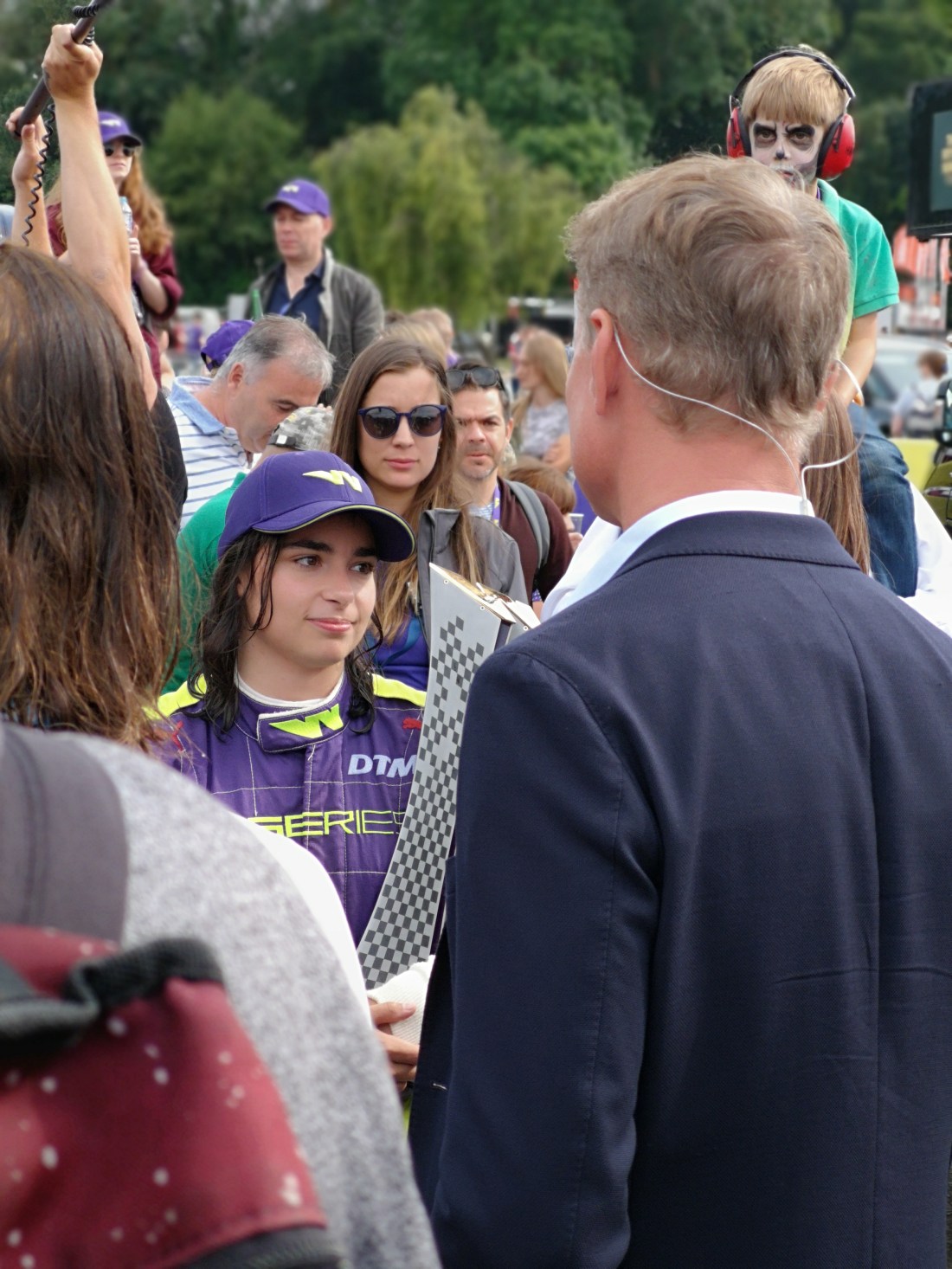
Champion Jamie Chadwick being interviewed by presenters Lee McKenzie and David Coulthard post-race.

“I think it’s about having the right person. It’s not my place to say ‘should it be female’ or whatever. It’s worked out that they picked somebody who knew motor sport, has been in motor sport, and that’s great.”

“It should always be the right person to fit the job, and that’s what they did, they believed I was the right person for the job. Whisper have been brilliant to get the right people in the right places and to give women more of a presence in motor sport. When I got the phone call, I thought ‘I’m in on this mission!’ It’s been the most incredible journey so far,” Cottingham added.

Cottingham, who has previously commentated on Formula Renault 3.5 and Formula Renault Eurocup for BT Sport, spoke about the challenges of working on a new championship, and the hurdles it brings.

“Because it’s a new series, much like when Formula E came out, everyone was learning the technology and learning the racing, it’s very similar,” she says.

“We’ve all learnt from Hockenheim to now, the drivers, the production team, everybody. We’ve all grown with it and I think that’s what’s been really fun, to be part of that family and moving it forward.”

A successful first season for W Series
Cottingham’s commentary can be heard worldwide, including in the UK on Channel 4. Allen is happy with how W Series has been brought to a wide audience in its inaugural, thanks to broadcasters such as Channel 4 backing the series.

“I think we’ve done really well, because we’ve brought a start-up racing series to a pretty wide audience, and I think people know about it,” Allen notes.

“When I speak to my friends who have no interest in motor sport, they’ve heard about it, they’ve read about it in the papers, in the broadsheets, they may have even watched it on Channel 4.”

“The good thing about being on Channel 4 in the UK is that people who are interested in Formula 1 will know about the fact that we’ve got W Series coming up, because at the end of the programme they’ll trail it.”

“If you’re watching the rugby today on Channel 4, we’ve sent them a 30-second VT, which will trail our final programme, and off the back of that the presenter of the rugby will say ‘don’t forget tomorrow to tune in, 2:30 on Channel 4 for the finale on W Series.'”

“Whisper is all about the stories, characters, personalities, entertainment is everything. Sport is entertaining, but my opinion on sport is that has to be easily understandable by everyone, so if you’re sitting down with your daughter or son and they’ve never watched W Series before, they can’t think ‘that was boring’ at the end of the programme, and that’s the key.”

“What we’re doing with this is everything around the racing, even if the racing hasn’t done what you wanted it to, we’ll make sure we sell that sport to the absolute maximum and get the most emotion and entertainment out of it.”


Contribute to the running costs of Motorsport Broadcasting by donating via PayPal

In conversation with Tony Jardine

From reporting on radio in the early 1980s, to analysing Formula 1 for audiences across the globe, Tony Jardine’s broadcasting career has spanned nearly four decades.

I reminisced with Jardine at the 2018 edition of the Autosport Show, as we looked back at his broadcasting career.

How did your broadcasting career begin?

It was by accident! I was at the 1982 South African Grand Prix, working as the JPS Lotus press officer, when the infamous drivers’ strike took place.

The Independent Radio News (IRN) news reporter at the time was not in the press box, and I took a phone call from IRN. IRN distributed the radio news, and they were desperate, they needed a voice piece. I said “I can’t do that,” and they were like “Just tell me what you see down the pit lane.”

I did my first ever broadcast from Kyalami about the strike. IRN asked me to do more pieces, and I ended up becoming their Formula 1 correspondent, as well as doing the day job.

From IRN you moved to the BBC, how did that gig come about?

The BBC deal was a very different kettle of fish, in as much that Murray Walker had a conflict between the British motorcycle Grand Prix and the German Grand Prix. The BBC decided they wanted him to do the bikes, and asked me to make my commentary debut in ’85 alongside James Hunt.

That led to me becoming the full-time pit lane commentator with the BBC, and race commentator for South African Broadcasting Corporation (SABC). I did a lot of live broadcasts for them, but I do want to stress that broadcasting was never my main job. The PR and communications company that I am involved with (HPS Jardine) is still my main mode of employment nearly 40 years later!

The role of pit lane reporter I imagine was quite different back then, given the archaic technology on offer.

It was quite difficult being in the pit lane as communications were not very sophisticated. It was very ancient equipment, you had to carry a lot of batteries, microphones, and headsets around with you. I was always trying to get in touch with the producer to say “I’ve got a story,” but they couldn’t always hear me.

We also could not do a proper grid walk at the BBC, as you were restricted as to where you could go by FOM.

I was literally arrested by Pasquale Lattuneddu, Bernie’s number two man, by going over some yellow line, and had to sit outside the [Formula One Management] office for several hours like a naughty school boy! You were limited as to what you could do on the grid, but I used to go to the edge of the pit lane and report in from there.

Was the pit lane role your main role with the BBC, or were there other roles you played a part in during their F1 coverage?

I started to get involved with the highlights on BBC Two in the early ’90s. One year, we did the British Grand Prix highlights opening live on stage from the post-race concert, with David Coulthard and Johnny Herbert! I was trying to hear the opening bits of music, so I could make my cue. When I thought there was a gap, I just went for it! I could not hear a word, it was very raw, rough, and ready.

The other thing I provided is what they call a ‘guide commentary.’ When neither Murray or James were overseas, for example in Canada or Japan, but they needed to know what happened, I would lay down a ‘ghost commentary’ over the action. Murray and James would listen to the ‘ghost’ version before they did their own commentary on several hours later.

Towards the end of 1995, we found out that ITV had grabbed the rights to the F1. Did that come as a shock to you and the team?

I was offered a new contract at the end of 1995 and was asked to present the BBC Two highlights from 1997 onwards, as well as doing the pit lane reporter gig. Three days later, the news came through that the BBC had lost [the F1] and ITV had won. I was gutted, as the BBC had empowered me, I said I’d give it a shot.

Jonathan Martin [BBC’s Head of Sport] believed he had a strong relationship with Bernie, and there is a view that he was quite arrogant. “Oh, Bernie wouldn’t do that to us!”, that kind of thing, and then gone.

Tony Jardine during ITV’s coverage of the 2005 Canadian Grand Prix.

Even though my company were involved in promoting the BTCC in the ’90s, I never really thought about staying with the BBC. My expertise was very much from working in Formula 1.

However, as luck would have it, I knew some of the production companies that were bidding for the ITV coverage. One of the guys from ITV saw me individually, and in the end, ITV said to the successful production company [Chrysalis] that they had to take me too! So, I wasn’t selected by them, but ITV had chosen me already.

That’s when they decided that I become an analyst in the studio. I did nine successful years with ITV and thoroughly enjoyed it, in TV terms that is a very long time.

How did the viewing public react to ITV’s offering in 1997?

I think it was quite warmly received. There were a lot of people waiting to criticise, the adverts were a big issue. However, we had our own studio, we had new graphics, we took it up another level.

At the time, it was unheard of to have a team that size, two analysts, guests, two pit lane reporters. Apart from some of the things we missed because of the ad-breaks, I don’t remember us receiving any massive criticism. Jim [Rosenthal] was one of those consummate professionals that does the job wherever he is, and he’s still working today.

The big difference too was that ITV gave it time. With the BBC, one race would air live, and the next would air as highlights, until 1995 when the Beeb started showing everything.

One of the major revelations about ITV’s coverage was Martin Brundle, so much so that he is still involved in F1 broadcasting to this very day.

I used to regularly go to Martin, both from my company’s perspective, and from a broadcasting perspective, as he was always great at talking. Martin could explain technical things in a very simplistic manner, not talking down to people, but just bringing it to a language you could understand, and maybe even have a little quip to boot.

Towards the end of the BBC’s tenure, Jonathan was with Murray in the commentary box and they brought Martin in as a third commentator. Brundle saw the race unfolding, and made a prediction which Palmer disagreed with, and the rest of it. But, what Brundle said was concise, he had a great idea of the strategy, and it was a great drivers’ perspective of what was going on.

It was a no brainer for ITV to bring him on-board. He took all that incredible knowledge, wit, wisdom, connectivity with drivers into the grid walk which we know and love.

Post-ITV, you have been involved with many different broadcasters on various things, close to home with Sky but also overseas.

I went back to Sky after ITV, and worked the live A1 Grand Prix races with Georgie Thompson, even doing my own grid walk from Brands Hatch!

I did some Sky Sports News work as well, previewing each Grand Prix using the touch screen from 2012. I would do two previews in a day building up to a race. I would script it, say what images I wanted, and Sky would get all the graphics.

On stage, I would talk to the presenter, talk through a lap of the circuit on the touch screen and play in all the video, never once using an autocue. The nightmare of course is that sometimes the touch screen would freeze, you’re live and you only have a certain amount of time, as Sky Sports News are constantly going from sport to sport.

More recently I’ve worked with Angus Scott, another former ITV man, on BeIN Sports’ live F1 shows. Many people in that production were also ex-BBC and Sky people, and BeIN really looked after me and listened to me editorially.

I am very fortunate to have had a lot of different jobs within broadcasting, all of which I have enjoyed. The art of good broadcasting is that you make it look easy, but believe you me, when you are doing it, it’s not.

My thanks go to Tony Jardine for spending the time with me on the above interview.