In conversation with Tony Jardine

From reporting on radio in the early 1980s, to analysing Formula 1 for audiences across the globe, Tony Jardine’s broadcasting career has spanned nearly four decades.

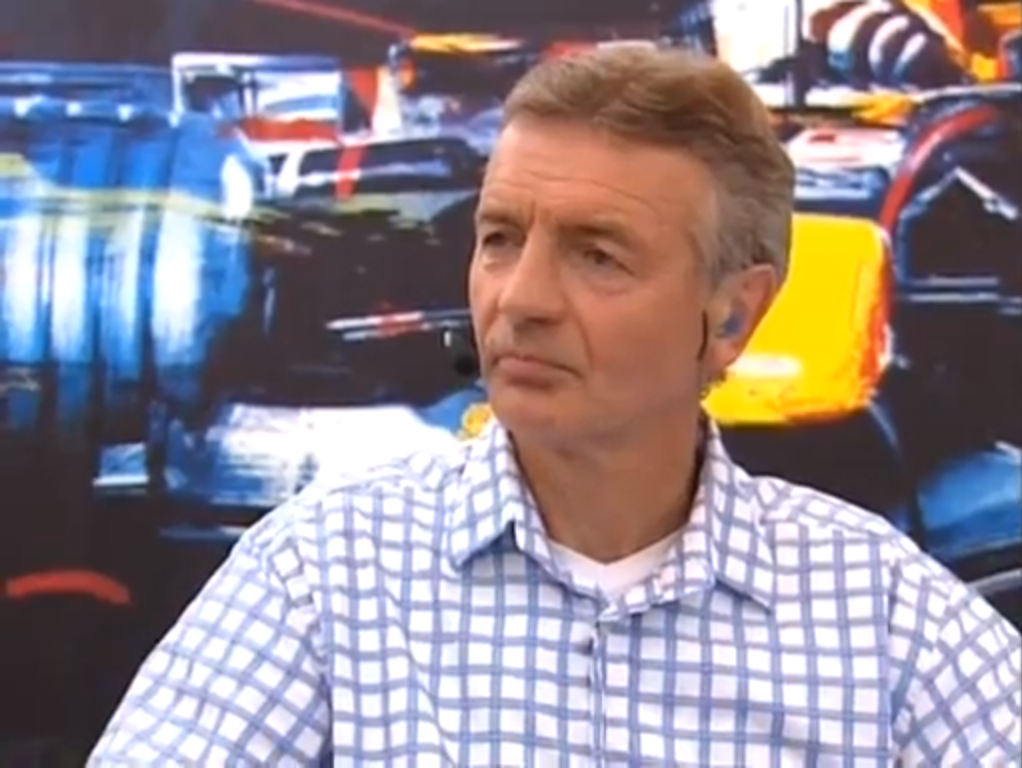
I reminisced with Jardine at the 2018 edition of the Autosport Show, as we looked back at his broadcasting career.

How did your broadcasting career begin?

It was by accident! I was at the 1982 South African Grand Prix, working as the JPS Lotus press officer, when the infamous drivers’ strike took place.

The Independent Radio News (IRN) news reporter at the time was not in the press box, and I took a phone call from IRN. IRN distributed the radio news, and they were desperate, they needed a voice piece. I said “I can’t do that,” and they were like “Just tell me what you see down the pit lane.”

I did my first ever broadcast from Kyalami about the strike. IRN asked me to do more pieces, and I ended up becoming their Formula 1 correspondent, as well as doing the day job.

From IRN you moved to the BBC, how did that gig come about?

The BBC deal was a very different kettle of fish, in as much that Murray Walker had a conflict between the British motorcycle Grand Prix and the German Grand Prix. The BBC decided they wanted him to do the bikes, and asked me to make my commentary debut in ’85 alongside James Hunt.

That led to me becoming the full-time pit lane commentator with the BBC, and race commentator for South African Broadcasting Corporation (SABC). I did a lot of live broadcasts for them, but I do want to stress that broadcasting was never my main job. The PR and communications company that I am involved with (HPS Jardine) is still my main mode of employment nearly 40 years later!

The role of pit lane reporter I imagine was quite different back then, given the archaic technology on offer.

It was quite difficult being in the pit lane as communications were not very sophisticated. It was very ancient equipment, you had to carry a lot of batteries, microphones, and headsets around with you. I was always trying to get in touch with the producer to say “I’ve got a story,” but they couldn’t always hear me.

We also could not do a proper grid walk at the BBC, as you were restricted as to where you could go by FOM.

I was literally arrested by Pasquale Lattuneddu, Bernie’s number two man, by going over some yellow line, and had to sit outside the [Formula One Management] office for several hours like a naughty school boy! You were limited as to what you could do on the grid, but I used to go to the edge of the pit lane and report in from there.

Was the pit lane role your main role with the BBC, or were there other roles you played a part in during their F1 coverage?

I started to get involved with the highlights on BBC Two in the early ’90s. One year, we did the British Grand Prix highlights opening live on stage from the post-race concert, with David Coulthard and Johnny Herbert! I was trying to hear the opening bits of music, so I could make my cue. When I thought there was a gap, I just went for it! I could not hear a word, it was very raw, rough, and ready.

The other thing I provided is what they call a ‘guide commentary.’ When neither Murray or James were overseas, for example in Canada or Japan, but they needed to know what happened, I would lay down a ‘ghost commentary’ over the action. Murray and James would listen to the ‘ghost’ version before they did their own commentary on several hours later.

Towards the end of 1995, we found out that ITV had grabbed the rights to the F1. Did that come as a shock to you and the team?

I was offered a new contract at the end of 1995 and was asked to present the BBC Two highlights from 1997 onwards, as well as doing the pit lane reporter gig. Three days later, the news came through that the BBC had lost [the F1] and ITV had won. I was gutted, as the BBC had empowered me, I said I’d give it a shot.

Jonathan Martin [BBC’s Head of Sport] believed he had a strong relationship with Bernie, and there is a view that he was quite arrogant. “Oh, Bernie wouldn’t do that to us!”, that kind of thing, and then gone.
Tony Jardine during ITV’s coverage of the 2005 Canadian Grand Prix.

Even though my company were involved in promoting the BTCC in the ’90s, I never really thought about staying with the BBC. My expertise was very much from working in Formula 1.

However, as luck would have it, I knew some of the production companies that were bidding for the ITV coverage. One of the guys from ITV saw me individually, and in the end, ITV said to the successful production company [Chrysalis] that they had to take me too! So, I wasn’t selected by them, but ITV had chosen me already.

That’s when they decided that I become an analyst in the studio. I did nine successful years with ITV and thoroughly enjoyed it, in TV terms that is a very long time.

How did the viewing public react to ITV’s offering in 1997?

I think it was quite warmly received. There were a lot of people waiting to criticise, the adverts were a big issue. However, we had our own studio, we had new graphics, we took it up another level.

At the time, it was unheard of to have a team that size, two analysts, guests, two pit lane reporters. Apart from some of the things we missed because of the ad-breaks, I don’t remember us receiving any massive criticism. Jim [Rosenthal] was one of those consummate professionals that does the job wherever he is, and he’s still working today.

The big difference too was that ITV gave it time. With the BBC, one race would air live, and the next would air as highlights, until 1995 when the Beeb started showing everything.

One of the major revelations about ITV’s coverage was Martin Brundle, so much so that he is still involved in F1 broadcasting to this very day.

I used to regularly go to Martin, both from my company’s perspective, and from a broadcasting perspective, as he was always great at talking. Martin could explain technical things in a very simplistic manner, not talking down to people, but just bringing it to a language you could understand, and maybe even have a little quip to boot.

Towards the end of the BBC’s tenure, Jonathan was with Murray in the commentary box and they brought Martin in as a third commentator. Brundle saw the race unfolding, and made a prediction which Palmer disagreed with, and the rest of it. But, what Brundle said was concise, he had a great idea of the strategy, and it was a great drivers’ perspective of what was going on.

It was a no brainer for ITV to bring him on-board. He took all that incredible knowledge, wit, wisdom, connectivity with drivers into the grid walk which we know and love.

Post-ITV, you have been involved with many different broadcasters on various things, close to home with Sky but also overseas.

I went back to Sky after ITV, and worked the live A1 Grand Prix races with Georgie Thompson, even doing my own grid walk from Brands Hatch!

I did some Sky Sports News work as well, previewing each Grand Prix using the touch screen from 2012. I would do two previews in a day building up to a race. I would script it, say what images I wanted, and Sky would get all the graphics.

On stage, I would talk to the presenter, talk through a lap of the circuit on the touch screen and play in all the video, never once using an autocue. The nightmare of course is that sometimes the touch screen would freeze, you’re live and you only have a certain amount of time, as Sky Sports News are constantly going from sport to sport.

More recently I’ve worked with Angus Scott, another former ITV man, on BeIN Sports’ live F1 shows. Many people in that production were also ex-BBC and Sky people, and BeIN really looked after me and listened to me editorially.

I am very fortunate to have had a lot of different jobs within broadcasting, all of which I have enjoyed. The art of good broadcasting is that you make it look easy, but believe you me, when you are doing it, it’s not.

My thanks go to Tony Jardine for spending the time with me on the above interview.

Scheduling: The 2019 French Grand Prix / Bern E-Prix

Paul Ricard in France plays host to round eight of the 2019 Formula One season, as the championship begins to hurdle towards the Summer break.

The main change to Sky’s schedule is the extension of Welcome to the Weekend to an hour, giving the team further opportunity to discuss events last time out in Canada.

Paddock Walkout is also absent, as Karun Chandhok is not with Sky in France. The plan was always for Chandhok to do many, but not all races with Sky this season, so his absense is not a surprise.

Despite no Porsche Supercup action in France, the gap between the Formula Two support race and the Grand Prix on Sunday remains long. Instead, VIP and Renault parade laps fill the gap for fans in Paul Ricard.

Elsewhere, qualifying for Formula Three airs on a slight tape-delay on Sky F1 on Friday. The channel is also joining coverage of IndyCar on Sunday later than their American colleagues. NBC’s broadcast starts at 12:00 EST / 17:00 UK, with Sky’s simulcast starting at 17:30. The first half hour for UK viewers will air on the Red Button. The race itself begins at 17:40 UK time.

Channel 4’s F1 offering sees the return of Mark Webber and Billy Monger to their line-up, the pair joining Ben Edwards, David Coulthard and Steve Jones out in France.

Further afield, Formula E heads to Bern in Switzerland for the first time, as Dario Franchitti returns to the team after his Indianapolis 500 commitments last month. The BBC’s live airing is only available via their website and Connected TV, with the first Red Button airing not until 04:00 on Sunday morning.

Channel 4 F1
22/06 – 18:30 to 20:00 – Qualifying Highlights
23/06 – 19:00 to 21:00 – Race Highlights

Sky Sports F1
Sessions
21/06 – 09:45 to 11:50 – Practice 1
21/06 – 13:45 to 15:45 – Practice 2
22/06 – 10:45 to 12:10 – Practice 3
22/06 – 13:00 to 15:35 – Qualifying
=> 13:00 – Pre-Show
=> 13:55 – Qualifying
23/06 – 12:30 to 17:30 – Race
=> 12:30 – Pit Lane Live
=> 13:30 – On the Grid (also Sky Sports Main Event)
=> 14:05 – Race (also Sky Sports Main Event)
=> 16:00 – Paddock Live
=> 17:00 – Notebook

Supplementary Programming
20/06 – 14:00 to 14:30 – Drivers’ Press Conference
20/06 – 17:00 to 18:00 – Welcome to the Weekend
21/06 – 16:30 to 17:00 – The Story so Far
22/06 – 16:45 to 17:15 – The F1 Show
26/06 – 20:30 to 21:00 – F1 Midweek Debrief

BBC Radio F1
All sessions are available live on BBC’s F1 website
21/06 – 21:30 to 22:00 – Preview (BBC Radio 5 Live)
22/06 – 14:00 to 15:05 – Qualifying (BBC Radio 5 Live)
23/06 – 14:00 to 16:00 – Race (BBC Radio 5 Live)

Formula E – Bern
Also airs live on YouTube
21/06 – 14:15 to 15:00 – Shakedown (BT Sport/ESPN)
22/06 – 07:45 to 09:00 – Practice 1 (BT Sport/ESPN)
22/06 – 10:15 to 12:00 – Practice 2 (BT Sport/ESPN)
22/06 – 12:15 to 13:45 – Qualifying (BT Sport/ESPN)
22/06 – 16:30 to 18:30 – Race: World Feed
=> live on BBC’s website and Connected TV
=> live on Quest
=> live on BT Sport/ESPN
=> live on Eurosport 2

Formula Two – France (Sky Sports F1)
21/06 – 11:50 to 12:40 – Practice
21/06 – 15:50 to 16:25 – Qualifying
22/06 – 15:35 to 16:45 – Race 1
23/06 – 10:15 to 11:15 – Race 2

Formula Three – France (Sky Sports F1)
21/06 – 17:00 to 17:30 – Qualifying Tape-Delay
22/06 – 09:30 to 10:15 – Race 1
23/06 – 08:55 to 09:40 – Race 2

IndyCar Series – Road America
22/06 – 21:00 to 22:30 – Qualifying (Sky Sports F1)
23/06 – 17:00 to 17:30 – Build-Up (Sky Sports F1 Red Button)
23/06 – 17:30 to 20:00 – Race (Sky Sports F1)

World Superbikes – Misano
Also airs live on World Superbikes’ Video Pass (£)
21/06 – 09:25 to 10:25 – Practice (Eurosport 2)
22/06 – 09:30 to 14:15 – Qualifying and Race 1 (Eurosport 2)
23/06 – 09:30 to 15:20 – Support and Race 2 (Eurosport 2)
26/06 – 20:00 to 21:00 – Highlights (ITV4)

World Touring Car Cup – Nurburgring
21/06 – 16:15 to 17:15 – Race 1 (Eurosport 2)
22/06 – 10:00 to 11:00 – Race 2 (Eurosport)

This article will be amended if schedules change.

Updared on June 21st.

Hamilton’s Monaco victory performs solidly in UK

Lewis Hamilton’s victory in the Monaco Grand Prix performed solidly, official consolidated figures from BARB show.

Consolidated audience figures include viewers who watched via the TV set within seven days of broadcast, and exclude commercial breaks. Figures in this article should not be compared to previous overnight ratings posted on this site.

Race
Due to incomplete data, comparisons for Sky’s F1 coverage are difficult, however, all of Channel 4’s figures are publicly available. In addition, Channel 4 aired the Grand Prix live in 2017 and 2018, which also should be factored into the viewing figures.

Unfortunately, the ever-changing slot lengths also make direct comparisons tricky, meaning that the figures must be taken at face value.

Live coverage of the race aired across Sky Sports F1 and Sky Sports Main Event. At press time, audience figures for Main Event are unavailable. The race airing from 14:03 to 16:24 averaged 845,900 viewers on Sky’s F1 channel. Including Main Event will push the race average for Sky to around one million viewers.

Last year, a combined audience of 707,000 viewers watched across F1 and Main Event (excluding an additional simulcast on Sky One) from 14:05 to 16:36. In 2017, 688,000 viewers watched across the two channels across a longer slot from 12:30 to 15:37.

Sky’s 2019 figures are also significantly higher than 2016, when the race last aired exclusively live on Sky Sports F1 to an audience of 786,000 viewers from 12:30 to 15:50, although this is over a longer time slot.

As mentioned, exact comparisons are extremely difficulty, however it does appear that Sky made noticeable gains on race day compared to previous years. On Sky Sports F1 alone, Pit Lane Live averaged 247,700 viewers from 12:30, On the Grid brought in 507,000 viewers, with Paddock Live averaging 227,900 viewers from 16:24.

The F1 increase helped the Indianapolis 500, which recorded excellent figures following the Grand Prix.

Highlights of the Grand Prix aired on Channel 4 from 19:00 to 21:00 to an audience of 2.02 million viewers, their highest audience of the year so far.

Last year, the free-to-air broadcaster aired Monaco live, with 1.01 million viewers watching the build-up (12:59), 2.50 million watching the race itself (13:33) and 970,000 viewers watching the post-race analysis (16:29). In 2017, the same three components averaged 920,000 viewers (11:59), 2.30 million (12:32) and 720,000 viewers (15:20) respectively.

If you use the first two components to pull out a rough three and a half hour average, encompassing the build-up and the race itself, then 2017 averaged 2.07 million viewers, with 2018 averaging 2.26 million viewers.

Compared to 2017 and 2018, the 2019 highlights show does not fare too badly. However, the 2016 highlights comparison averaged 2.48 million viewers over a slightly longer time slot. Whilst the 2019 figure is still down, it is down less than compared to previous races.

Looking at the figures in totality, the Monaco round rated in a similar ballpark to previous years, with a slight Channel 4 decrease being countered by a good increase for Sky. How well it rated is difficult to say given that the picture is incomplete, but the figures are promising nevertheless.

Qualifying and Analysis
Live coverage of the qualifying session on Sky Sports F1 averaged 476,100 viewers from 13:50, compared with 332,000 viewers from twelve months ago. An average of 228,400 viewers watched Sky’s build-up, also an increase on 2018’s figure of 169,000 viewers.

Both figures exclude their respective simulcasts. In 2018, the session also aired on Sky One, with this year’s session simulcast on Main Event.

Highlights on Channel 4 jumped to their highest Monaco figure on record. An audience of 1.59 million viewers tuned in from 18:30 to 20:00, an increase on last year’s live average audience of 1.26 million viewers from 12:55.

Considering the way the season is turning out, the audience figures across the Monaco weekend are surprisingly good. By no means are they spectacular, but neither do they show signs that F1’s audience figures are collapsing across the board.

Up next, the championship heads to Canada, where Channel 4’s highlights programme airs late at night. Expect the viewing figures between Channel 4 and Sky to be relatively even as a result, with Sky recording some of their highest figures of the year.

The only downside for them is the clash with the UEFA Nations League final, which could severely dent the potential audience on offer.

Indianapolis 500 soars to record UK audience

The Indianapolis 500 soared to its highest ever audience of the modern era last weekend, official consolidated viewing figures from BARB show.

Consolidated audience figures include viewers who watched via the TV set within seven days of broadcast, and exclude commercial breaks. Figures in this article should not be compared to previous overnight ratings posted on this site.

Background and Historical Comparison
For the first time ever, the race aired live on Sky Sports F1. Historically, the race, which forms part of the IndyCar Series, aired on Sky Sports through the 2000s. Both the series and the race moved to BT Sport under the ESPN banner at the start of 2013. The series has a small, but passionate following in the UK, and that is reflected in most of the audience figures.

However, in 2017, BT Sport’s coverage of the Indianapolis 500 averaged 141,000 viewers from 16:30, a number boosted significantly by the presence of Fernando Alonso, a year-on-year increase of 900 percent! BT’s programme started half an hour than Sky’s offering did this year, but the race back in 2017 also started earlier, so the comparison is like-to-like.

Last year with no Alonso, audience figures dropped back to their usual levels of around 40,000 viewers on BT. 2019 is IndyCar’s first year back on Sky, but audience figures have not jumped significantly so far. That was, until the 500 came around…

Race
The Indianapolis 500 averaged 172,000 viewers from 17:00 on Sunday 26th May on Sky Sports F1, IndyCar’s highest ever audience in the modern era.

Furthermore, the IndyCar average is across a four-and-a-half-hour time slot, suggesting that those watching did so for most of the broadcast, as opposed to a downward trend throughout. BARB does not publish consolidated peak figures, but it is likely that the 500 peaked with around 250,000 viewers.

IndyCar retained most of the audience that were watching Sky’s F1 post-race show. Paddock Live from Monaco, which preceded events from Indianapolis, averaged 228,000 viewers from 16:25 to 17:00.

Excluding Formula 1, it is Sky Sports’ highest audience for a live motor race since the launch of A1 Grand Prix nearly fourteen years ago! The World Cup of motor sport’s inaugural race from Brands Hatch in September 2005 attracted an audience of 247,000 viewers to much fanfare back then.

Of course, that statistic also means that the 2019 running of the 500 out-rated every Formula 1 feeder race in the past seven years, which is great for IndyCar, but not so good for Formula Two. Sky did not repeat the 500 in the days following the race, whereas Formula Two races are repeated ad nauseam on the channel.

The audience figures are slightly below what MotoGP gets on BT Sport and ITV4 get for British Touring Cars, but not a million miles away.

Analysis
For me, the viewing figures this time around are more surprising than 2017. The 2017 audience boost can be equated to Alonso, and we all knew that race was going to receive a sizeable boost, whereas this time, the boost cannot be equated to a specific person.

Yes, the race did follow Sky’s Monaco programming on the very same channel, but the gap between Monaco concluding and the Indianapolis 500 starting was nearly two hours, enough time for the audience to dwindle, as we have seen on many occasions in the past.

However, it should be acknowledged that BT’s programme in 2017 essentially had to ‘self-start’ from an audience perspective, whereas the 2019 audience was already there and waiting on the same channel.

If Alonso drives in 2020, and manages to qualify next year, it will be interesting to see if there is any boost beyond 2019’s figure. The target audience will already be watching Sky Sports F1, so any further boost may be limited.

As in 2017, do not expect IndyCar’s numbers to suddenly jump moving forward. However, being on the same channel as Sky’s F1 offering provides a platform for IndyCar’s numbers to gradually increase.

Sky need to prepared to increase resources to help the cause, including bespoke UK commentary during US ad-breaks. The argument for doing that has surely increased following the successful trial run during the 500, bringing Sky back in-line to the level of coverage that BT Sport offered.

For now, at least, the IndyCar Series had another, somewhat unexpected, day in the sun from a UK perspective. And based on the quality of both the 500, and the Duel in Detroit over this past weekend, they absolutely deserve it.

Scheduling: The 2019 Canadian Grand Prix

Formula 1 heads for its annual June trip to Montreal for the Canadian Grand Prix!

The Grand Prix airs exclusively live on Sky Sports F1, and with it, both Ted Kravitz and Jenson Button are returning to Sky’s line-up for the weekend.

Stefano Domenicali joins Steve Jones and David Coulthard over on Channel 4. Their highlights air later than in previous years due to the contractual restrictions imposed on them by Sky. Qualifying starts at 19:00 on Saturday, with the race starting at 19:10 on Sunday.

Adding three hours onto the expected end time (20:00 for qualifying and 20:40 for the race) takes you to 23:00 and 23:40 respectively, hence why Channel 4’s programming starts when it does over the weekend.

The race faces the UEFA Nations League final, which kicks off at 19:45. The final will see either Portugal or Switzerland face Netherlands or England. Although the tournament is nowhere near the scale of the football World Cup or Euro’s, the clash does demonstrate an unwillingness from Liberty to work their way around major football clashes.

Elsewhere, the W Series line-up is radically different in Misano, as both Kravitz and Coulthard are on duty in Canada. Allan McNish replaces Coulthard as W Series analyst and co-commentator for Misano. MotoGP reporter Amy Dargan replaces Kravitz, whilst Becky Evans (aka Queen B) serves as an additional correspondent.

Channel 4 F1
08/06 – 22:50 to 00:20 – Qualifying Highlights
09/06 – 23:00 to 01:00 – Race Highlights

Sky Sports F1
Sessions
07/06 – 14:45 to 16:45 – Practice 1
07/06 – 18:45 to 20:45 – Practice 2
08/06 – 15:45 to 17:30
=> 15:45 – Practice 3
=> 17:10 – Paddock Walkabout
08/06 – 18:00 to 20:30 – Qualifying
=> 18:00 – Pre-Show
=> 18:55 – Qualifying
09/06 – 17:30 to 22:30 – Race
=> 17:30 – Pit Lane Live
=> 18:30 – On the Grid (also Sky Sports Main Event)
=> 19:05 – Race (also Sky Sports Main Event)
=> 21:00 – Paddock Live
=> 22:00 – Notebook

Supplementary Programming
06/06 – 16:00 to 16:30 – Drivers’ Press Conference
06/06 – 22:00 to 22:30 – Welcome to the Weekend
07/06 – 21:00 to 21:30 – The Story so Far
08/06 – 20:30 to 21:00 – The F1 Show
12/06 – 20:00 to 20:30 – F1 Midweek Debrief

BBC Radio F1
All sessions are available live on BBC’s F1 website
09/06 – 19:00 to 21:00 – Race (BBC Radio 5 Live)

W Series – Misano (Channel 4)
Qualifying airs live across Facebook and Twitter
08/06 – 14:45 to 16:00 – Race

Euroformula – Spa (BT Sport 3)
Also airs live on YouTube
08/06 – 14:30 to 15:30 – Race 1
09/06 – 12:45 to 13:45 – Race 2

IndyCar Series – Texas 600 (Sky Sports F1)
07/06 – 23:30 to 01:00 – Qualifying (also Sky Sports Main Event)
08/06 (Saturday night) – 01:00 to 04:00 – Race (also Sky Sports Main Event)

International GT Open – Spa (BT Sport 3)
Also airs live on YouTube
08/06 – 15:30 to 17:00 – Race 1
09/06 – 13:45 to 15:15 – Race 2

World Superbikes – Jerez
Also airs live on World Superbikes’ Video Pass (£)
07/06 – 09:25 onwards (Eurosport 2)
=> 09:25 to 10:25 – SBK: Practice 1
=> 13:55 to 14:55 – SBK: Practice 2
=> 14:55 to 15:55 – SSP: Practice 2
08/06 – 09:30 to 14:15 – Qualifying and Race 1 (Eurosport 2)
09/06 – 09:30 to 15:15 – Support and Race 2 (Eurosport 2)
12/06 – 22:00 to 23:00 – Highlights (ITV4)

The listings will be updated if plans change.