Analysis: How F1 and MotoGP have interpreted Mugello differently from a broadcasting perspective

The Mugello circuit in Italy is renowned for two wheeled action, with MotoGP fans flocking to the race track each June to cheer on their favourite stars, including Valentino Rossi and the Ducati team.

This year, COVID-19 has meant that MotoGP has had to postpone its visit to the legendary circuit, the first time Mugello has not been on the MotoGP calendar since 1993.

The unusual circumstances have resulted in Formula 1 making its inaugural trip to Tuscany, with the circuit set to be one of the most physically demanding on the calendar for its 20 drivers.

As readers of this site will be all too aware, any new circuit represents a new challenge for those working on the broadcasting front, and Mugello is no different.

Formula 1’s production team comes to Tuscany from Monza with their own intentions and goals, meaning that the result from a television perspective will be significantly different to MotoGP’s own output from their yearly Mugello visit.

But just how different were Formula 1’s camera angles compared to MotoGP’s usual positions for two-wheeled action? Motorsport Broadcasting analyses the running themes from today’s F1 practice sessions…

Higher or lower?
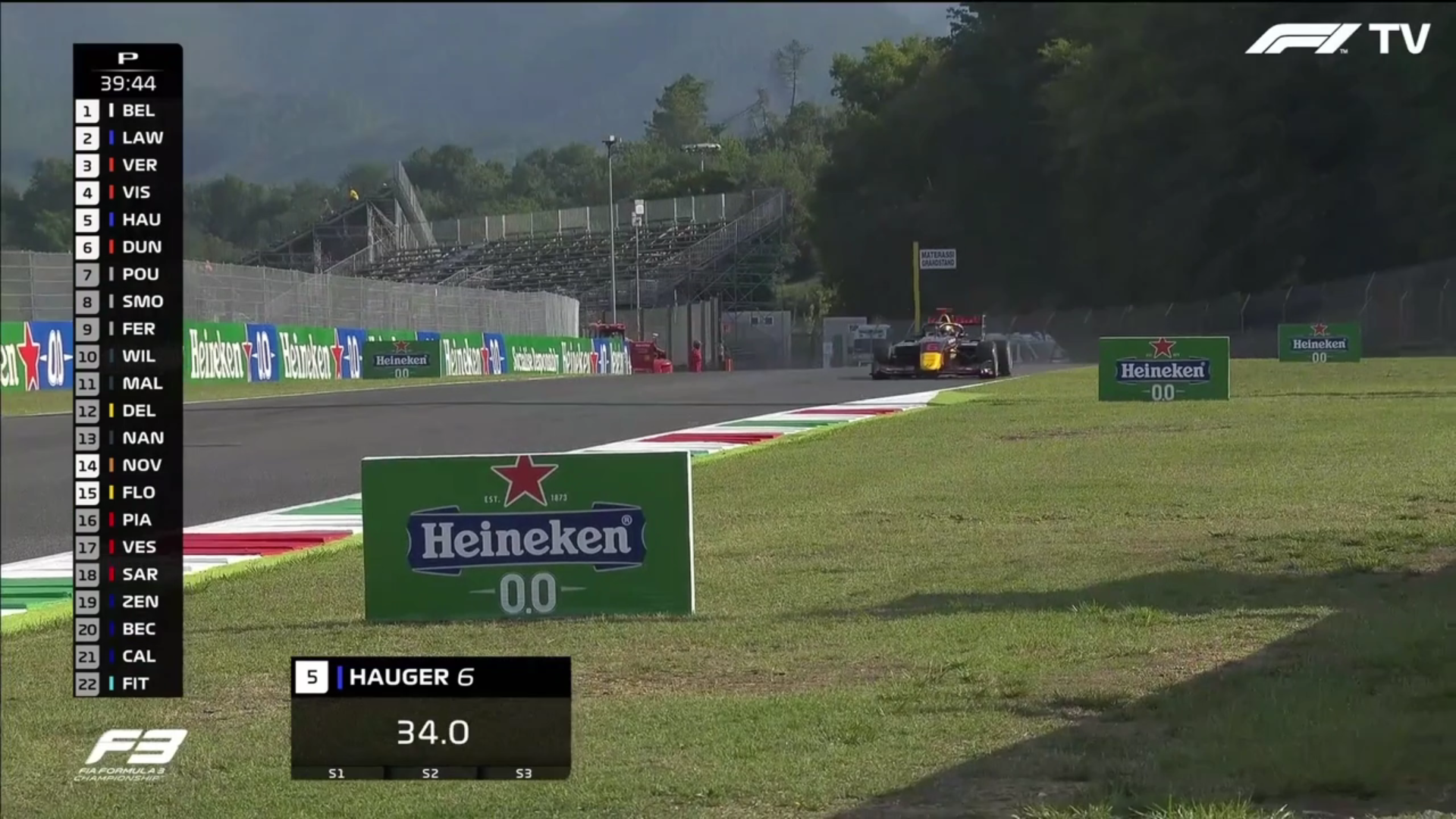
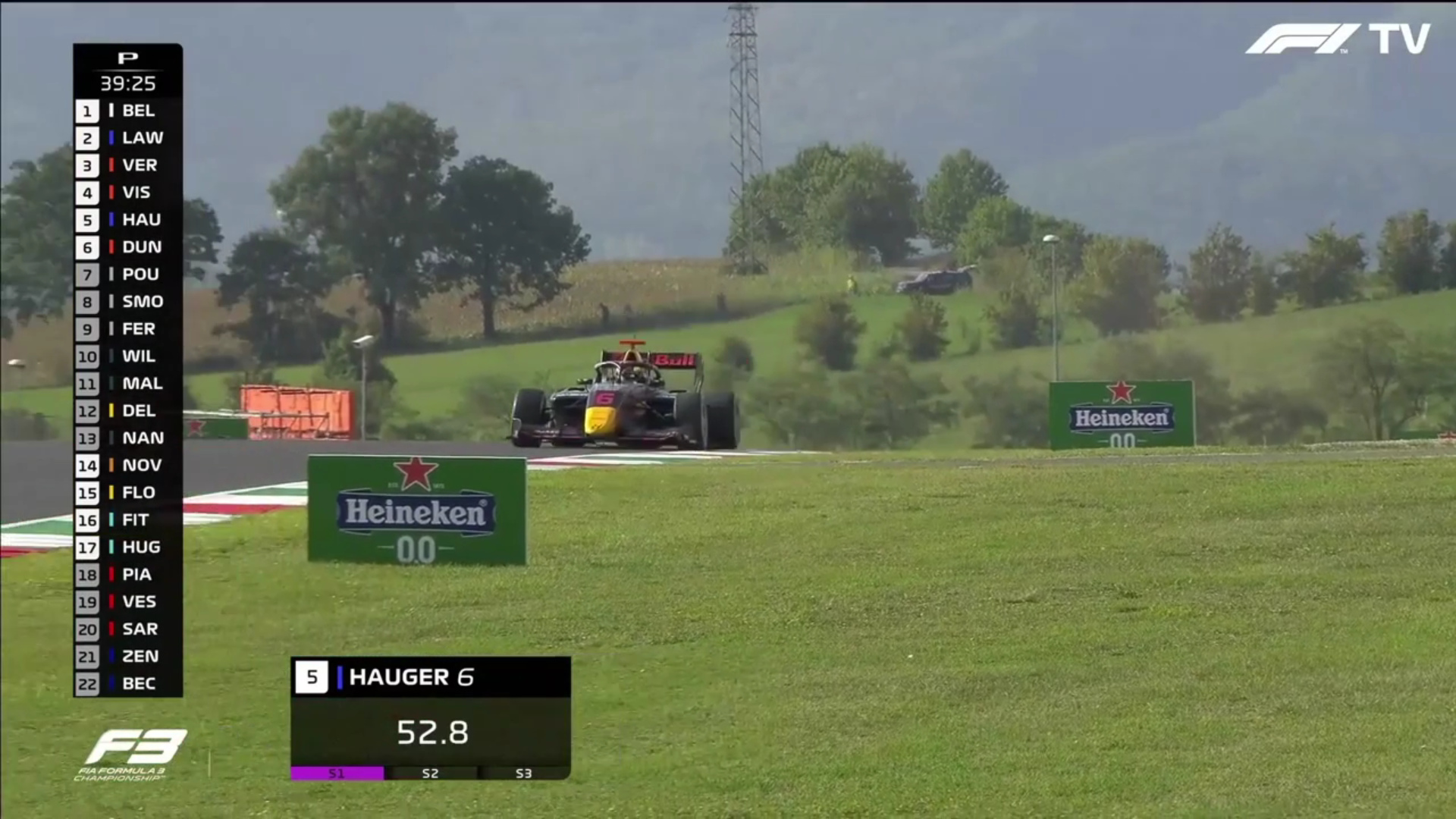
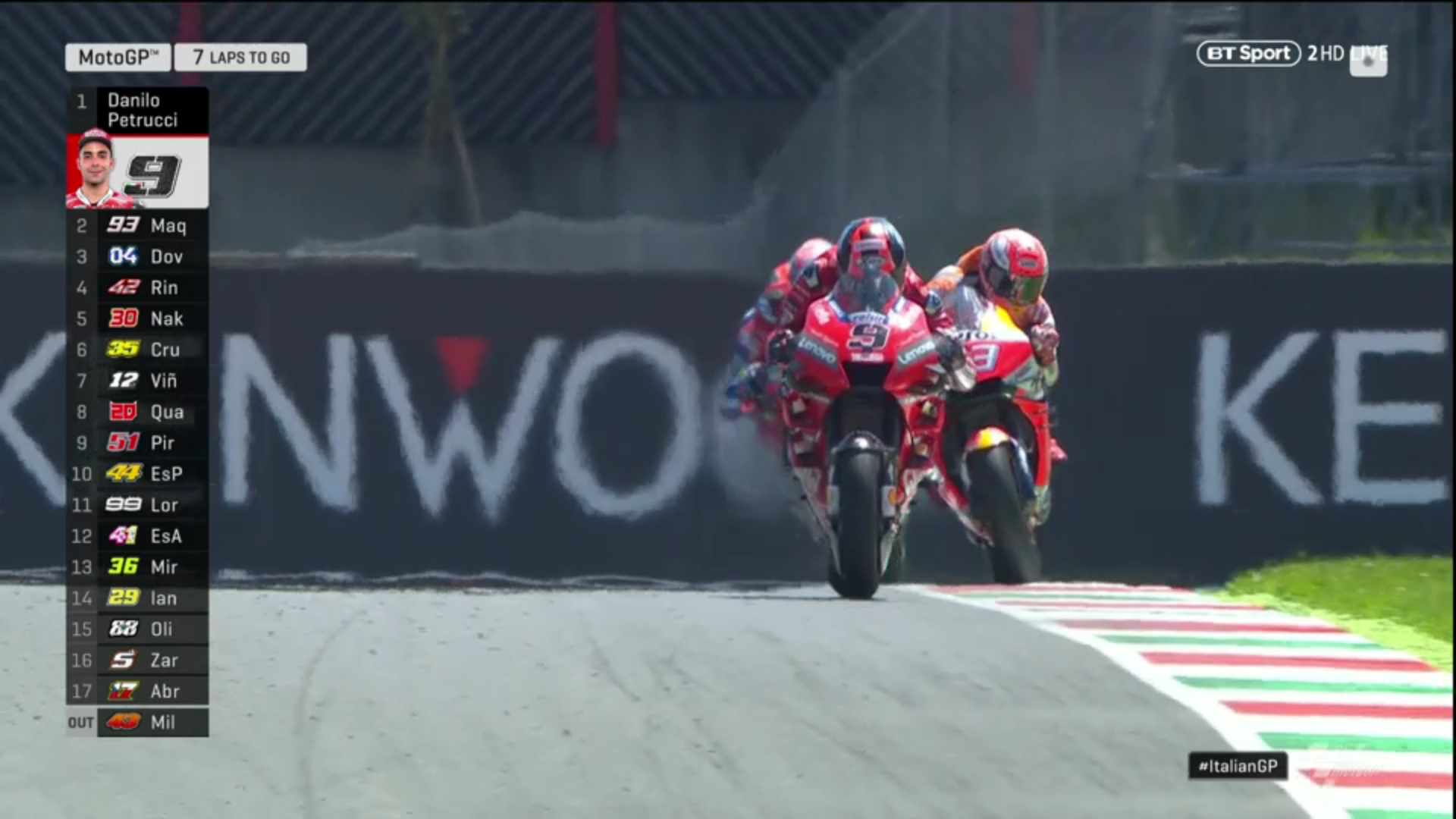
Both championships’ take a significantly different approach in terms of camera height. When analysing last year’s MotoGP race with today’s practice action, it is clear that throughout the 5.2km circuit, F1 have opted to position their cameras lower than MotoGP’s historical positioning.

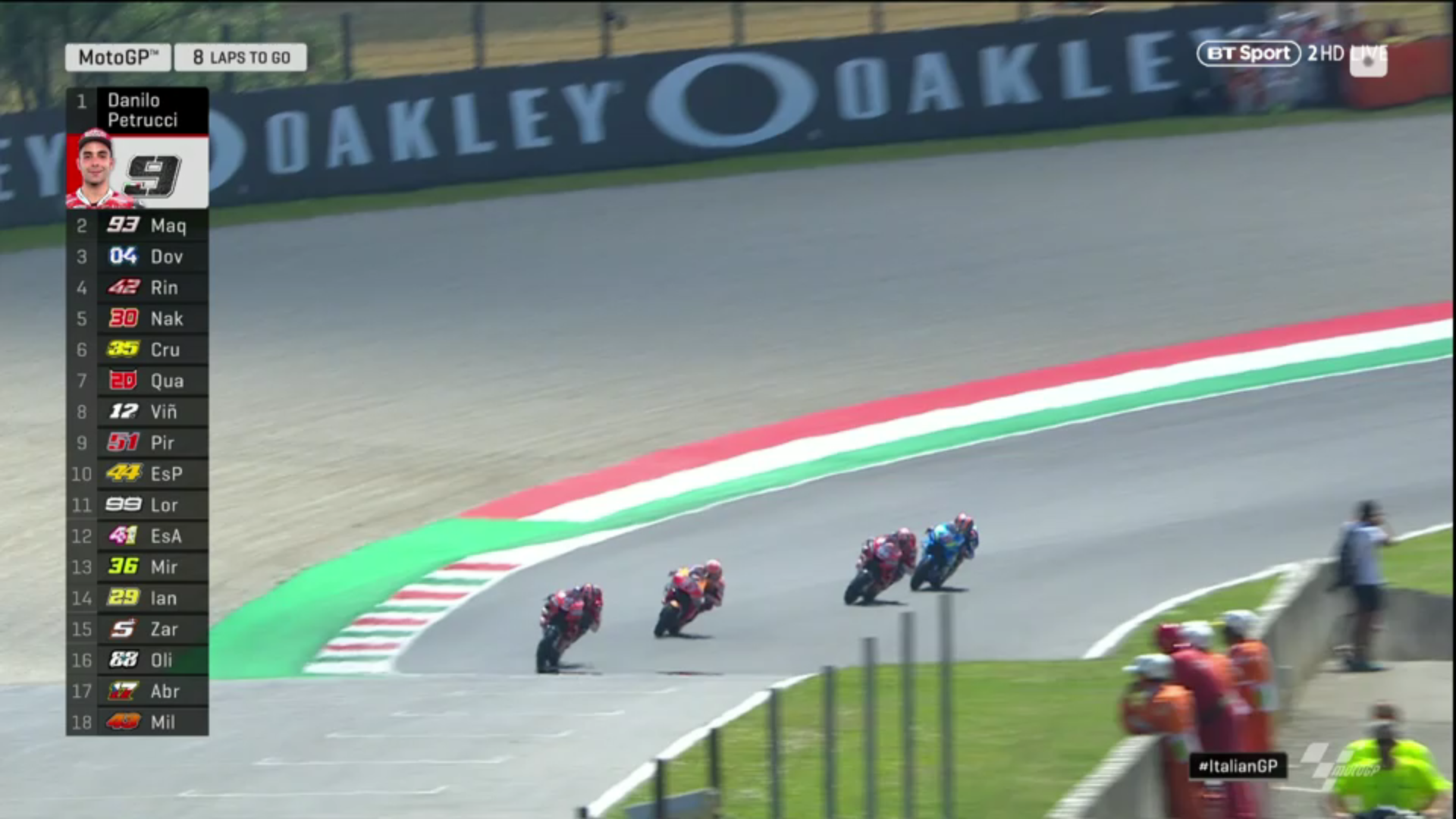
 

The lower angles help show the direction change of the single-seaters much better than a higher angle – a strategic direction F1, under Liberty Media’s watch, started to take back in 2017. Critically, the lower angles give viewers a better side-on view of the car, which is important for sponsors whose brands are located there.

In contrast, MotoGP’s angles give fans a better idea of the elevation on offer around the Mugello circuit which, in my opinion, F1 does not convey as well as their bike rival.

This is obvious in two main places. MotoGP’s camera angles at the start of the start-finish straight and turn six are higher than F1’s, the bike series making Mugello look like a rollercoaster ride compared to F1. However, F1’s angles show off Mugello’s picturesque backdrop.

The angle at turn six though is deliberate from F1’s perspective. All of the cars will be going flat out heading into here during qualifying, and F1 wants to show the change of direction on offer at high speeds.

Further round the lap, both display the same traits at turns eight and ten: F1 going for the low angle, with MotoGP venturing higher up.

Slip-streaming is a common feature of MotoGP, Moto2 and Moto3, and the higher angles will make it easier to identify when slip-streaming is occurring as the race progresses.
One straight, many cameras
Motor sport is renowned for long straights that head into sharp corners, and Mugello is no different in this regard.

Combined with the elevation change, one camera angle is insufficient to track the machinery from the exit of the final corner to the start of turn one.

At some circuits, such as Shanghai, one camera angle would be enough if you were short on resources, but such an approach would also make for boring viewing.

As Sergi Sendra, Dorna’s Senior Director for Media Content, Television and Production explained to me last year, the TV team typically splits long straights into three: one for the exit from the previous bend, the second for the mid-section as the bikes head to top speed, and finally for the braking zone.

Both MotoGP’s and F1’s positioning in Mugello follows this rule to the letter, with the second angle close to pit lane exit after the starting grid.

Positioning of angles
A common trait from MotoGP is to position additional angles on the inside of corners, and use that as their main angle. During last year’s MotoGP race, the production team utilised an angle on the inside of turn one, using this to show the bike’s lean angle throughout the constant radius hairpin.

For turn four, MotoGP positions their camera on the entry to the corner showing the riders turn into the bend, whereas F1 opted to go for a more direct angle with their positioning.

In my view, MotoGP does a better job in making Arrabbiata one continuous corner, whereas it is not immediately obvious with F1’s angles that the two corners seamlessly link with one another.

The key to all this though is that there is no right or wrong answer to positioning cameras around a race track.

F1 switching its angles to the same position to MotoGP’s angles would not make F1’s product infinitely better, or vice versa.

The answer is much more nuanced than that depending on the constraints that both championships, commercial, budgetary, or otherwise, are working within.

In addition, the action points for bike racing and single-seater racing are inherently different on a circuit-by-circuit basis, meaning you cannot apply a one size fits all model from a production perspective.

For now, F1 will have learnt a massive amount from today, and will no doubt be making tweaks to their camera angles as the weekend progresses in Mugello as race day approaches.
Contribute to the running costs of Motorsport Broadcasting by donating via PayPal
Sainz’s pursuit of victory sees F1’s viewing figures double in Spain

Carlos Sainz’s pursuit of victory in last weekend’s Italian Grand Prix saw viewing figures double in Spain, audience data from overseas shows.

The race was red flagged after a major accident for Ferrari’s Charles Leclerc.

Following the restart, AlphaTauri’s Pierre Gasly battled McLaren’s Sainz for victory, Sainz a couple of laps too short from potential victory.

Sainz’s pursuit of victory resulted in audience figures surging in his home land.

An audience of 244,000 viewers (2.1% audience share) watched the Grand Prix on pay TV station Movistar+ according to Formula TV, double the 121,000 viewers (1.2% audience share) that watched last month’s Spanish Grand Prix on the same channel.

Last weekend’s race was up by around a third on last year’s Monza figure, which averaged 173,000 viewers (1.4% audience share) in Spain.

Over in France, a peak audience of 1.24 million viewers watched Gasly’s victory on Canal+, a slight increase on last weekend’s peak audience of 1.16 million viewers.

The average audience declined from 932,000 viewers for the Belgian Grand Prix, to 841,000 viewers last weekend, a reflection of the red flag period which may have depleted the Canal+ average slightly.

The conclusion here is obvious, but worth stating: France’s viewing figures are higher than Spain, meaning that there is less room for growth, whereas F1 in Spain is underperforming massively now.

The presence of Sainz fighting it out up front – and the returning Fernando Alonso – is critical to move the needle in Spain.

Unfortunately, one of F1’s biggest territories in Europe shed over one million viewers, thanks to Ferrari’s continued woes. According to Motorsport.com, coverage of the race in Germany averaged 4.54 million viewers, a decrease on last year’s figure of 5.71 million viewers.

The 2020 figure is in-line on F1’s audiences for the year to date in Germany, whereas last year’s race over-indexed considerably.

Viewing figures for the race also dipped year-on-year in America on Labor Day weekend. 602,000 viewers watched the race on ESPN2, compared with 635,000 viewers last year.

Impressively, live coverage of the third practice session averaged 244,000 viewers at 06:00 on Saturday morning on ESPN, with 518,000 viewers tuning into qualifying, showing that increased interest in F1 in the US is filtering through to the other weekend sessions.

Formula Two viewing figures surge in UK
In the UK, viewing figures for the Formula Two championship continue to impress according to consolidated data from BARB and ThinkBox.

Whilst data for the Italian Grand Prix is unavailable, data from the Belgian Grand Prix weekend shows that 222,000 viewers watched the Formula Two feature race on Saturday 29th August, believed to be Formula Two’s highest ever figure in the UK.

185,000 viewers watched the race via Sky Sports F1, with an additional 37,000 viewers watching on Sky Sports Main Event.

To put that into historical comparison, back in 2012 during Sky’s first season covering F1, only 29,000 viewers watched the GP2 feature race during the Belgium weekend.

Viewing figures have increased rapidly in the past year and a half, Sky’s F1 exclusivity helping the cause.

Elsewhere, the Indy 500, which took place the week before, averaged 130,000 viewers, although the two figures are not directly comparable given that the IndyCar figure includes a 90-minute build-up which would have depleted the average.


Contribute to the running costs of Motorsport Broadcasting by donating via PayPal

Scheduling: The 2020 Tuscan Grand Prix

Nine races. Three old favourites, three new challenges and three modern circuits is all that remains as the 2020 Formula One season heads into the Autumn.

Whilst both the Drivers’ and Constructors’ Championships look set to be heading towards Mercedes, the COVID-19 pandemic means that everyone (from a championship perspective) has a new set of challenges ahead of them, starting this weekend at Mugello!

But, if last weekend told us anything, it is that anything can happen in Formula 1, and it usually does (just when you least expect it).

For Formula Three, the Mugello weekend marks the end of the year, with Oscar Piastri and Logan Sargeant fighting over the crown and almost certain promotion to Formula Two.

With the Porsche Supercup season now over, both Formula Two and Three move 45 minutes later on Sunday morning.

MotoGP returns after a few weeks off, with nine races taking place in the next eleven weeks. As revealed by Motorsport Broadcasting in our behind the scenes piece, BT Sport are remaining off-site as the season resumes.

Further afield the World Touring Car Cup finally starts its 2020 season over in Belgium, with Eurosport airing live coverage.

On the documentary front, a special 30-minute programme airs on Sky Sports F1 following the Tuscan Grand Prix and live IndyCar action from Mid-Ohio to mark Ferrari’s 1,000th F1 race.

Sky’s F1 documentary series Race to Perfection also drops this Saturday, which each of the seven episodes also airing on Sky’s F1 channel over the coming weeks.

Channel 4 F1
12/09 – 19:30 to 21:00 – Qualifying Highlights
13/09 – 18:30 to 21:00 – Race Highlights

Sky Sports F1
Sessions
11/09 – 09:30 to 11:50
=> 09:30 – Welcome to the Weekend (also Sky Sports Main Event)
=> 10:00 – Practice 1
11/09 – 13:45 to 15:45 – Practice 2
12/09 – 10:45 to 12:10 – Practice 3
12/09 – 13:00 to 15:35 – Qualifying
13/09 – 12:30 to 17:30 – Race
=> 12:30 – Grand Prix Sunday
=> 14:05 – Race
=> 16:00 – Chequered Flag
=> 17:00 – Notebook

Supplementary Programming
11/09 – 16:30 to 17:00 – The Story so Far
13/09 – 20:00 to 20:30 – Scuderia Ferrari 1,000th Race Celebration
16/09 – 21:00 to 21:30 – Midweek Debrief

BBC Radio F1
All sessions are available live on BBC’s F1 website
10/09 – 21:30 to 22:00 – Preview (BBC Radio 5 Live)
11/09 – 09:55 to 11:55 – Practice 1 (BBC Radio 5 Live Sports Extra)
12/09 – 10:55 to 12:05 – Practice 3 (BBC Radio 5 Live Sports Extra)
12/09 – 13:55 to 15:05 – Qualifying (BBC Radio 5 Live Sports Extra)
13/09 – 14:00 to 16:00 – Race Updates (BBC Radio 5 Live)

MotoGP – San Marino (BT Sport 2)
Also airs live on MotoGP’s Video Pass (£)
11/09 – 08:00 to 10:45 – Practice 1
11/09 – 12:00 to 15:00 – Practice 2
12/09 – 08:00 to 15:45
=> 08:00 – Practice 3
=> 11:00 – Qualifying
=> 15:00 – MotoE
13/09 – 07:15 to 15:00
=> 07:15 – Warm Ups
=> 08:45 – MotoE
=> 09:30 – Moto3
=> 11:00 – Moto2
=> 12:30 – MotoGP
=> 14:00 – Chequered Flag

MotoGP – San Marino (Quest)
14/09 – 18:00 to 19:00 – Highlights

Formula Two – Tuscan (Sky Sports F1)
11/09 – 11:50 to 12:40 – Practice
11/09 – 15:55 to 16:30 – Qualifying
12/09 – 15:35 to 16:55 – Race 1
13/09 – 10:45 to 11:50 – Race 2

Formula Three – Tuscan (Sky Sports F1)
11/09 – 08:30 to 09:20 – Practice (also Sky Sports Main Event)
11/09 – 13:00 to 13:45 – Qualifying
12/09 – 09:20 to 10:10 – Race 1
13/09 – 09:20 to 10:20 – Race 2

IndyCar Series – Mid-Ohio (Sky Sports F1)
12/09 – 21:30 to 00:00 – Race 1
13/09 – 18:00 to 20:00 – Race 2

Speedway Grand Prix – Poland (BT Sport 3)
12/09 – 17:45 to 21:15 – Races

World Touring Car Cup – Belgium
13/09 – 09:15 to 10:15 – Race 1 (Eurosport)
13/09 – 13:00 to 14:00 – Race 2 (Eurosport)

As always, this article will be updated if plans change.

Updated on September 10th.

Update on September 12th – The Ferrari special is airing live, right now at 20:12, on the F1 channel.


Contribute to the running costs of Motorsport Broadcasting by donating via PayPal

Scheduling: The 2020 Rally Estonia / Italian Grand Prix

After a six-month hiatus due to the ongoing COVID-19 pandemic, the World Rally Championship returns, with the Rally Estonia!

Squeezed into two full days’ worth of action, the weekend promises to be jam packed for rallying fans worldwide. Every stage airs live via WRC’s over-the-top platform, and BT Sport’s Red Button service, with free-to-air highlights airing following the rally on ITV4.

Excluding breaks, the WRC team will be on-air for almost ten hours on Saturday from 04:30 to 17:45 UK time, a mammoth shift.

Despite the COVID restrictions, WRC intend to cover the rally as normally as practically possible, with Molly Pettit and Ben Constanduros interviewing the drivers from a distance at stage end.

Becs Williams and Julian Porter remain in the commentary booth, as the series returns to action, with Paul King joining them. Jon Desborough voices the daily highlights programme.

Elsewhere, the Formula 1 paddock takes the eight-hour trip south to the temple of speed, for the Italian Grand Prix from Monza.

Joining the paddock out in Monza is Ted Kravitz, who re-joins the Sky Sports F1 team after missing the past three Grand Prix.

World Rally Championship – Estonia (All Live)
Also airs live on WRC+ (£)
04/09 – 15:30 to 18:00 – Stage 1 (BT Sport Extra 1)
05/09 – 04:30 to 17:45 – Stages 2 to 11 (BT Sport Extra 2)
=> 05:40 – Stage 2
=> 06:20 – Stage 3
=> 07:00 – Stage 4
=> 08:00 – Stage 5
=> 09:19 – Stage 6
=> 12:37 – Stage 7
=> 13:17 – Stage 8
=> 14:00 – Stage 9
=> 15:00 – Stage 10
=> 16:19 – Stage 11
06/09 – 04:00 to 12:45 – Stages 12 to 17 (BT Sport Extra 1)
=> 05:35 – Stage 12
=> 06:09 – Stage 13
=> 07:00 – Stage 14
=> 08:49 – Stage 15
=> 09:28 – Stage 16
=> 11:00 – Stage 17

World Rally Championship – Estonia
04/09 – 17:00 to 18:00 – Stage 1 (BT Sport 2)
04/09 – 20:30 to 21:00 – Day 1 Highlights (BT Sport 2)
05/09 – 07:00 to 08:00 – Stage 4 (BT Sport 1)
05/09 – 14:00 to 15:00 – Stage 9 (BT Sport 3)
05/09 – 21:00 to 21:30 – Day 2 Highlights (BT Sport 2)
06/09 – 07:00 to 08:00 – Stage 14 (BT Sport 2)
06/09 – 11:00 to 12:30 – Stage 17 [Power Stage] (BT Sport 2)
06/09 – 20:30 to 21:00 – Day 3 Highlights (BT Sport 1)
09/09 – 21:30 to 22:35 – Highlights (ITV4)

Channel 4 F1
05/09 – 19:30 to 21:00 – Qualifying Highlights
06/09 – 18:30 to 21:00 – Race Highlights

Sky Sports F1
Sessions
04/09 – 09:30 to 11:50 (also Sky Sports Main Event)
=> 09:30 – Welcome to the Weekend
=> 10:00 – Practice 1
04/09 – 13:45 to 15:45 – Practice 2 (also Sky Sports Main Event)
05/09 – 10:45 to 12:10 – Practice 3
05/09 – 13:00 to 15:35 – Qualifying
06/09 – 12:30 to 17:30 – Race
=> 12:30 – Grand Prix Sunday
=> 14:05 – Race (also Sky Sports Main Event)
=> 16:00 – Chequered Flag
=> 17:00 – Notebook

Supplementary Programming
05/09 – 16:30 to 17:00 – The Story so Far (also Sky Sports Main Event)
06/09 – 17:30 to 18:30 – Jochen Rindt: Uncrowned Champion
09/09 – 21:00 to 21:30 – Midweek Debrief

BBC Radio F1
All sessions are available live on BBC’s F1 website
02/09 – 21:00 to 22:00 – Preview (BBC Radio 5 Live)
04/09 – 09:55 to 11:55 – Practice 1 (BBC Radio 5 Live Sports Extra)
04/09 – 13:55 to 15:35 – Practice 2 (BBC Radio 5 Live Sports Extra)
05/09 – 10:55 to 12:05 – Practice 3 (BBC Radio 5 Live Sports Extra)
05/09 – 13:55 to 15:05 – Qualifying (BBC Radio 5 Live Sports Extra)
06/09 – 14:00 to 16:00 – Race (BBC Radio 5 Live)

British Superbikes – Silverstone
05/09 – 12:00 to 12:50 – Qualifying (Eurosport 2)
05/09 – 16:00 to 18:00 – Race 1 (Eurosport 2)
06/09 – 12:15 to 12:55 – Race 2 (Eurosport 2)
06/09 – 14:00 to 18:00 – Race 3 (Eurosport 2)
09/09 – 20:00 to 21:30 – Highlights (ITV4)

Formula Two – Italy (Sky Sports F1)
04/09 – 11:50 to 12:40 – Practice (also Sky Sports Main Event)
04/09 – 15:55 to 16:30 – Qualifying (also Sky Sports Main Event)
05/09 – 15:35 to 16:55 – Race 1
06/09 – 10:00 to 11:05 – Race 2 (also Sky Sports Main Event)

Formula Three – Italy (Sky Sports F1)
04/09 – 08:30 to 09:20 – Practice (also Sky Sports Main Event)
04/09 – 13:00 to 13:45 – Qualifying (also Sky Sports Main Event)
05/09 – 09:20 to 10:10 – Race 1
06/09 – 08:35 to 09:35 – Race 2 (also Sky Sports Main Event)

Porsche Supercup – Italy (Sky Sports F1)
06/09 – 11:40 to 12:25 – Race

Virgin Australia Supercars – Townsville (BT Sport 2)
Also airs live on SuperView (£)
05/09 – 06:30 to 08:00 – Race 1
06/09 – 03:15 to 04:30 – Race 2
06/09 – 05:30 to 07:00 – Race 3

World Superbikes – Aragon
Also airs live on World Superbikes’ Video Pass (£)
04/09 – 09:25 to 10:25 – Practice 1 (Eurosport 2)
04/09 – 13:55 to 14:55 – Practice 2 (Eurosport 2)
05/09 – 09:30 to 12:00 – Superpole (Eurosport 2)
05/09 – 12:50 to 16:00 – Race 1 (Eurosport 2)
06/09 – 09:45 to 12:15 – Superpole Race (Eurosport 2)
06/09 – 12:55 to 14:00 – Race 2 (Eurosport 2)
08/09 – 20:00 to 21:00 – Highlights (ITV4)

As always, this article will be updated if plans change.

Update on September 5th – Sky are airing a special documentary following tomorrow’s Italian Grand Prix to mark fifty years since the death of Jochen Rindt.


Contribute to the running costs of Motorsport Broadcasting by donating via PayPal

On location with BT Sport’s MotoGP team at Triumph’s HQ

For all stakeholders across motor sport, the restart of sport since the COVID-19 pandemic has meant a change in the ways of working, as everyone adapts to the current landscape – inside and outside of broadcasting.

So far, project restart has gone remarkably well, with no flare ups causing significant disruption to major championships.

Many have taken the decision, voluntarily or not, to remain away from the paddock, reducing the risk of COVID-19 transmission for everyone involved.

One broadcaster, BT Sport has remained off-site for their MotoGP coverage, instead opting to base themselves at the home of Moto2 engine supplier Triumph.

Now in their seventh season covering the championship and with the team settled into their temporary home, Motorsport Broadcasting took a trip up to Hinckley in Leicestershire to see how things were shaping up…

The three ‘bases’
Luckily for me, Hinckley is only a short drive from where I live, so getting to Triumph was not a problem, but upon arrival to BT’s new base, two things are immediately clear.

Firstly, BT really have taken over museum element of the Triumph building; and secondly, those working on the production in Hinckley take social distancing seriously.

As mentioned by Series Editor Kevin Brown in our chat last month, only the key people who need to be in Hinckley are on location, again to reduce the potential risk.

The Triumph team consists of the on-air presentation line-up, key technicians across sound and vision to fix emerging issues, as well as an Assistant Producer who doubles up as a COVID-19 supervisor, ensuring all present follow the guidelines whilst off-air.

The bulk of the production team remains down in London, with some working remotely, all communicating with those on-site in Triumph to help bring the show to life.

Hinckley (Triumph HQ) London
5 x Presenters / Commentators 1 x Series Editor / COVID-19 supervisor
1 x Sound / Tech Supervisor 1 x Director
2 x Sound Assistant 1 x Vision Mixer
2 x Camera Operator 1 x Sound Supervisor
1 x Assistant Producer / COVID-19 supervisor 1 x Assistant Producer / EVS Operator
1 x Vision Guarantee 1 x Script Supervisor
1 x Uplink Engineer 1 x Resource Manager
1 x Generator / Electrician 1 x Broadcast Engineer
1 x Sound Guarantee
1 x Media Systems Engineer
Remote On-Site (Dorna staff)
1 x Production Manager 1 x Floor Producer
1 x Junior Production Manager 1 x RF Cameraman
1 x VT Co-Ordinator 1 x Sound Technician
1 x Assistant Producer  
1 x Graphics Operator  
1 x Digital Producer  
2 x Editors  

Despite the drawbacks of not being on-site, the consensus from many, including MotoGP lead commentator Keith Huewen, is that the Triumph setup has worked.

“I have to say that, at first you do think, ‘ugh I’ve got to do it back in the UK’ rather than being at trackside,” he tells me.

“Am I going to miss the information that I need to commentate? Normally you’re walking down pit lane, you’re bumping into people; you run the track and you bump into mechanics and crew chiefs.”

“You come here [to Triumph] for the first time with some trepidation, am I going to be stunted in what I can put out.”

“But, the answer to that is not really, because you have personal links to the track, you have links to the officials, you use the phone to get in touch with them and find out what’s going on.”

From a facilities perspective, Huewen believes there is ‘no better facility’ than Triumph’s base, Huewen chatting to me in the Hinckley sunshine prior to MotoGP qualifying.

“The commentary booths are brilliant; sound and vision are all good for us. So, from a technical point of view, it couldn’t be better. In my view, there is no better facility than the one we’re working out of here,” he adds.

The Triumph layout and how it has benefited the team…
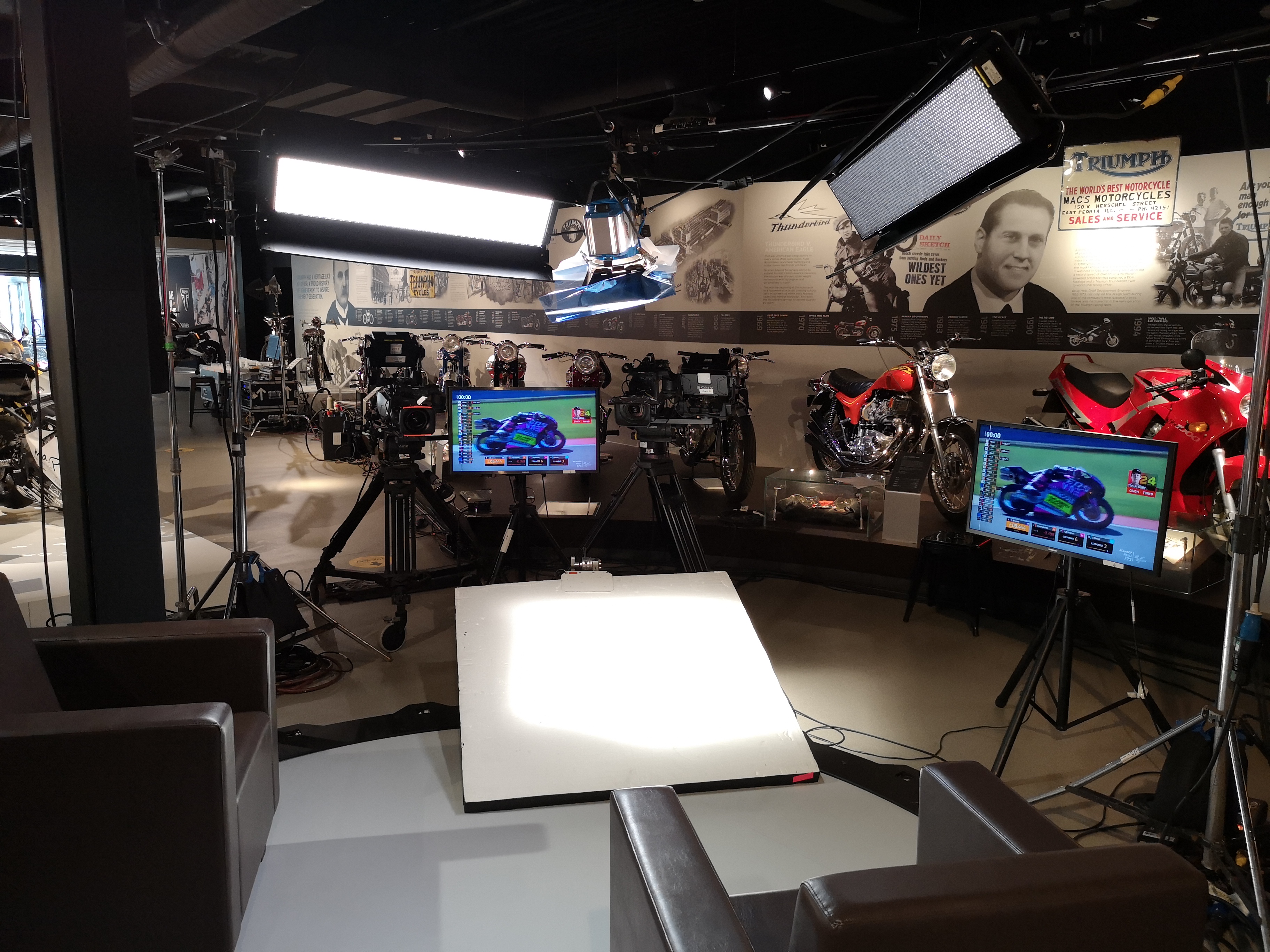
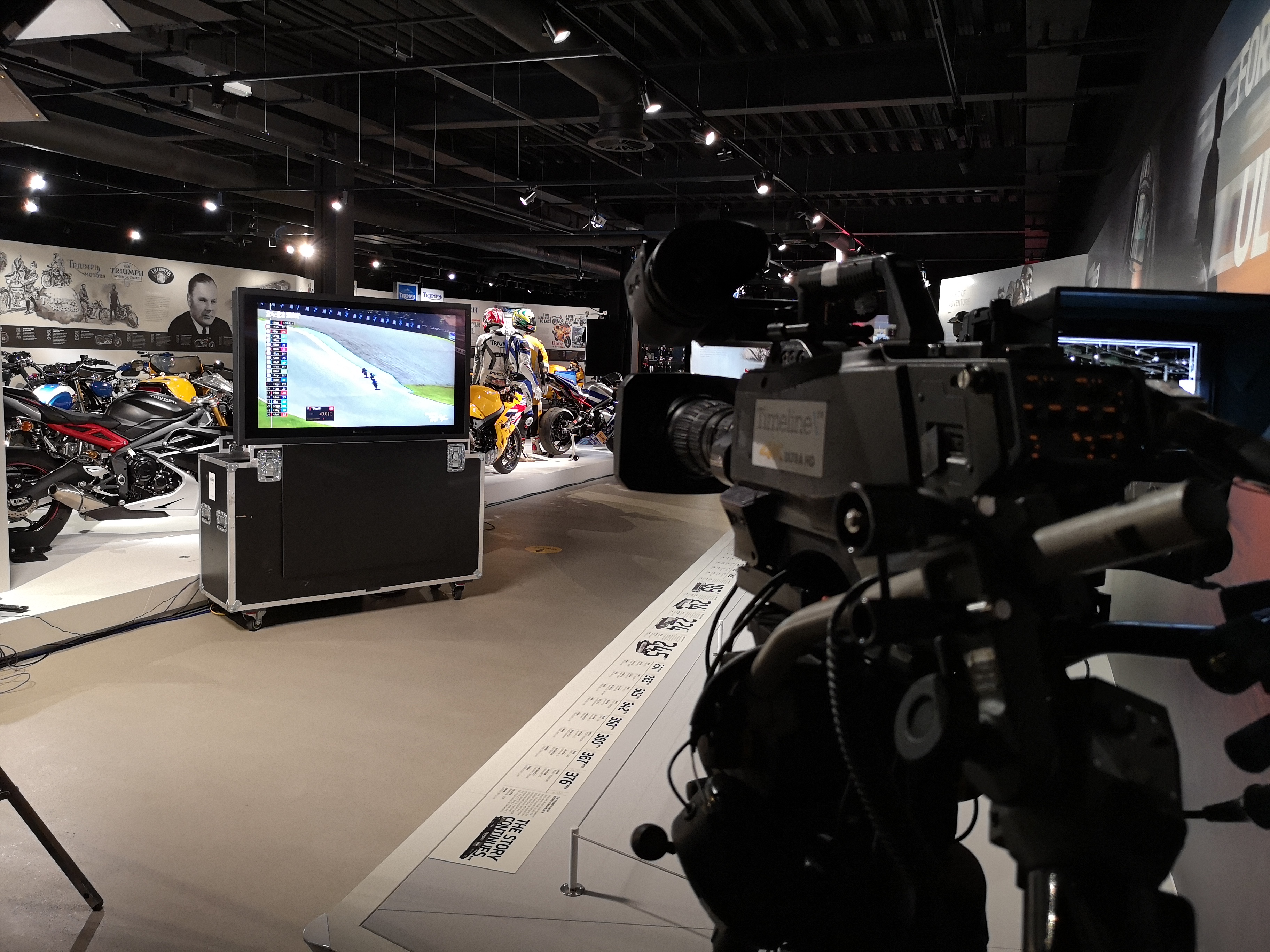
Split across two floors, the main studio and touch screen is located on the ground floor in the main museum area, the back drop perfect for BT’s MotoGP programming.

A plethora of cables, laptops and generators sprawl the floor, all necessary for getting the show to air, a collaborative effort between BT Sport, MotoGP commercial rights holder Dorna, production partner North One Television and technology provider Timeline Television.

BT Sport Triumph - main studio.jpg
The view that presenter Suzi Perry sees when presenting BT Sport’s MotoGP coverage from Triumph HQ.

Also, on show was plenty LED lighting and four state of the art 4K Ultra HD cameras, three for the main studio set and one for the touch screen further round the museum.

BT used both the video wall behind the main studio and the touch screen to great effect: conducting interviews with those in the paddock throughout the opening weekends, the set up unintentionally providing benefits to BT’s output.

“I’m doing interviews with people actually a bit easier than when you’re at the racetrack because [Dorna are] bringing them to our position [within the paddock], whereas normally I’m chasing round for like three hours at the end of the day trying to find people to interview,” resident interviewer Gavin Emmett tells me.

“The riders have been accommodating on the other end of things by going to a position, and they can’t see me, even though I can see them and they can hear me, so having a fairly relaxed, normal conversation with them has been good.”

“The team managers are normally tied up with meetings on Sunday’s, whereas now they’ve been able to speak to Suzi [Perry] directly in the couple of hours before a race, which is really handy. I’m pleasantly surprised at how well it has all gone.”

Historically, journalists and broadcasters have conducted post-session MotoGP media interviews from the comfort of the teams’ motorhomes, but Emmett believes that the COVID-19 pandemic may result in permanent changes within the paddock.

When asked by Motorsport Broadcasting, Emmett noted that the introduction of a ‘media pen,’ akin to the current Formula 1 set-up following qualifying and the race, would only be a positive for the two-wheeled community.

“Having a mix zone has worked for us, and I think it would work for the teams and the riders, because they know that they come there, they do their thing and that’s it, done, and they don’t need to go to different places, different times.”

BT Sport Triumph - touch screen.jpg
BT Sport’s touch screen set up at Triumph HQ.

“I think it’s a great idea. Teams are bringing their backdrops to the mix zone and putting them in, understandably they want the sponsor logos displayed. I hope it’s something we continue in the future because it does help everybody. It helps us know what the lights, the sound, everything is going to look like.”

The touch screen has proved its worth for BT already in 2020, Neil Hodgson using it to analyse the horrifying accidents during the Austrian Grand Prix weekend, illustrating how close MotoGP came to multiple fatalities that weekend.

At the other end of the ground floor in Triumph’s canteen area is the sound booth, whilst upstairs are BT’s four commentary booths, all separated by Perspex screens.

If anything, the commentary set up works better than your traditional on-site circuit set up. All four of BT’s commentators have their own monitors, giving them more space to work within than at a normal race weekend.

Thanks to the close relationship between the BT Sport team and many of MotoGP’s riders, the team has still been able to relay critical information about the riders back to the viewer at home.

Huewen, who retired from racing and started his broadcasting career thirty years ago, knows many of the current riders’ relatives. In some other cases, the working relationship between the rider and broadcaster is so close that the riders themselves message the BT team directly!

“Before the start of the [Czech Republic Grand Prix FP3] session this morning John McPhee sent Michael [Laverty] a voice message saying ‘we’ve been banned for the first 10 minutes the session, we’ve just found out.'”

“That was him sat in the garage, sending the information back to Michael from the garage in the little voice note, and that’s great,” Emmett says.

“He probably wouldn’t have done that if we were there! He’s aware ‘Oh, you know, I need to let you guys know because you’re going to be commentating on this session’ and the fans also wanting to know what happened, well this is what happened.”

The only inconvenience for Emmett from a commentary perspective comes when teamed with Laverty, the two positioned the furthest away from one another, however in the grand scheme of things it is a minor issue (as Hodgson was keen to point out to me in a friendly manner, he rarely looks at his co-commentator anyway…).

Post-COVID
Whilst the COVID-19 pandemic is (hopefully) temporary, many of the techniques BT Sport and other broadcasters have utilised over the past four months will remain a permanent fixture in the years to come, as broadcasting transitions to a remote, environmentally friendly, model.

The plan for BT Sport was to begin looking at MotoGP remote production this year, although clearly COVID accelerated their plans further than they anticipated.

With no fans and fewer personnel on-site, Hodgson believes that there is little incentive for the team to head back overseas whilst the paddock is ‘still empty.’  In the longer term, however, Huewen believes on-site presence remains ‘critical’ to BT’s output.

“My view is that trackside presence is critical,” Huewen says.

“At the moment, we can manage as we are, but this is a short-term thing. Is a long-term solution to production? No.”

“Dorna are helping us massively from trackside, facilitating the interviews. Moving forward, I think for the impromptu paddock views, meetings and information, you’ve got to be there on-site.”

The two-wheel series takes a break until September 13th, with nine rounds in eleven weekends to bring the 2020 season to a conclusion. The current plan is for BT to remain at Triumph for the next three races, but the broadcaster is reviewing plans on a regular basis.

There may not be many things guaranteed in 2020, but with Marc Marquez out injured, 2020 will certainly see a new MotoGP champion. Quartararo? Dovizioso? Miller? Binder? Your guess is as good as mine.

It really is all to play for in this strangest of years…


Contribute to the running costs of Motorsport Broadcasting by donating via PayPal